Understanding the realities of the local climate goes far beyond just picking a sunny week on a calendar. For anyone planning maritime excursions, your true focus needs to stay on wind patterns, swell directions, and reef microclimates. Our localized, on-the-water expertise provides a definitive look at how changing seasons directly impact your beach days and private boat charters. Generic forecasts simply won’t explain ocean behavior, but our maritime logs and daily operational experience certainly do. Check out our comprehensive, data-driven breakdown of seasonal weather and sea conditions to plan a structurally perfect tropical itinerary. We want to ensure you know exactly what to expect in Punta Cana.
Quick Weather & Marine Snapshot: What to Expect Year-Round
The bottom line? Punta Cana maintains a constant tropical climate with average daytime air temperatures sitting comfortably between 80°F and 89°F. Marine environments shift between energetic Atlantic trade winds in the winter and ultra-warm, glassy Caribbean waters throughout the summer. Strategic planning requires understanding these localized microclimates.
| Metric | Annual Range | Impact on Marine Excursions |
| Average Air Temp | 80°F – 89°F | Constant warmth; thermal gear rarely needed. |
| Average Sea Temp | 79°F – 84°F | Immediate comfort upon water entry year-round. |
| Average Rainfall | 1.8″ – 5.8″ / month | Primarily manifests as 20-minute passing showers. |
| Average Wind Knots | 7 – 14 Knots | Peak sailing winds in winter; motor cruising in summer. |
| Wave Height | 1.0 – 3.5 Feet | Swells heavily dependent on Atlantic vs. Caribbean side. |
| UV Index | High to Extreme | Requires physical sun-blocking and reef-safe zinc. |
Ocean Microclimates: Atlantic Ocean vs. Caribbean Sea Conditions
This coast uniquely bridges two distinct water zones, creating a massive divergence in marine conditions. You have to decide between the kinetic energy of the Atlantic Ocean and the profound tranquility of the Caribbean Sea. To fully grasp the geographic layout, checking out Where Is Cap Cana? helps illustrate this coastal divide perfectly.
Bavaro & Macao Coast (Atlantic Waters)
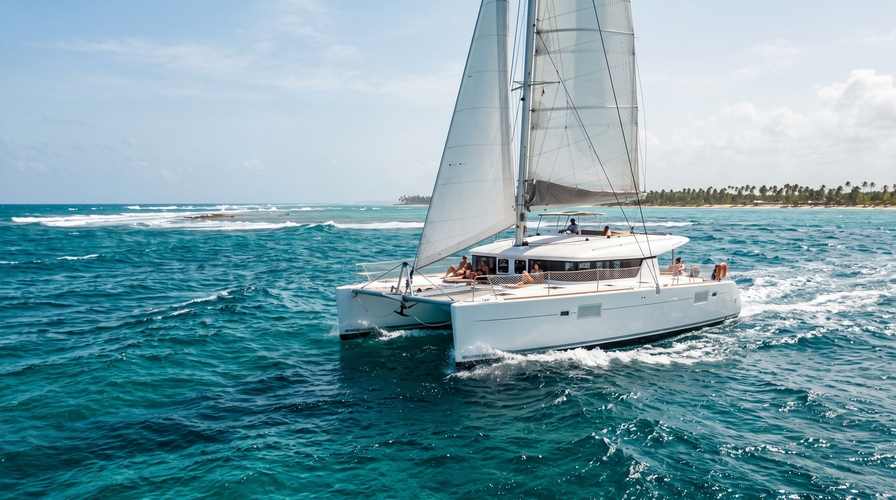
The northern and eastern stretches, encompassing Bavaro and Macao, face the direct force of the Atlantic Ocean. Predictable trade winds hit this coastline daily, generating steady wave action and rolling offshore swells. While this energy might suggest turbulent waters, an expansive barrier reef system physically absorbs the heaviest impacts, heavily protecting the immediate beach and shoreline. This natural breakwater allows for active but highly manageable sailing. Passengers booking a catamaran Punta Cana Bavaro experience should expect an authentic, dynamic sailing sensation rather than completely flat waters. For a solid overview of local land and sea options in this zone, explore the best things to do in Bavaro.
Bayahibe, Saona & Catalina Island (Caribbean Calm)
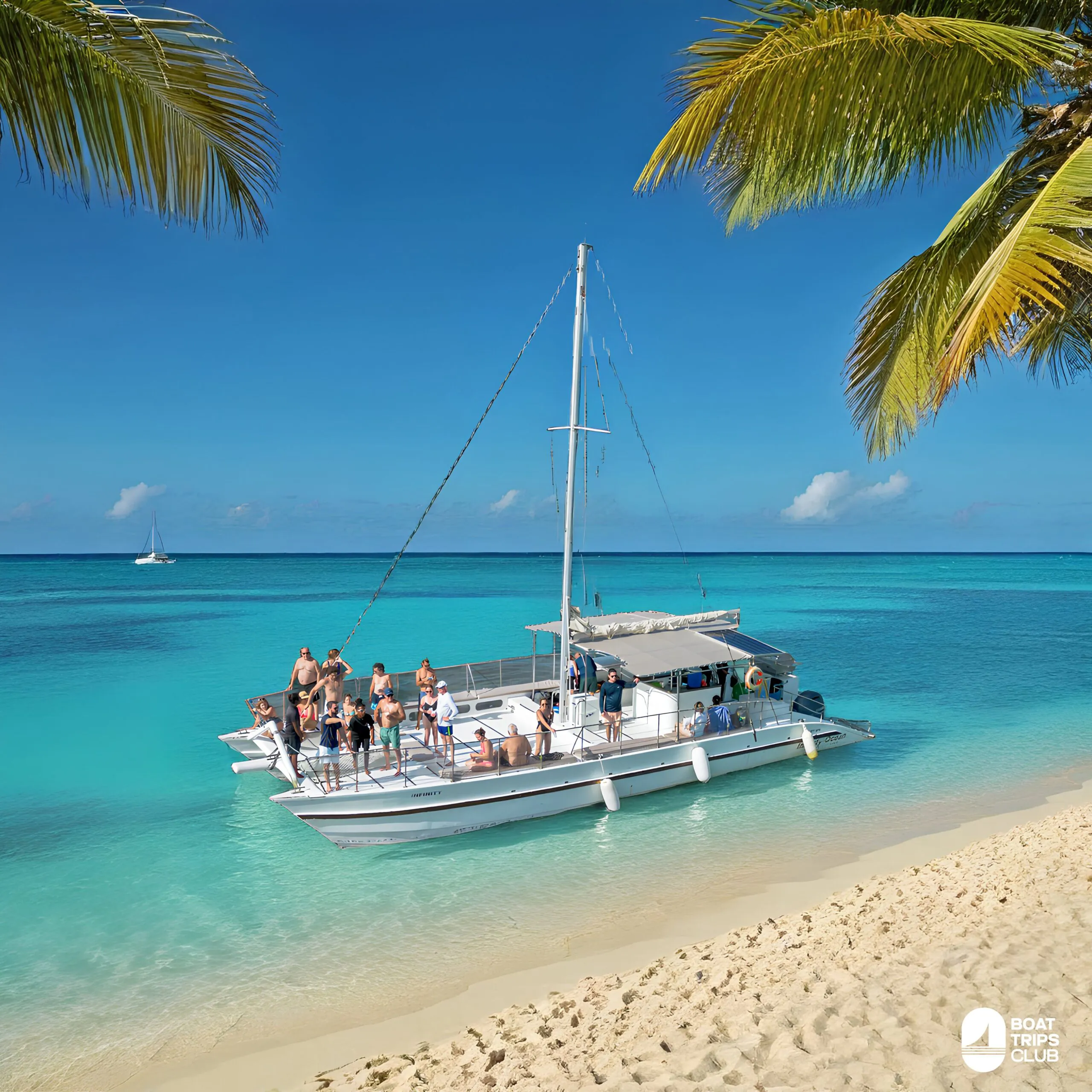
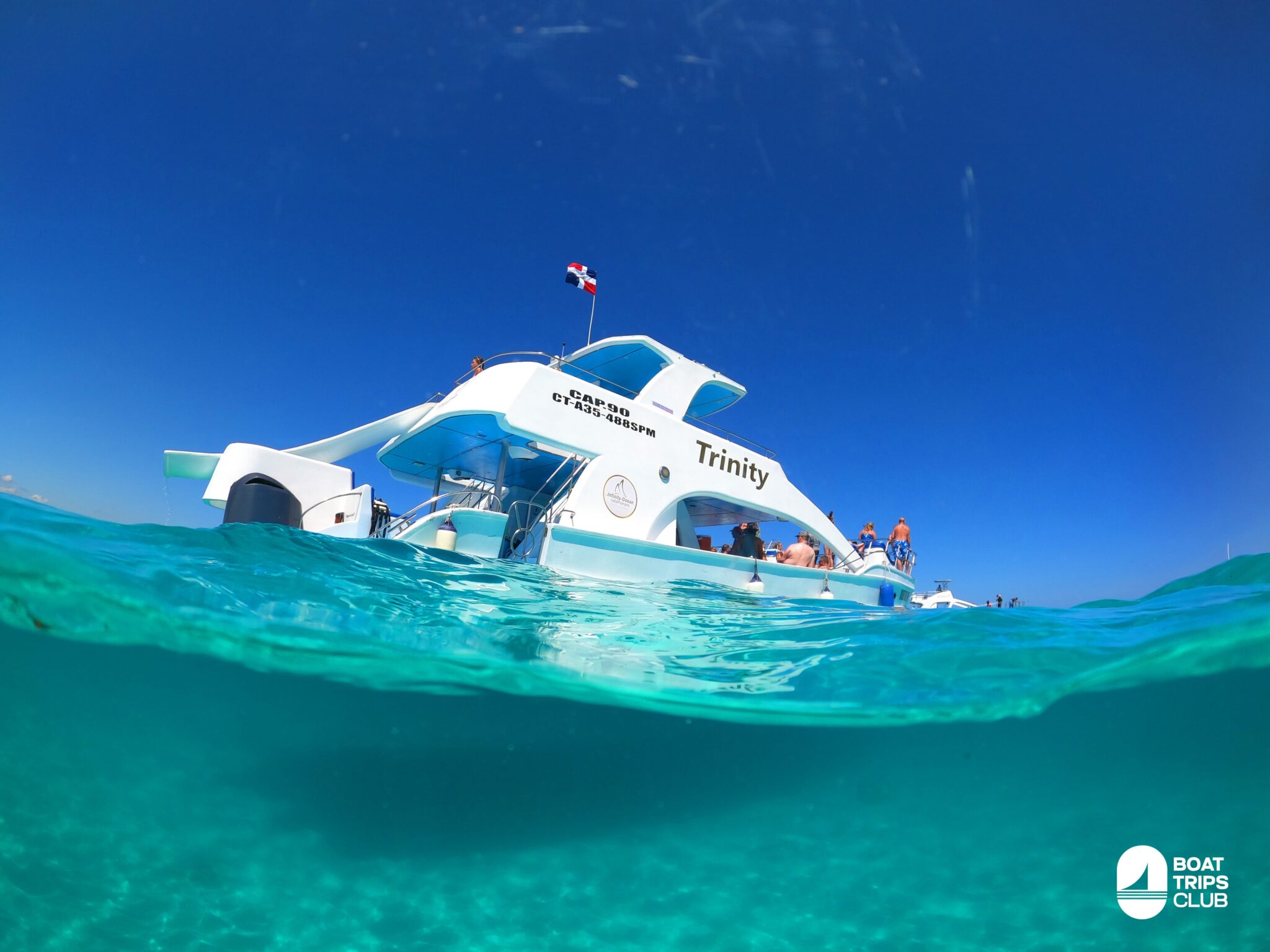
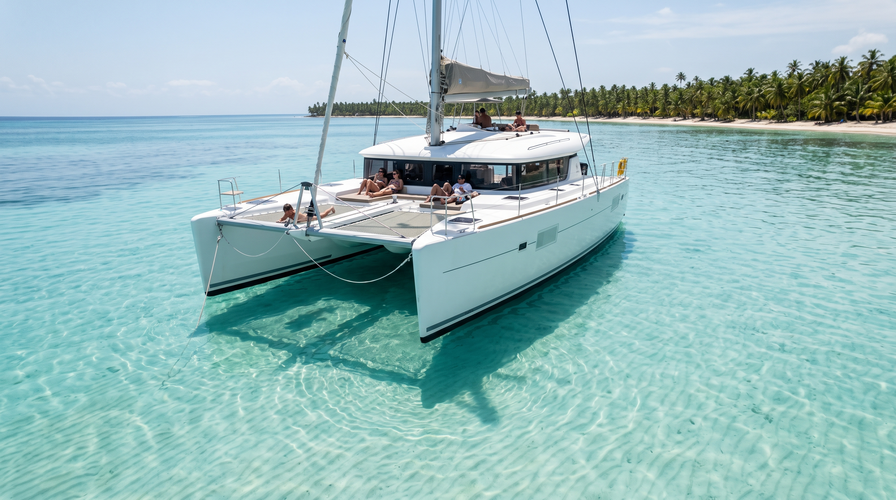
Heading south towards Bayahibe, Saona, and Catalina Island, the Dominican landmass completely blocks the prevailing Atlantic trade winds. The Caribbean Sea here presents fundamentally different marine dynamics, offering flat, undisturbed waters. This deep structural protection guarantees smooth navigation. Boat tours run perfectly in this region even on days when the Atlantic-facing beaches look uncomfortably choppy. If your priority is undisturbed sailing and maximum sub-surface clarity, this southern Caribbean zone proves structurally superior. Excursions like the private Saona Island & Palmilla experience thrive right here. You can also easily coordinate La Romana day trips to access these specific departure points.
Natural Reef Barriers in Cabeza de Toro
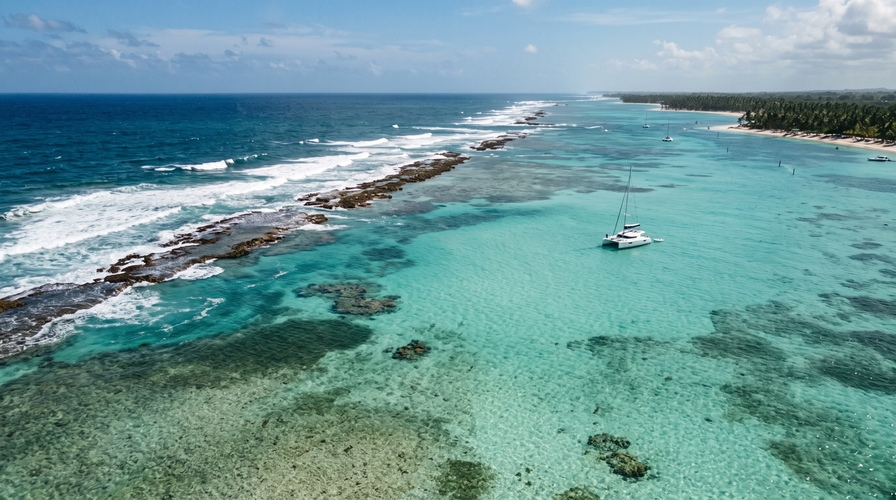
Cabeza de Toro features a dense, shallow reef architecture that essentially acts as a fortress against offshore energy. This geography creates natural pools offering remarkable calmness. Catamarans frequently anchor in these protected pockets because the reef naturally nullifies approaching swells. The result? An isolated, pristine environment strictly optimized for swimming, floating, and relaxing without fighting the current.
Punta Cana Weather & Sea Conditions Month by Month (2027 Projections)
January: Pleasant Trade Winds & Calm Winter Cruising
| Parameter | January Projection |
| Air Temp | 81°F |
| Sea Temp | 80°F |
| Rainfall | 2.5 inches |
| Wind Speed | 12 – 14 Knots |
| Wave Height | 2.0 – 3.5 Feet |
| Underwater Vis | 20 Meters |
| Best Tour Type | Catamaran Sailing |
January delivers incredibly pleasant trade winds and highly predictable, calm winter cruising. The air carries significantly less humidity. This makes full-day maritime excursions comfortable without causing oppressive heat exhaustion. Swells remain moderate, offering a rhythmic, stabilized bounce for vessels operating on the Atlantic side. These crisp, cool breezes define the winter cruising season. That makes January structurally perfect for expansive, wind-driven catamaran charters.
February: Driest Month & Peak Marine Clarity
| Parameter | February Projection |
| Air Temp | 82°F |
| Sea Temp | 79°F |
| Rainfall | 1.8 inches |
| Wind Speed | 11 – 13 Knots |
| Wave Height | 1.5 – 3.0 Feet |
| Underwater Vis | 25 Meters |
| Best Tour Type | Deep-Sea Exploration & Scuba |
February historically stands as the driest month of the calendar year. With minimal terrestrial rainfall runoff entering the ocean, suspended particulate matter drops significantly. This results in peak marine clarity. The visual penetration into the water column reaches its absolute maximum depth, offering unparalleled conditions for underwater observation. If your itinerary involves analyzing reef structures or tracking pelagic species, February provides the finest visual fidelity. Understand the exact parameters to expect by checking our metrics on scuba diving visibility.
March: Optimal Sailing Weather & Warm Breezes
| Parameter | March Projection |
| Air Temp | 83°F |
| Sea Temp | 80°F |
| Rainfall | 2.0 inches |
| Wind Speed | 10 – 12 Knots |
| Wave Height | 1.5 – 2.5 Feet |
| Underwater Vis | 22 Meters |
| Best Tour Type | Spring Break Excursions |
March balances the residual atmospheric dryness of winter with an incoming increase in ambient Caribbean warmth. The winds settle into a comfortable, steady flow that provides optimal sailing weather and highly consistent warm breezes. Surface chop decreases slightly from the peak winter months, creating a highly forgiving marine environment. This equilibrium makes March heavily sought-after by guests staying at spring break resorts, offering reliable canvas propulsion every single afternoon.
April: Spring Transition & Low Swell Conditions
| Parameter | April Projection |
| Air Temp | 85°F |
| Sea Temp | 81°F |
| Rainfall | 3.1 inches |
| Wind Speed | 9 – 11 Knots |
| Wave Height | 1.0 – 2.0 Feet |
| Underwater Vis | 18 Meters |
| Best Tour Type | Family Snorkeling |
As the seasonal transition accelerates, April brings noticeably warmer water temperatures and low swell conditions. The ocean surface flattens out, dropping wave heights to highly manageable, almost lake-like levels in protected zones. While humidity begins to build, the marine state remains exceptional for gentle, slow-speed cruising. The drastically reduced swell environment proves particularly beneficial for any passengers prone to acute motion sickness.
May: Warm Waters, Early Showers & Budget Cruising
| Parameter | May Projection |
| Air Temp | 86°F |
| Sea Temp | 82°F |
| Rainfall | 4.5 inches |
| Wind Speed | 8 – 10 Knots |
| Wave Height | 1.0 – 1.8 Feet |
| Underwater Vis | 15 Meters |
| Best Tour Type | Morning Charters |
May introduces the early phase of regional precipitation. Expect noticeably warm waters and early showers. However, these showers typically manifest as brief, intense afternoon bursts rather than prolonged, multi-day storm systems. The ocean absorbs significant solar radiation, raising subsurface temperatures substantially. Due to the slight increase in rain probability, May often presents excellent value for budget cruising. Operational strategy dictates scheduling morning departures to completely avoid late-day convective cloud buildup.
June: Start of Summer Warmth & Best Morning Departures
| Parameter | June Projection |
| Air Temp | 88°F |
| Sea Temp | 83°F |
| Rainfall | 4.0 inches |
| Wind Speed | 9 – 12 Knots |
| Wave Height | 1.2 – 2.2 Feet |
| Underwater Vis | 16 Meters |
| Best Tour Type | Sandbar Swimming |
June officially initiates the start of the summer warmth pattern. Atmospheric humidity spikes, and the thermal contrast frequently generates scattered, fast-moving squalls. Marine strategy during this specific month relies heavily on early execution. Prioritizing morning departures secures the calmest seas and clearest skies. The water feels exceptionally warm to the touch, entirely eliminating the need for thermal neoprene protection while swimming off the stern of the boat.
July: Peak Water Temperature (84°F) & Ideal Snorkeling
| Parameter | July Projection |
| Air Temp | 88°F |
| Sea Temp | 84°F |
| Rainfall | 3.5 inches |
| Wind Speed | 10 – 13 Knots |
| Wave Height | 1.5 – 2.5 Feet |
| Underwater Vis | 18 Meters |
| Best Tour Type | Extended Snorkel Trips |
July records the absolute peak ocean temperature, consistently hitting 84°F. This bath-like environment provides ideal snorkeling conditions. Guests staying at high-end beachfront resorts in the Dominican Republic will find the water incredibly inviting. The trade winds briefly re-intensify, helping mitigate the intense shore-side heat. Snorkelers can easily spend multiple hours analyzing reef ecosystems without experiencing any form of thermal drain.
August: Calm Morning Seas & Afternoon Thermal Clouds
| Parameter | August Projection |
| Air Temp | 89°F |
| Sea Temp | 84°F |
| Rainfall | 4.2 inches |
| Wind Speed | 8 – 11 Knots |
| Wave Height | 1.0 – 2.0 Feet |
| Underwater Vis | 16 Meters |
| Best Tour Type | Caribbean Coast Excursions |
August continues the trend of intense heat. This drives rapid oceanic evaporation and subsequent afternoon thermal cloud formation. The oceans remain remarkably flat, yielding glassy, calm morning seas. Our captains heavily favor early schedules to capitalize on the frictionless surface before atmospheric instability builds over the landmass. The water strictly maintains its peak temperature, ensuring immediate comfort upon entry.
September: Uncrowded Sandbars & Low-Season Value
| Parameter | September Projection |
| Air Temp | 89°F |
| Sea Temp | 84°F |
| Rainfall | 5.5 inches |
| Wind Speed | 7 – 10 Knots |
| Wave Height | 1.0 – 2.5 Feet |
| Underwater Vis | 14 Meters |
| Best Tour Type | Private Yacht Rentals |
September falls squarely within the statistical peak of hurricane season, inherently bringing increased atmospheric moisture. Consequently, tourist volume plummets drastically. For those willing to monitor the weather and remain flexible, September offers massive low-season value and completely uncrowded sandbars. High-traffic spots like Playa Blanca sit virtually empty. While you must track cyclonic activity, the day-to-day maritime reality often presents incredibly flat, windless stretches of open ocean.
October: Cooling Breezes & Quiet Reef Exploration
| Parameter | October Projection |
| Air Temp | 87°F |
| Sea Temp | 83°F |
| Rainfall | 5.8 inches |
| Wind Speed | 8 – 11 Knots |
| Wave Height | 1.2 – 2.5 Feet |
| Underwater Vis | 15 Meters |
| Best Tour Type | Island Hopping |
October marks the transitional decline of extreme summer heat, welcoming the first cooling breezes back to the coastline. While rainfall averages remain statistically high, precipitation predominantly falls in concentrated, highly predictable bursts. The severe lack of commercial marine traffic ensures quiet reef exploration. This isolation allows for highly undisturbed observation of the local aquatic biomass. Every snorkeling stop feels like a private discovery.
November: End of Rainy Transition & Refreshing Winds
| Parameter | November Projection |
| Air Temp | 84°F |
| Sea Temp | 81°F |
| Rainfall | 4.5 inches |
| Wind Speed | 11 – 13 Knots |
| Wave Height | 1.5 – 3.0 Feet |
| Underwater Vis | 18 Meters |
| Best Tour Type | Coastal Sailing |
November aggressively shifts the climate back toward the dry winter pattern. The lingering rainy transition definitively ends. Robust, refreshing winds clear out the residual terrestrial humidity. Surface conditions begin to liven up as Atlantic energy increases. This month serves as a phenomenal time for active coastal sailing, providing enough steady wind to cut the motors entirely and rely purely on the tension of the canvas.
December: Peak Holiday Sunshine & Festive Sunset Sails
| Parameter | December Projection |
| Air Temp | 82°F |
| Sea Temp | 80°F |
| Rainfall | 3.0 inches |
| Wind Speed | 12 – 14 Knots |
| Wave Height | 2.0 – 3.5 Feet |
| Underwater Vis | 20 Meters |
| Best Tour Type | Sunset Cruises |
December guarantees peak holiday sunshine with heavily reinforced trade winds that strictly regulate the island’s temperature. The atmosphere is exceptionally clear, creating vivid, high-contrast skies perfectly suited for maritime photography. The energetic ocean surface provides a brilliant backdrop for a sunset cruise Punta Cana. You get festive sunset sails backed by highly reliable, dry marine forecasts.
The Sargassum (Seaweed) Seasonality & Boat Tour Solutions
When Does Sargassum Appear in Punta Cana?
Sargassum predominantly appears along the eastern coastlines during the warmer summer months. As ocean temperatures rise between May and August, the biomass rapidly expands and drifts westward across the Atlantic. While natural ocean currents drive this phenomenon, it impacts shoreline aesthetics severely during this specific seasonal window.
Why Private Boat Trips Are the Best Way to Escape Seaweed
The primary mechanism of sargassum accumulation relies entirely on shallow coastal trapping. Seaweed physically gets stuck on beaches, but offshore sandbars and open-water reefs remain crystal clear. Booking a VIP boat tour acts as the ultimate structural bypass. Our operations simply navigate past the localized shoreline accumulation. We drop anchor in pristine, unaffected offshore zones where swimming conditions remain flawless and uninterrupted.
Caribbean Coast vs. Atlantic Coast Seaweed Levels
The geographic orientation of the Dominican Republic creates a massive disparity in seaweed impact. The Atlantic coast catches the direct brunt of the drifting algae. Conversely, the southern Caribbean coastline is largely immune to incoming seaweed due to opposing wind patterns and blocking landmasses. Booking a catamaran Isla Saona effectively guarantees a pristine, seaweed-free aquatic environment.
Marine Life & Underwater Visibility Calendar
Humpback Whale Watching Season
The migration of North Atlantic humpback whales represents the most significant biological event in the region. The humpback whale watching season operates strictly from January to March in the Samaná and Mona Passage. These massive mammals utilize the warm, protected waters to calve and mate. High-end marine excursions during this quarter frequently intercept these animals in transit, offering unparalleled, close-quarters observation opportunities. The physical scale of these animals near the hull is staggering.
Coral Reef Snorkeling & Tropical Fish Visibility by Season
For optimal visual fidelity and the highest definition of tropical fish, target the dry winter months. February and March yield the lowest precipitation, directly minimizing terrestrial runoff into the ocean. This lack of suspended sediment guarantees maximum light penetration onto the reef architecture. To explore the finest underwater topography, analyze the best places to snorkel in Punta Cana. Summer months still offer dense biological activity, but visibility can fluctuate rapidly following heavy afternoon rain squalls.
Deep-Sea Fishing Calendar
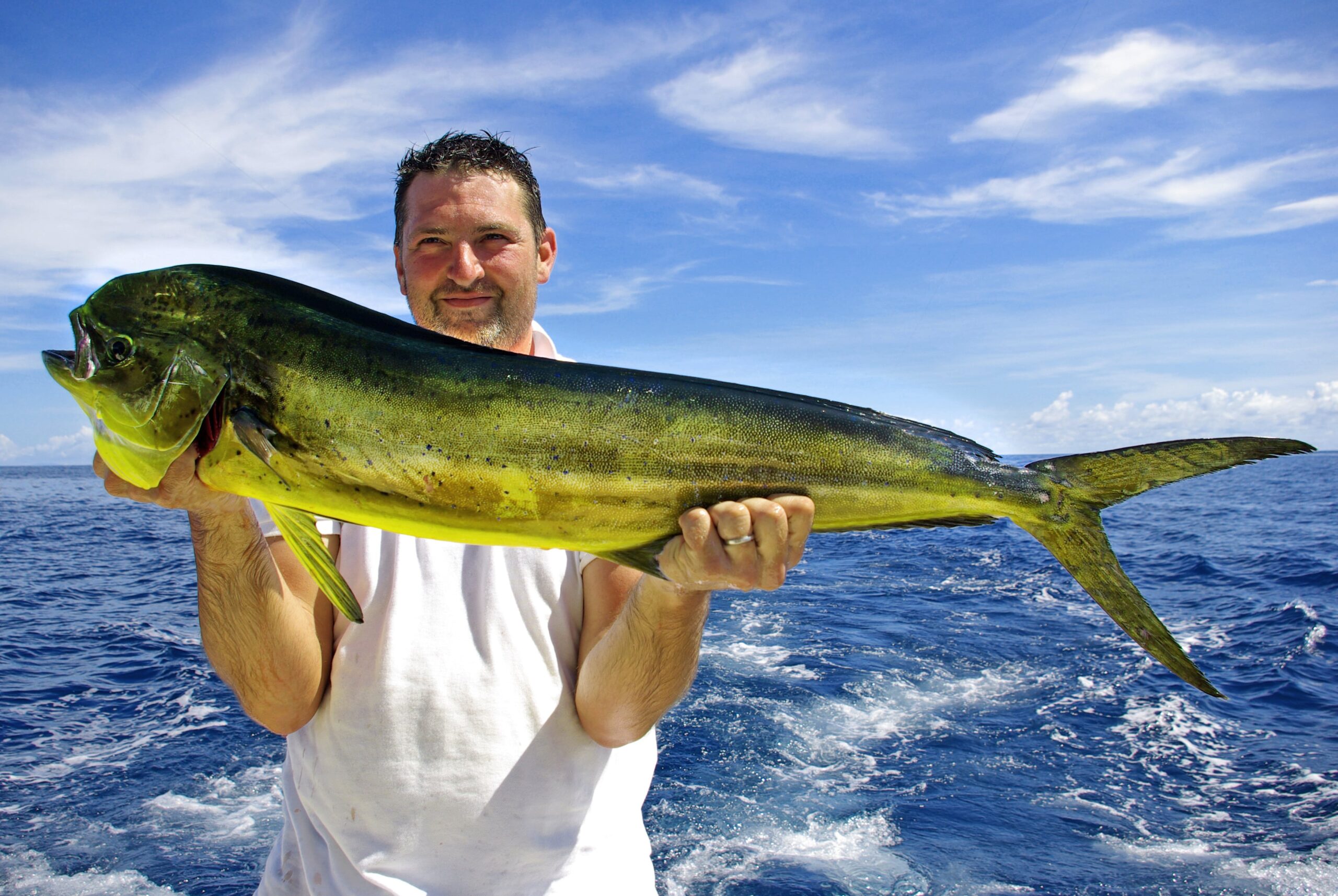
Pelagic species run on strict, temperature-driven seasonal migration routes. Deep-sea fishing charters targeting Mahi-Mahi find the greatest success from October through April. Wahoo predominantly strike during the cooler winter months, while the highly prized Blue Marlin actively feeds in the deeper offshore trenches throughout the intense summer heat. Booking specialized deep-sea fishing charters aligns your trip with these exact migration windows.
Port Authority Rules & Rain Safety: What Happens If It Rains on Your Boat Trip?
Tropical Passing Showers vs. Systemic Rain
Caribbean precipitation rarely manifests as total washouts. Our localized radar data confirms that standard Caribbean rain usually lasts 20 minutes before the intense sun breaks right back through the cloud cover. These brief squalls are simply necessary atmospheric pressure releases. Systemic, multi-day rain is a statistical anomaly. Full day-long cancellations remain extremely rare.
Armada de República Dominicana Rules
Maritime operations execute under strict governmental oversight. We do not cancel excursions based on scattered cloud cover or light drizzle. We only cancel operations if the official Port Authority issues a small craft advisory. The Armada de República Dominicana strictly monitors wave heights and wind speeds. This ensures our operational decisions rely entirely on empirical safety data rather than cautious estimates.
Boat Trips Punta Cana Rescheduling Guarantee
Navigating unpredictable tropical weather requires strict financial flexibility. We maintain a flexible policy and rescheduling guarantee. If the Port Authority issues an advisory and we cannot sail safely, your investment is entirely protected through immediate priority rebooking or full administrative refunds.
Best Time to Visit Punta Cana (Tailored by Traveler Goal)
Best Weather & Calm Seas: February – April
If your primary objective requires absolute meteorological stability, book between February and April. This quarter provides the lowest wave action, highest water clarity, and mathematically lowest precipitation rates. It serves as the ultimate, risk-free window for couples booking premium Punta Cana honeymoon resorts.
Best for Private Charters & VIP Sandbar Parties: December – March
The winter months generate a vibrant, energetic maritime atmosphere. Expect brilliant sunshine, steady trade winds, and optimal temperatures for extended deck lounging. If you intend to rent a private catamaran Punta Cana for high-level VIP hosting and celebration, firmly target December through March.
Best Budget & Low-Crowd Excursions: September – October
Those optimizing strictly for cost efficiency should target the peak storm season. September and October strip away the massive tourist crowds, causing hotel rates to plummet. Excursions operate with significantly fewer passengers, delivering a near-private experience at standard baseline rates. Check out our list of free things to do to maximize this highly aggressive budget window.
Best for Families & Warm-Water Swimming: June – August
Children and casual swimmers demand comfortable, shock-free ocean temperatures. The summer window guarantees bath-like water hovering around 84°F. This eliminates the need for any thermal gear. It stands as the superior choice for guests staying at the best beaches with resorts where families spend hours fully submerged.
Best for Destination Weddings & Sunset Catamarans: February – May
High-stakes event planning requires aggressive risk mitigation regarding rain. The February through May window offers the absolute lowest statistical probability of evening showers. This ensures your romantic things to do for couples, including high-end sunset sails, execute flawlessly under clear, painted skies.
Hurricane Season in Punta Cana: Reality vs. Perception
Why Punta Cana’s Geographic Position Deflects Most Major Storms
The reality of the Caribbean storm threat often contradicts aggressive public perception. Historically, Punta Cana’s specific geographic position and the natural barrier of the Mona Passage deflect most major storm systems away from a direct impact. While the broader region experiences cyclonic activity, the Dominican Republic’s eastern tip frequently avoids catastrophic landfalls. You can verify these historical, highly specific deflection patterns through the NOAA National Hurricane Center.
Should You Book Boat Excursions During Hurricane Season?
Yes, absolutely. “Hurricane season” technically spans six months, yet actual cyclonic interruptions only account for mere days of disruption. The vast majority of days feature brilliant sunshine and entirely safe, flat boating conditions. Leveraging our Port Authority protocols guarantees you will never be placed on the water during dangerous atmospheric instability.
What to Pack for Punta Cana Weather & Boat Excursions
Boat Trip Essentials
Marine environments demand specific, specialized preparation. Standard hotel packing lists fail completely on the open water. Prioritize reef-safe sunscreen to comply with environmental regulations and protect local coral (supported by international conservation initiatives like Save the Reef). Bring specialized dry bags for electronics, polarized sunglasses to cut severe ocean glare, UV-rated rash guards, and proven motion sickness pills. Find out exactly how to load out through our comprehensive Punta Cana packing list.
Dry Season Additions (December – April)
During the high winter months, strong offshore winds produce a noticeable chill following a deep-water swim. Pack a high-quality windbreaker or a dense microfiber towel to instantly block the breeze and retain body heat. Don’t bother bringing heavy jeans or thick hoodies; they’ll just take up valuable luggage space.
Rainy Season Additions (May – November)
The humid summer transition requires rapid waterproofing. Include a lightweight, packable rain shell and aggressive anti-fog gel for your snorkeling mask. The intense atmospheric humidity during these months rapidly fogs untreated glass within minutes.
UV Index & Ocean Sun Safety
Understanding High to Extreme UV on the Open Ocean
The Caribbean sun acts drastically differently than northern latitudes. The UV Index in Punta Cana frequently registers at “Extreme” levels year-round. On the open ocean, the water surface acts as a massive mirror, reflecting UV rays upwards. You absorb intense radiation from the sky and the sea simultaneously. You don’t just get burned from above; the glare off the white fiberglass decks and the blue water hits you right from below.
Marine Sun Safety Tips
Mitigate this dangerous double exposure through mechanical blocking rather than pure chemical reliance. Wear long-sleeved UPF 50+ shirts, utilize wide-brimmed hats with secure chin straps, and reapply thick, reef-safe zinc immediately after exiting the water.
Book Your Perfect Weather-Proof Boat Experience in Punta Cana
Securing your maritime adventure requires relying directly on local experts who understand the intricate, localized details of Punta Cana’s ocean conditions. Do not let unpredictable, generalized forecasts deter you from experiencing the island’s premier aquatic environments. Whether you require the high-end exclusivity of a luxury yacht rental Punta Cana, seek out things to do in Punta Cana, or simply want to explore things to do outside the resort, our localized knowledge guarantees a structurally optimized itinerary. Discover How to plan a trip to Punta Cana effectively, rely on our data, and lock in your ideal dates today.
Frequently Asked Questions About Punta Cana Weather
What is the best month to go to Punta Cana for calm ocean waters?
April delivers the absolute best balance of low wind and minimal swell, creating incredibly calm ocean waters. The transition between winter breezes and summer storms provides a highly predictable, flat surface perfect for cruising.
What happens to my boat trip if it rains?
Brief passing showers will not stop an excursion. The intense tropical sun typically returns within 20 minutes. If the Port Authority issues an official small craft advisory for severe weather, your trip is immediately, safely rescheduled or refunded.
How does the weather affect snorkeling visibility in Punta Cana?
Heavy rainfall rapidly increases terrestrial runoff, which temporarily clouds shallow coastal reef systems. For maximum visual clarity and undisturbed sediment, book snorkeling trips during the ultra-dry months of February and March.
Which coast has calmer water: Bavaro or Bayahibe/Saona?
Bayahibe and Saona Island consistently offer significantly calmer waters because they sit entirely on the protected Caribbean coast. Bavaro faces the open Atlantic Ocean, inherently producing more dynamic wave action and steady, rolling breezes.
Is there seaweed on boat excursions in Punta Cana?
While sargassum accumulates heavily on eastern beaches during the summer, private boat excursions completely bypass the shoreline. Offshore reefs, deep-water channels, and isolated sandbars remain pristine and entirely unaffected.
How strong are the ocean winds for sailing in Punta Cana?
Winter trade winds generally blow between 11 and 14 knots, offering perfect, heavy propulsion for true catamaran sailing. Summer winds drop slightly to 8-11 knots, generating flatter seas best suited for motorized cruising and relaxation.