You are staring at two very different flights for your 2026 trip. On one side, Mexico’s Pacific edge. On the other, the Dominican Republic’s eastern coast. Deciding between them is tough. We get it.
Both destinations sell sunshine and palm trees. But the actual on-the-ground reality? Completely different. Puerto Vallarta hits you with raw Pacific energy, authentic street tacos, and cobblestone history. Punta Cana operates on a totally different frequency. Here, it is all about dead-calm Caribbean water, flawless white sand, and cold drinks on private boats.
We run marine charters out of the Dominican Republic every single day. We know this specific coastline like the back of our hands. But we also know when a traveler actually belongs in Mexico. Let’s cut the travel brochure nonsense. You need to know the hard facts about the sand, the surf, the costs, and the crowds before you hand over your credit card.
Quick Verdict: Punta Cana or Puerto Vallarta?
Punta Cana is your absolute best bet if you want zero-stress, all-inclusive luxury. Think calm turquoise waters, massive beachside resort pools, and world-class offshore sailing. Puerto Vallarta takes the win if you crave street-level culture. Pick Mexico for Pacific surfing, historic walking districts, and deep culinary exploration. Choose the Dominican Republic to totally unplug. Choose Mexico to actively explore.
At a Glance: Head-to-Head Comparison
| Feature | Puerto Vallarta (Mexico) | Punta Cana (Dominican Republic) |
| Vibe & Energy | Historic, loud, highly active, mountainous. | Slow, resort-centric, flat, purely tropical. |
| Target Traveler | Foodies, heavy explorers, LGBT community. | Exhausted parents, honeymooners, beach snobs. |
| Average Cost | Cheap local food; mid-tier boutique rooms. | Higher upfront resort costs; premium boat tours. |
| Ocean Reality | Coarse golden sand, heavy Pacific waves. | Fine white powder, flat Caribbean shallows. |
| Nightlife Scene | Dive bars, salsa clubs, busy street vendors. | Massive resort shows, luxury beach clubs. |
Vibe, Atmosphere & Culture: Pacific Charm vs Caribbean Chill
Puerto Vallarta is a real, living, breathing city. It just happens to sit on a gorgeous bay. Walk out of your hotel in the Zona Romantica, and the history hits you immediately. You navigate steep cobblestone streets. Local art galleries sit next to open-air butcher shops. The air smells like roasted corn and exhaust fumes. It is loud. It is energetic. You are instantly forced to merge with the local way of life.
Punta Cana ignores all of that. This entire region was carved out of the jungle specifically for leisure. There is no historic downtown to walk through. Instead, your entire world revolves around the shoreline. The famous Bavaro Beach sets the daily pace. You wake up, eat breakfast staring at the water, spend the afternoon sailing, and fall asleep listening to the tide.
Want a little more energy? You can easily hunt down the Macao Beach crowds on a Sunday afternoon for surf lessons and cold Presidente beer. But overall? The culture here forces your heart rate down. You come here to actively do nothing.
Beaches & Ocean Conditions: Golden Sands vs White Powdery Shores
Pay close attention here. This is the biggest difference between the two trips. The Pacific Ocean and the Caribbean Sea do not act the same way.
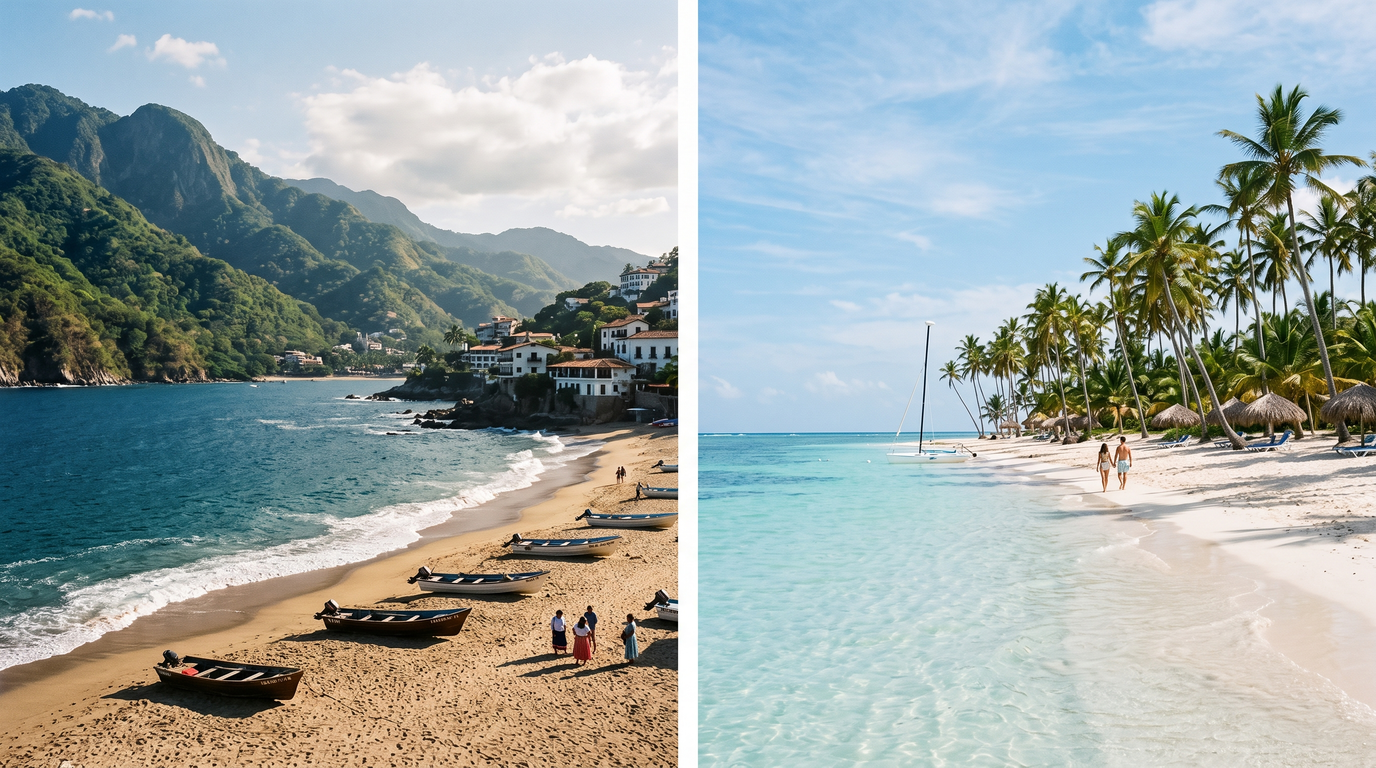
Puerto Vallarta beaches feature coarse, golden sand. It sticks to you. The backdrop is incredible—thick, green Sierra Madre mountains diving straight into the water. But that water is the Pacific. It runs deep blue, cold, and aggressive. You will encounter heavy undertows and massive shore breaks. In the winter, the water drops down to a chilly 73°F (22°C). You do not casually float here. You swim with intent, and you always watch the lifeguard flags.
Punta Cana looks entirely fake. It looks like someone heavily filtered an Instagram photo. But it is totally real. The sand is stark white. It feels like baby powder between your toes, and it never gets too hot to walk on, even at noon. A massive offshore barrier reef protects most of the eastern Dominican coast. Because of that reef, the ocean sits flat. The water is a brilliant, blinding turquoise. And it stays warm. We are talking 80°F (26°C) bathwater all year long. You don’t battle the waves here. You stand waist-deep with a drink in your hand.
Activity Showdown: The Best Things to Do
Top Adventures in Punta Cana
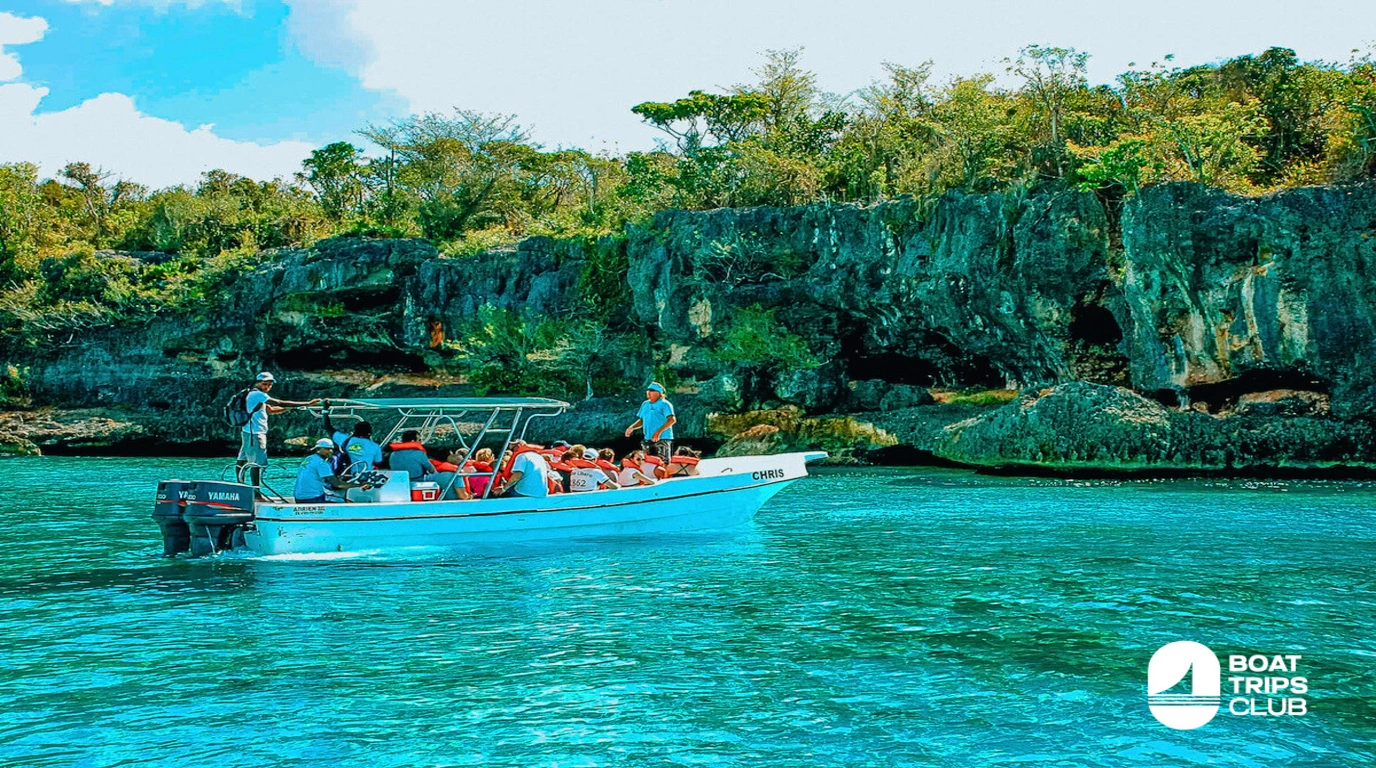
The Dominican Republic is a marine playground. Because the ocean is so calm, the boat life here is unmatched. You absolutely have to get off the sand to understand why people fly here.
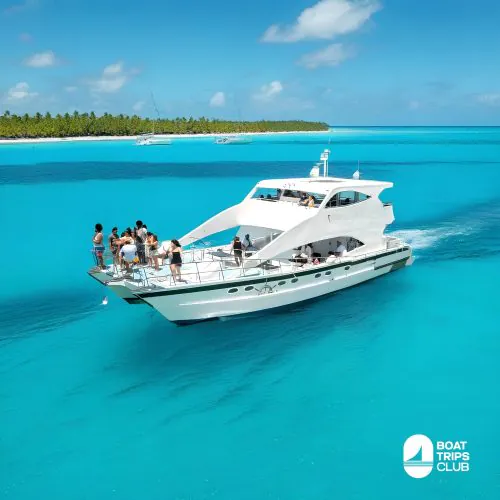
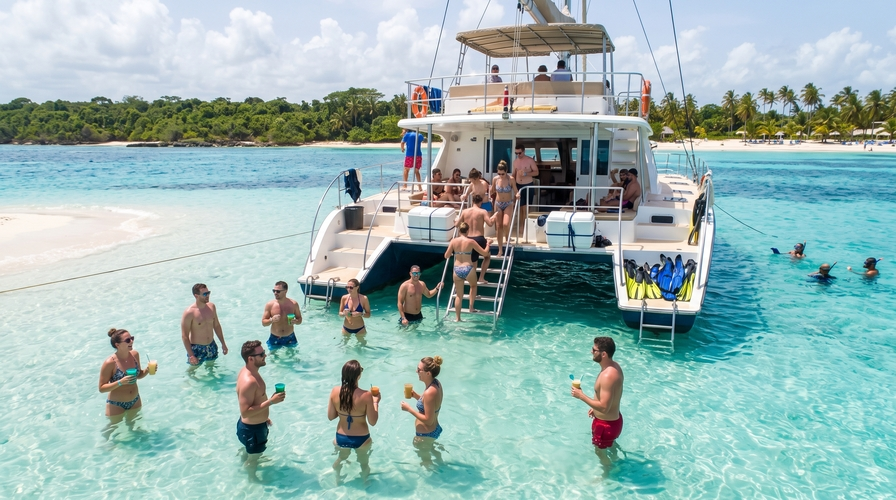
Almost every visitor eventually books catamaran cruises to Saona Island. It is a full-day run down the coastline. You eventually drop anchor at a natural sandbar in the middle of the ocean. The water sits at your waist. The crew hands out rum. It is exactly what you want a tropical vacation to be.
If you prefer looking at fish instead of drinking, scuba diving at Catalina Island drops you onto a massive vertical coral wall. You drift past eagle rays and giant sea sponges.
Want to stay above the surface? The offshore trenches near Cap Cana get deep, fast. Booking deep sea fishing charters puts you on top of huge pelagic species. We pull wahoo, mahi-mahi, and blue marlin out of these waters daily.
Need a break from the salt? Head inland. Getting strapped in for ziplining at Bavaro Adventure Park shoots you right over the top of the jungle canopy at high speeds.
Top Adventures in Puerto Vallarta
Mexico uses its dramatic geography to its advantage. The Malecon boardwalk serves as the main artery of the city. It runs for a solid mile right against the crashing surf. You walk past bronze statues, fire dancers, and vendors selling fresh churros out of paper bags. It gets packed at sunset.
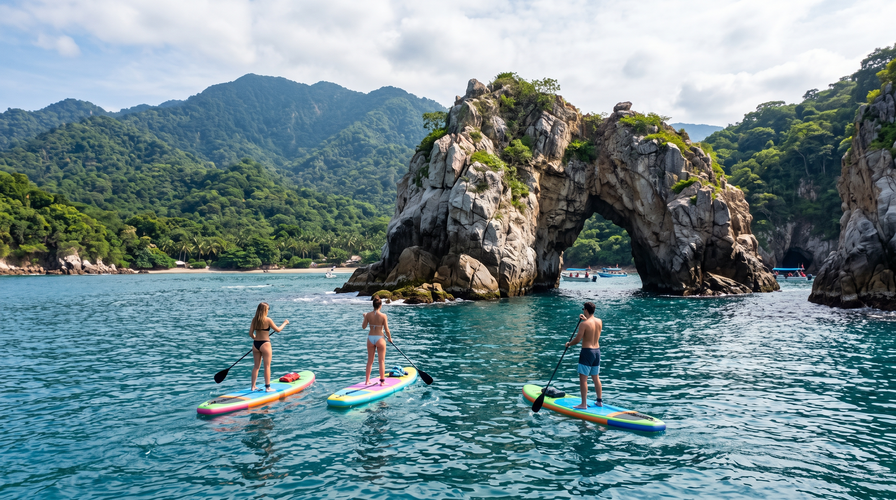
Out on the water, Los Arcos Marine Park offers towering granite arches shooting straight up from the waves. People paddleboard through the caves here. Further out, boats run to the Marietas Islands to drop tourists at the Hidden Beach. It is a crazy geological formation—a sandy crater completely trapped inside a rocky island. You literally have to time the tide and swim through a dark cave to get inside.
Hidden Gems & Under-the-Radar Spots
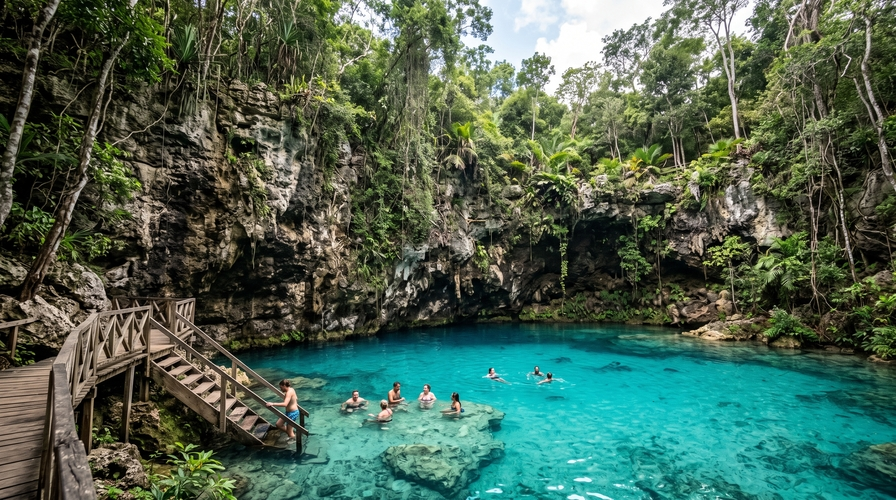
Want to ditch the crowds? In the Dominican Republic, you need to track down the Cenote Hoyo Azul natural swimming hole. It sits at the bottom of a massive limestone cliff. The water is an electric, shocking blue. It is also freezing cold. After hiking through the humid jungle dirt, jumping in will absolutely wake you up.
In Puerto Vallarta, ignore the main strip for a day. Catch a bumpy water taxi heading south until you hit Yelapa. No cars. Spotty cell service. A heavy waterfall sits about twenty minutes inland. It feels like you slipped thirty years backward in time.
Weather, Seasons & The “Sargassum” Factor
Timing matters. The absolute best time to visit Punta Cana hits right between December and April. The humidity breaks. It rarely rains. The temperature locks in around 83 degrees. Puerto Vallarta runs on the exact same schedule. Winter means clear skies and cool nights on the Pacific.
But we need to talk about seaweed.
Sargassum is a massive, floating algae bloom. During the hot summer months, it washes onto Caribbean beaches in huge, rotting piles. We don’t sugarcoat this. It happens. But Sargassum seaweed management in the DR is an aggressive, well-funded operation. The big resorts string up heavy offshore nets to catch it before it hits the sand. At 5:00 AM, they drive modified tractors down the shoreline to rake up whatever gets through. By the time you walk down for breakfast, the beach is totally clean.
Puerto Vallarta does not get Sargassum. The Pacific currents keep it away. If you are forced to travel in July or August and hate seaweed, Mexico is the safer bet.
Dining & Nightlife: Where to Eat and Drink
Mexico wins the food fight. Period. The street food in Puerto Vallarta will ruin you for life. You can stand on a cracked sidewalk at midnight and eat the best al pastor taco of your life for two bucks. The pork spins on a spit right in front of you. But they also do high-end. The romantic zone is packed with modern fusion spots pushing crazy tequila-tasting menus and fresh yellowfin tuna. At night, the Malecon turns up the volume. Salsa clubs blast music until 4:00 AM.
Punta Cana runs on the buffet. The mega-resorts fly in thousands of pounds of food to feed the masses. It is good, but rarely mind-blowing. The secret here? Leave the buffet and hunt down local seafood. Find a spot serving grilled red snapper and smashed plantains (mofongo).
You also have to take a shot of traditional Mamajuana. Locals make it by stuffing tree bark and roots into a bottle, then soaking it in rum, red wine, and honey. It burns. It is sweet. They claim it cures everything.
Punta Cana nightlife usually happens right on your resort property. Think fire dancers on the beach and massive foam parties in the main pool. Want something classier? Book a private catamaran sunset cruise. The crew pours premium rum while you watch the sky turn bright purple over the water. It beats standing in a crowded nightclub any day of the week.
Where to Stay & Key Districts to Explore
Your hotel choice determines your whole trip.
Puerto Vallarta pushes you toward smaller, independent spots. You book a boutique room with a courtyard or rent a cliffside condo. You do this because you want to leave the building. You want to walk down the hill, hit the pharmacy, grab a coffee, and blend in.
Punta Cana is built for massive scale. The Cap Cana district is the heavy hitter. It is a multi-billion-dollar gated community. It holds a private marina full of superyachts, a Jack Nicklaus golf course, and ultra-high-end hotels. You need a golf cart just to get from your room to the lobby. Up north in Bavaro, the properties are just as big but lean heavily toward family crowds and massive water parks. Once you check in, you rarely leave the gates.
Getting Around & Transportation
Logistics in Puerto Vallarta are incredibly easy. Download Uber. Hop in a cheap yellow taxi. Or just use your legs. The downtown core is packed tight. You can clear customs at the airport and be sitting at a bar in twenty minutes.
Do not try to walk in Punta Cana. Everything is massively spread out. The highways are busy, hot, and lack sidewalks. While Uber technically exists, local taxi unions fight them constantly. Getting an Uber past a resort security gate is a massive headache. Skip the stress. Pre-book private airport transfer options. A driver will stand at arrivals holding a sign with your name on it. They throw your bags in an air-conditioned van and drop you right at the front desk.
Safety, Budget & Tipping Culture in 2026
Let’s talk money.
Puerto Vallarta saves you cash on the daily grind. You pay in Mexican Pesos. A solid local dinner costs ten bucks. A nice independent hotel room runs $100 a night. But remember, every single drink, snack, and cab ride comes out of your pocket. It adds up.
Punta Cana requires a bigger swipe upfront. You will operate entirely in US Dollars. You can hunt down Punta Cana budget resorts, but a decent all-inclusive will pull $250 to $400 a night minimum. The upside? You put your wallet in the room safe and forget about it. Food and alcohol are already paid for.
Is it safe? Yes. Both regions survive on tourism money. They protect visitors aggressively. We track the local safety reassurance for tourists constantly. Violent crime against tourists inside the resort bubbles is incredibly rare. Just be smart. Don’t buy illegal drugs. Don’t walk down dark alleys at 3:00 AM. Always check the official US State Department travel advisories before you fly.
One final tip. Tipping in Mexico follows standard rules (15-20%). In the DR, tipping is a cheat code. Yes, the resort is “all-inclusive.” But if you hand the bartender a five-dollar bill on your first day, your drinks will suddenly get a lot stronger, and you will never wait in line again.
The Ultimate Showdown: Which Destination Should You Choose?
Make your decision based on exactly how you handle your free time.
- Book Punta Cana if: You are exhausted. You want someone else to cook. You want blindingly white sand, zero waves, and direct access to luxury private boats.
- Book Puerto Vallarta if: Sitting at a pool for three days makes you crazy. You want to hike, eat spicy street food, hear local music, and watch massive Pacific waves crash against the rocks.
- Book Punta Cana if: You have three kids under ten. You need safe, shallow ocean water, huge buffets to handle picky eaters, and dedicated resort staff to keep them busy.
- Book Puerto Vallarta if: You are traveling with a partner who loves deep cultural history, fast-paced nightlife, and getting lost in unfamiliar neighborhoods.
Frequently Asked Questions (FAQs)
Is the water warmer in Punta Cana or Puerto Vallarta?
The water in Punta Cana is significantly warmer. The Caribbean Sea acts like a heated pool, averaging a comfortable 80°F (26°C) every single month of the year. Puerto Vallarta sits on the Pacific Ocean. Those waters run much cooler, dropping to around 73°F (22°C) in the winter and only warming up to 82°F (28°C) by late August.
Which is cheaper: Puerto Vallarta or Punta Cana?
Puerto Vallarta wins on cheap daily expenses. Street food, local beers, and boutique hotels are very affordable. Punta Cana demands a higher upfront price tag because you are paying for an all-inclusive resort package. However, Punta Cana prevents surprise spending since your meals and drinks are already covered before you land.
Which destination is better for families with kids?
Punta Cana easily beats Puerto Vallarta for young families. The ocean is protected by reefs, meaning there are no dangerous undertows or crashing waves. Kids can safely swim. Furthermore, the massive Dominican resorts are built for families, featuring massive water slides, unlimited buffets, and supervised daily kids’ camps.