You don’t want to fly two thousand miles just to sit inside a hotel room while a tropical storm hammers the beach. Let’s be entirely honest here. Nailing the timing of your Dominican Republic vacation isn’t just about picking random dates off a calendar. The exact month you land dictates absolutely everything about your trip.
Your arrival date determines whether you pay a massive premium for your room, whether you’ll fight crowds for a pool chair, and most importantly, what the ocean looks like. We operate boats here every single day. We see first-hand how the marine conditions shift from crystal clear and flat in March to choppy and unpredictable by late September. Whether your main goal is stretching a tight budget, escaping massive spring break crowds, or securing flawless ocean conditions for a private yacht charter, you have to know exactly what each season brings.
Top Summary: The absolute best time to visit Punta Cana for flawless weather and calm ocean conditions is between March and May. You get brilliant skies and highly visible waters perfect for snorkeling and boat excursions. If you want to stretch your budget, September and October offer the cheapest off-season rates, though you face a higher risk of rain. To entirely avoid seasonal coastal seaweed (sargassum), your best strategy is booking private boat trips to offshore islands like Saona, where the waters remain clear year-round.
Quick Snapshot: When to Visit Punta Cana in 2027
Need the fast facts before booking your flights? Here is exactly when you should travel based on decades of local weather data and daily marine observations:
- Best Overall Months (Weather & Value): Late April and May hit the ultimate sweet spot. You secure the fantastic dry-season weather without paying those massive peak winter resort prices. Plus, the ocean surface is incredibly flat.
- Cheapest Time to Visit: September and October absolutely slash prices across the board. Expect flight and hotel rates to drop by as much as 40% compared to January. The catch? You take on a slightly higher risk of seasonal rain.
- Best Time for Clear Ocean Water: February through April delivers maximum underwater visibility. Because there is virtually no rain, there is zero agricultural runoff muddying the coastline.
The Sargassum (Seaweed) Factor: What Tourists Need to Know
Most travel agencies and booking platforms conveniently ignore the seaweed problem. We won’t. Sargassum is a naturally occurring brown macroalgae that washes onto Caribbean coastlines in massive quantities.
Spending thousands of dollars on a luxury beachfront suite only to find a wall of rotting seaweed blocking the water is a nightmare scenario. But here is the good news. With a little bit of smart planning and the right ocean excursions, you can easily bypass the issue entirely.
When is Seaweed Season in Punta Cana?
Seaweed blooms typically peak during the hottest summer months. From June through August, rising ocean temperatures supercharge algae growth out in the Atlantic. Prevailing winds then push these massive floating mats directly toward the eastern shores of the Dominican Republic. If you plan on traveling during this summer window, reading our dedicated Punta Cana seaweed season guide is mandatory. It details exactly which weeks historically see the heaviest shoreline accumulations so you aren’t caught off guard.
Best Beaches & Boat Trips to Avoid Sargassum
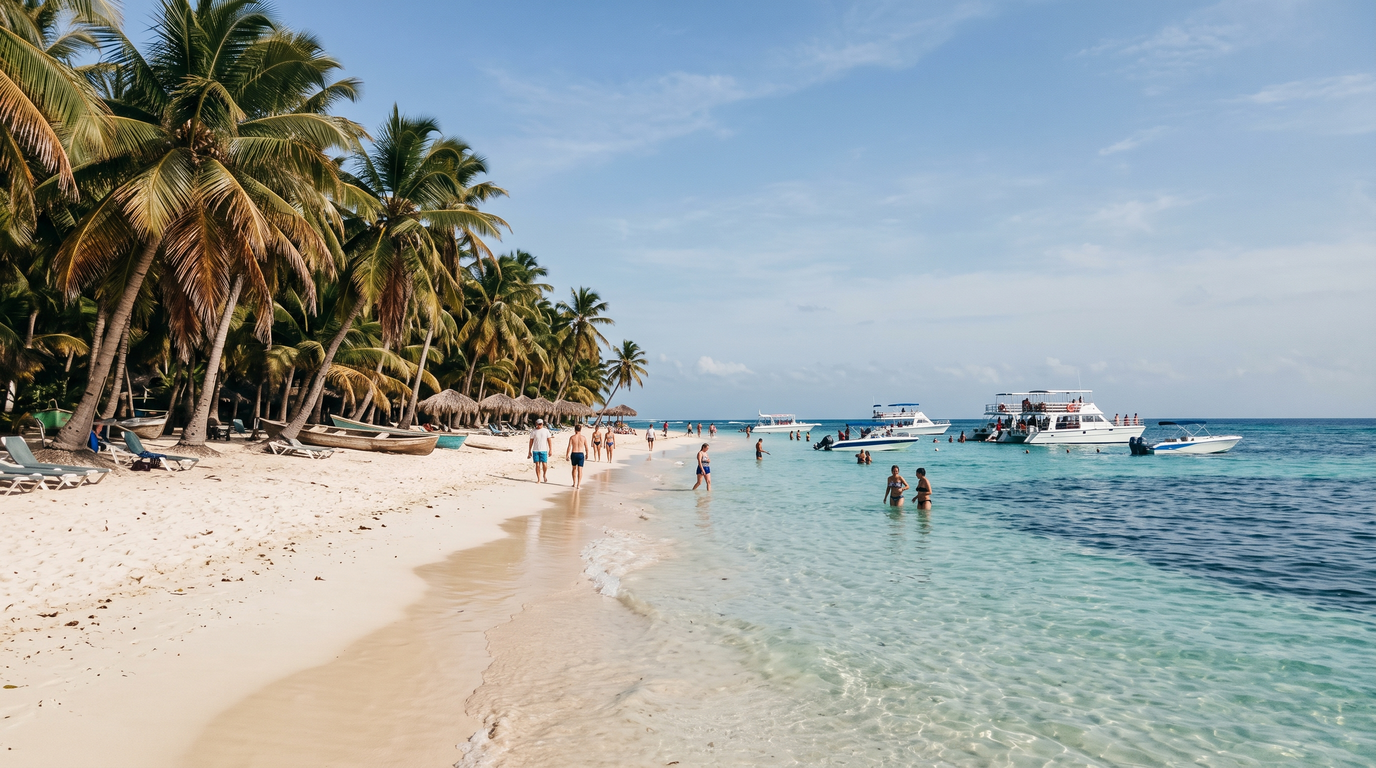
Here is the local secret. When the main resort strips in Bávaro or Uvero Alto get hit hard by sargassum, the offshore islands usually stay perfectly clean.
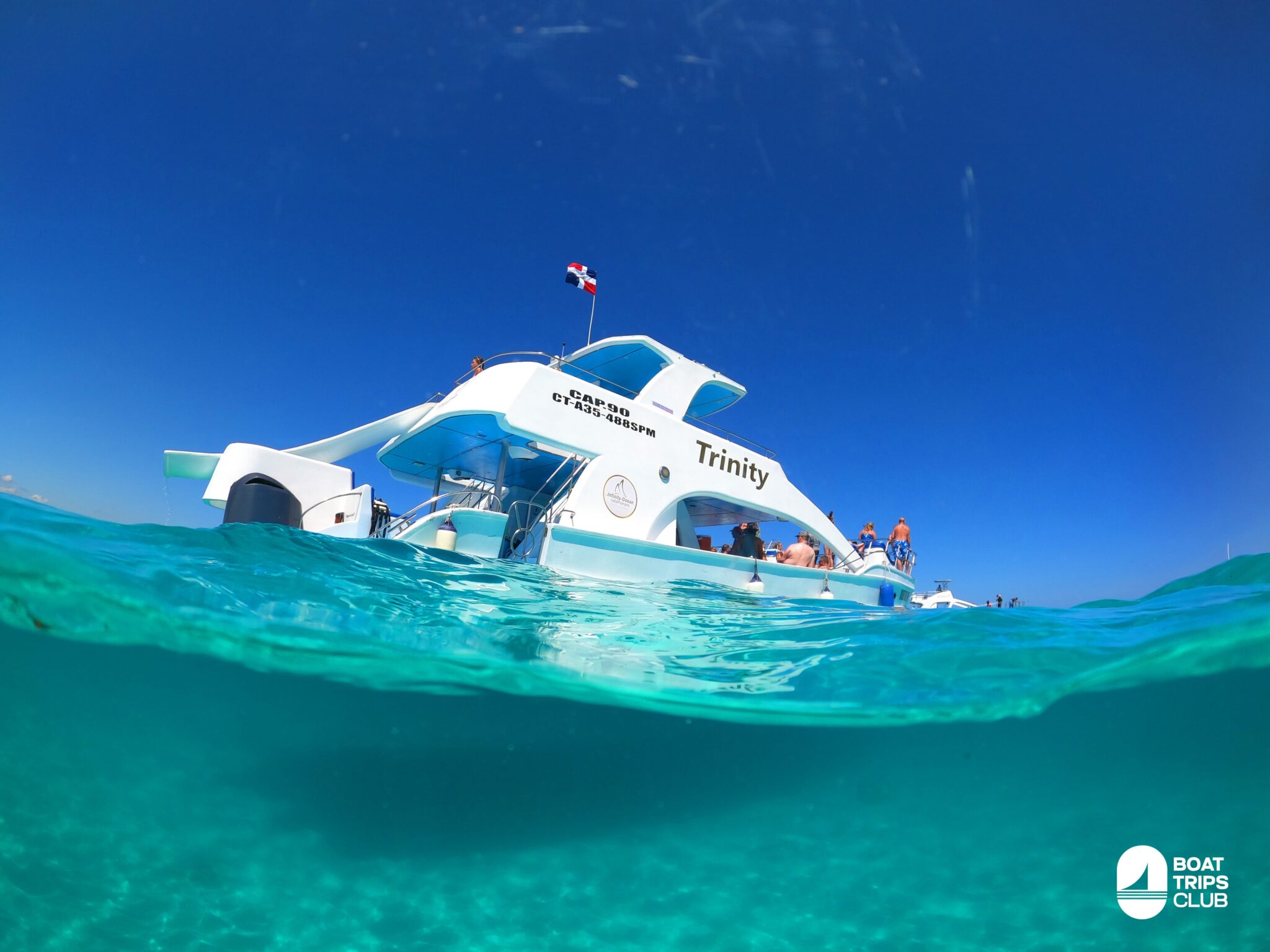
Why? It comes down to geography. Booking a private Saona Island catamaran charter is the ultimate escape plan. Saona Island sits strictly on the Caribbean Sea side, protected from the Atlantic currents that drag the seaweed in. The waters there remain a blinding turquoise almost every day of the year. Similarly, ditching your resort for a day to explore isolated, pristine Dominican Republic beaches via a specialized boat transfer guarantees you find clean sand and clear swimming conditions.
Best Time to Visit Based on Your Priorities
There is no single “perfect” month for everyone. A couple looking for a quiet, romantic honeymoon needs an entirely different environment than a college student looking for cheap drinks and loud music.
Best for Perfect Weather (March & April)
March and April deliver virtually flawless beach days. You completely avoid that heavy, suffocating late-summer humidity, and you dodge the unpredictable chilly cold fronts that occasionally sweep down from North America in January. Expect highly consistent temperatures hovering right around the mid-80s (Fahrenheit) with blindingly clear skies. For a deep dive into historical temperature data and exactly what clothes to pack, check our breakdown of Punta Cana weather in March.
Best for Budget Travelers (September & October)
Want to stay in a five-star oceanfront suite for the price of a standard garden-view room? Look at the deep off-season. September and October are easily the cheapest months to fly into the island.
Hotels and tour operators dramatically slash their rates simply to keep their staff working and beds filled. Yes, the trade-off involves higher humidity and a solid chance of afternoon rain showers. But if you don’t mind spending an hour at the indoor lobby bar while a storm passes, the massive financial discounts make it incredibly worthwhile.
Best to Avoid Crowds (September & November)
If you despise crowded buffet lines, fighting for pool chairs at 7:00 AM, and waiting for drinks, target the fall season. From early September through mid-November, tourist volume drops to its absolute lowest point. The massive resort pools sit empty. The beaches feel secluded. You can easily walk right into the top-tier á la carte restaurants without a reservation.
Best for Families & School Holidays (July)
July rules the family travel demographic. Because North American kids are out of school, the mega-resorts pivot hard to cater to families. They expand their daily entertainment programs, open up massive water parks, and run heavily staffed youth camps. Keeping the kids entertained all week is effortless. Take a look at these highly-rated family-friendly activities in Punta Cana that blend marine education with pure ocean adventure.
Best for Couples & Honeymoons (February & May)
Couples chasing romance typically target February to capitalize on Valentine’s week weather. However, May is the true hidden gem for couples. May offers an incredibly quiet, intimate atmosphere combined with fantastic shoulder-season pricing. That means you can affordably upgrade to a swim-up suite or book private beachfront dining experiences without paying those harsh winter premiums.
Best Time for Boat Trips, Water Sports & Ocean Excursions
The ocean has moods. It behaves very differently depending on the month. As daily marine operators, we know firsthand that aligning your trip with favorable ocean conditions drastically elevates your excursion quality.
Best Months for Snorkeling & Scuba Diving
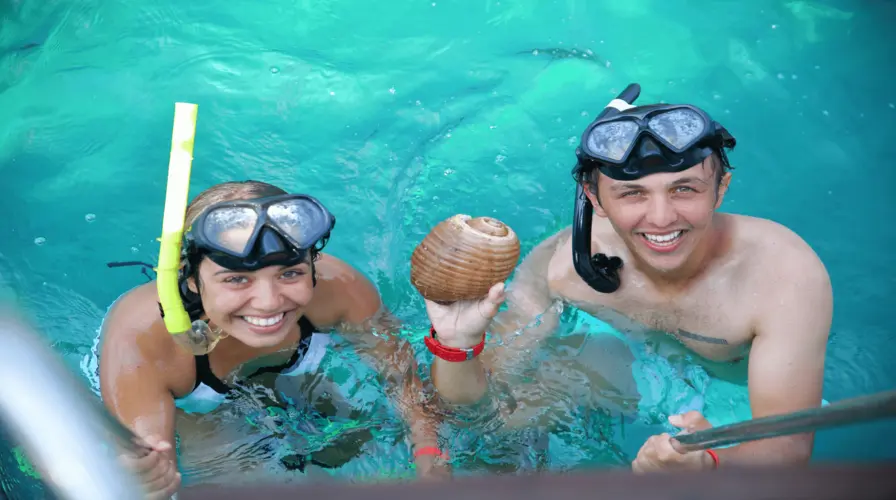
Late February through late April provides the calmest surface conditions and the highest possible underwater visibility. The lack of heavy rainfall means river runoff drops to zero. No muddy water spilling into the ocean means the coastal reefs remain incredibly clear. If spotting sea turtles and vibrant coral is on your bucket list, an Isla Catalina snorkeling tour during this exact window offers world-class visibility. For a wider range of reef options, review our guide to the best snorkeling spots in Punta Cana.

Whale Watching Season
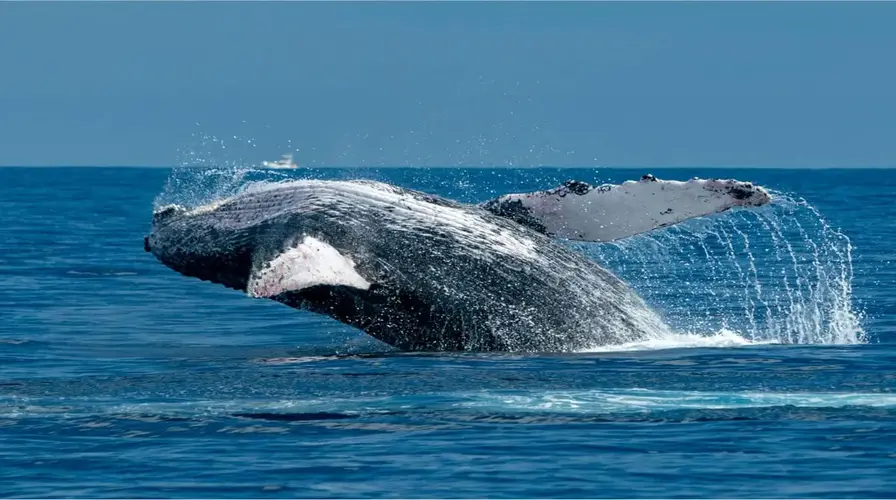
Thousands of North Atlantic humpback whales migrate down to the warm waters of the Dominican Republic strictly between mid-January and late March. If seeing a forty-ton mammal breach out of the water is a priority, you absolutely must travel during this tight 10-week window. Do not wait to book. Samaná whale watching excursions sell out incredibly fast during peak migration weeks.
Best Time for Catamaran & Party Boat Cruises
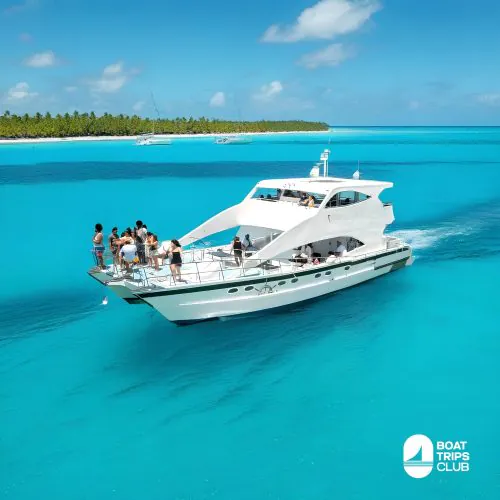
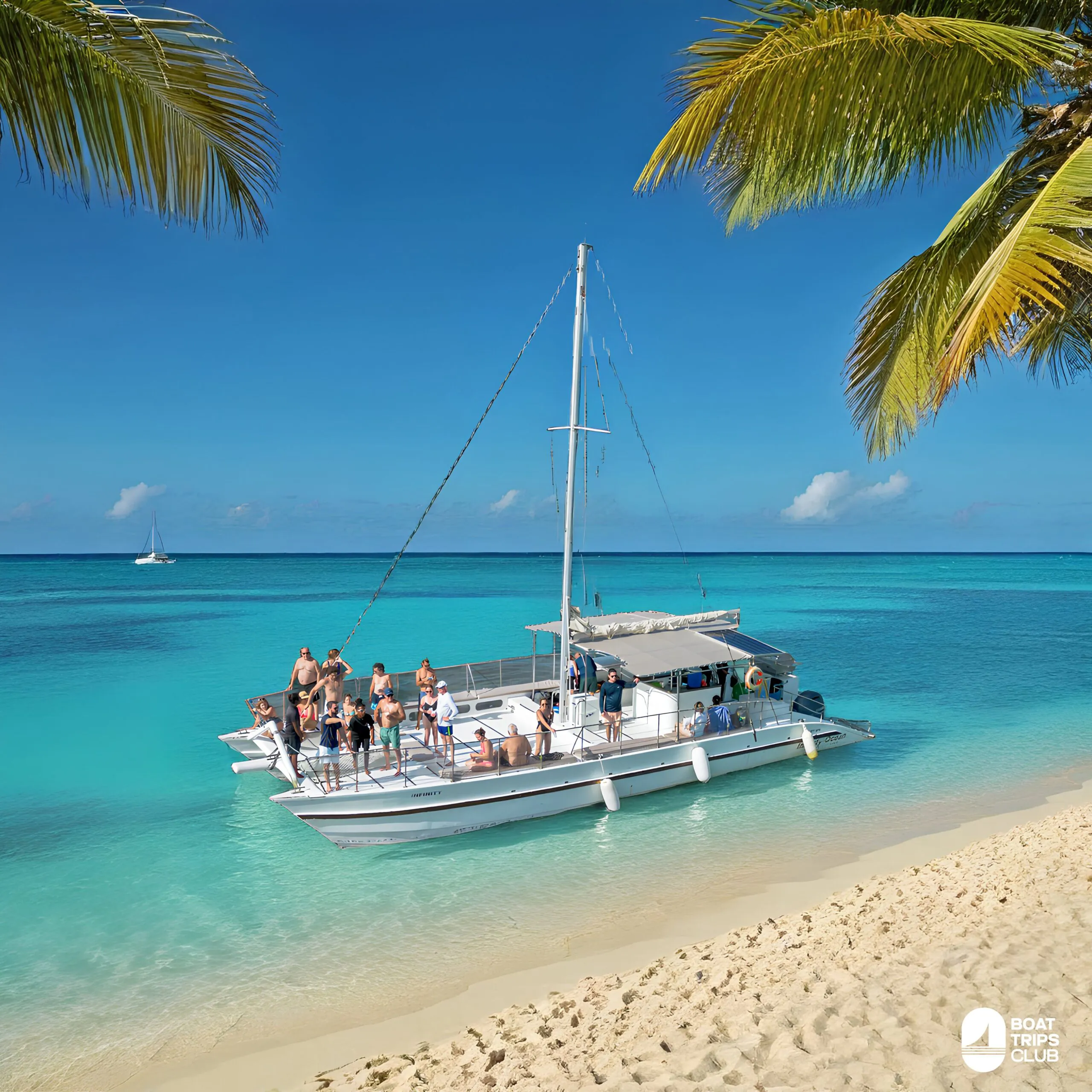
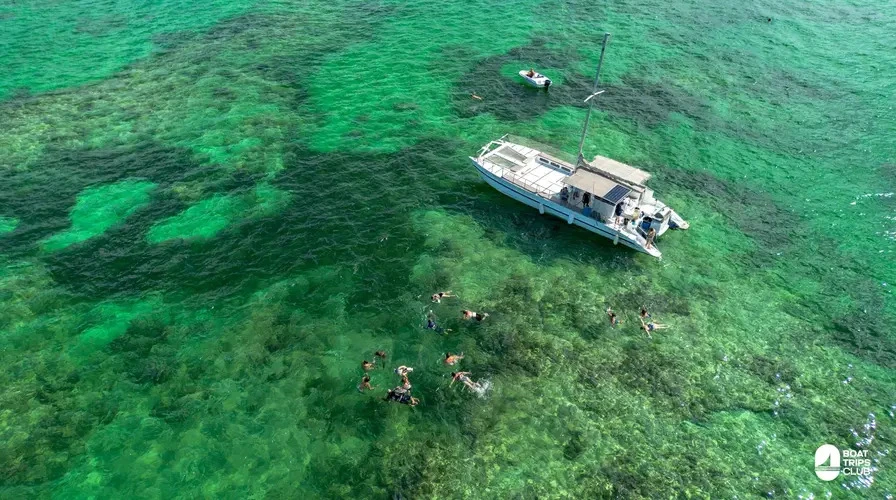
While the coastal waters are generally calm enough for boat parties year-round, late spring dominates. April and May offer the ultimate combination of warming water temperatures and glass-flat surface conditions. Whether you want a high-energy afternoon dancing on deck or a deeply relaxed sunset sail, reserving a private catamaran in Bavaro guarantees a highly customized experience tailored exactly to your group’s energy level.
Punta Cana Water Temperature Guide by Season
Knowing the exact water temperature helps you pack correctly. The Caribbean Sea never truly gets cold, but slight degree fluctuations matter if you plan on spending hours in the water snorkeling or diving.
| Season | Months | Average Water Temp (°F) | Average Water Temp (°C) | Best For |
| Peak Winter | Jan – Mar | 79°F – 81°F | 26°C – 27°C | Whale Watching, Kitesurfing |
| Spring | Apr – Jun | 81°F – 83°F | 27°C – 28°C | Snorkeling, Scuba Diving |
| Peak Summer | Jul – Sep | 84°F – 86°F | 29°C – 30°C | Party Boats, Swimming |
| Late Fall | Oct – Dec | 82°F – 84°F | 28°C – 29°C | Deep Sea Fishing, Catamarans |
Punta Cana Weather: Month-by-Month Breakdown (2027 Guide)
Weather in the tropics does not play by strict four-season rules. Instead, it cycles constantly through dry spells, intensely wet seasons, and awkward transitional periods.
January to April (Peak Season / Dry Season)
This right here is the golden window. Average daily temperatures sit perfectly around 82°F (28°C). Humidity drops to incredibly comfortable levels. Rain becomes incredibly scarce, usually just showing up as brief, 10-minute midnight showers that clear up before sunrise. Strong ocean breezes keep the evenings pleasantly cool, meaning you won’t sweat through your dinner clothes. Because these conditions are universally loved, this remains the most expensive and crowded time to visit.
May to August (Shoulder Season / Summer Warmth)
Once May hits, someone turns the oven on. The heat dials up aggressively. By the time July and August roll around, daily highs frequently crack 90°F (32°C), paired with a thick, heavy tropical humidity that hits you the second you walk out of your air-conditioned room. You will experience short, aggressive afternoon downpours that actually serve to cool the island off. This is the exact time of year when spending the day offshore on a boat with a constant sea breeze is infinitely better than baking on the static beach sand.
September to December (Hurricane Season & Winter Holidays)
Fall officially brings the highest risk of organized tropical storms. If you end up visiting Punta Cana in September, actively monitoring weather tracking from highly authoritative sources like the National Hurricane Center is non-negotiable. Direct, catastrophic hits on the eastern tip of the island happen rarely. But peripheral rain bands from storms passing out at sea can absolutely cause frustrating multi-day washouts. Fortunately, by mid-November, the storm threat fades. The humidity breaks, and spectacular dry season weather returns just in time to welcome the December holiday rush.
Pricing & Budget Breakdown by Season
The amount you spend on your vacation directly tracks with the weather patterns. Understand how this pricing matrix works, and you can easily save yourself a small fortune.
Peak Season Costs (December – April)
When the snow starts falling in North America, demand for Caribbean sand skyrockets. Flights hit their absolute maximum pricing ceilings. All-inclusive resorts charge aggressive premium rates. You can comfortably expect to pay anywhere from 40% to 60% more for the exact same hotel room compared to what you would pay in the fall. Budget flexibility here is practically non-existent. You pay to play.
Shoulder Season Deals (May – August)
Prices finally start softening in late spring. Resorts intentionally run “kids stay free” promotions throughout July to bait families into booking. You actually get phenomenal value for your money during these summer months. You successfully balance highly manageable costs with decent, albeit hotter, weather.
Off-Season Discounts (September – November)
Welcome to the bargain hunter’s paradise. To actively counter the massive drop-off in hurricane season tourism, hotels slash their standard rates into the floor. Airfare drops heavily. Moreover, finding affordable shared boat excursions becomes incredibly easy. You maximize your entertainment budget while enjoying the exact same island at a mere fraction of the winter cost.
Crowd Levels & Resort Vibe Throughout the Year
Your actual day-to-day vacation atmosphere hinges entirely on resort occupancy rates.
Busiest Months (High Occupancy)
March completely maxes out the island’s logistical capacity. Between thousands of college spring breakers and huge families escaping winter, the energy feels electric and chaotic. Swim-up bars get packed shoulder-to-shoulder. The nightlife stays loud until 3:00 AM, and the resort entertainment teams operate at full throttle. Be prepared to wait in a long line for your morning coffee and fight early risers just to claim a decent poolside lounger.
Quietest Months (Low Occupancy)
October feels like a ghost town by comparison. All that chaotic, high-volume energy vanishes entirely, leaving behind a profoundly relaxing atmosphere. Want to read a book in total silence under a palm tree? Want the lobby bartender to memorize your specific drink order by day two? This is your window.
Special Events, Festivals, & Holidays to Consider
Massive local celebrations heavily impact your travel logistics, road traffic, and your ability to access certain ocean excursions.
Major Dominican Republic Festivals
Dominican Independence Day always lands on February 27th. This sparks massive nationwide celebrations, incredibly loud street parades in all the major towns, and a huge surge in domestic local tourism. The other heavy hitter is Semana Santa (Easter week). During this massive religious holiday, the government heavily restricts all motorized water sports to ensure the safety of the massive local crowds flocking to the public beaches.
Spring Break & Holiday Crowds to Watch Out For
Want a quiet, highly sophisticated trip? Avoid the first three weeks of March like the plague. College students completely flood the eastern region. However, if you are actively hunting for that high-energy, nonstop party atmosphere, booking a room at one of the top Punta Cana spring break resorts drops you right into the absolute center of the action. Also, keep in mind that Christmas and New Year’s week remain incredibly busy and aggressively priced across every single property.
How Far in Advance Should You Book for 2027?
Procrastination destroys Caribbean vacation plans. High-quality inventory moves incredibly fast.
Booking Flights & All-Inclusive Resorts
For any peak season travel (January right through April), lock in your resort and your flights at least four to six months out. Prices rarely drop as the date approaches. They only climb higher. Furthermore, secure your ground logistics early. Pre-booking highly reliable Punta Cana airport transfers weeks before you actually arrive ensures you skip the chaotic, disorganized taxi lines sweating outside the terminal.
Securing Your Boat Trips & Excursions Early
Never wait until you arrive at the hotel lobby to start booking ocean activities. Hotel reps notoriously push heavily overpriced, incredibly crowded “cattle-marans.” High-end private boat tours in Punta Cana sell out weeks in advance, particularly on weekends and major holidays. Take total control of your itinerary early by actively planning your Punta Cana itinerary right from your couch at home.
Final Verdict: When Should You Plan Your Punta Cana Vacation?
Ultimately, late April brings the absolute best balance of spectacular dry weather, beautifully warm ocean temperatures, and rapidly softening shoulder-season prices. But realistically, there is no genuinely bad time to visit this island as long as you understand exactly what to expect and plan your days accordingly.
The undisputed key to a flawless trip is getting off the resort property and out onto the open water. Whether you are actively hunting for massive game fish or simply seeking a secluded, quiet sandbar to drink a rum punch, our modern fleet is ready to go. Browse our extensive options, book your deep sea fishing in Punta Cana, or reserve a luxury catamaran today to guarantee your spot out in paradise.
Frequently Asked Questions (FAQs) About Visiting Punta Cana
Is Punta Cana safe during hurricane season?
Yes, absolutely. The major resorts are structurally built to withstand severe weather, and direct, catastrophic hits remain historically rare. Review these expert hurricane safety tips for Punta Cana and always double-check official travel advisories before you fly. Buying comprehensive travel insurance is a must.
What is the rainiest month in Punta Cana?
September consistently records the highest historical rainfall on the island. Expect very heavy, intense afternoon downpours that usually clear out completely within an hour. The intense high humidity makes the rain feel heavier, but multi-day total washouts remain relatively uncommon unless a named tropical system passes nearby.
How many days in Punta Cana is enough?
Five to seven full days is the perfect duration. This layout gives you two dedicated days for epic ocean excursions, one full day for off-resort cultural exploration, and plenty of uninterrupted, quiet time to relax on the beach without feeling rushed.
Are boat trips operating all year round?
Yes, commercial boat trips operate 365 days a year, weather permitting. The Dominican navy strictly regulates all maritime departures. They will temporarily halt ocean operations only if specific wind speeds or wave heights pose a genuine safety risk to passengers and crew.