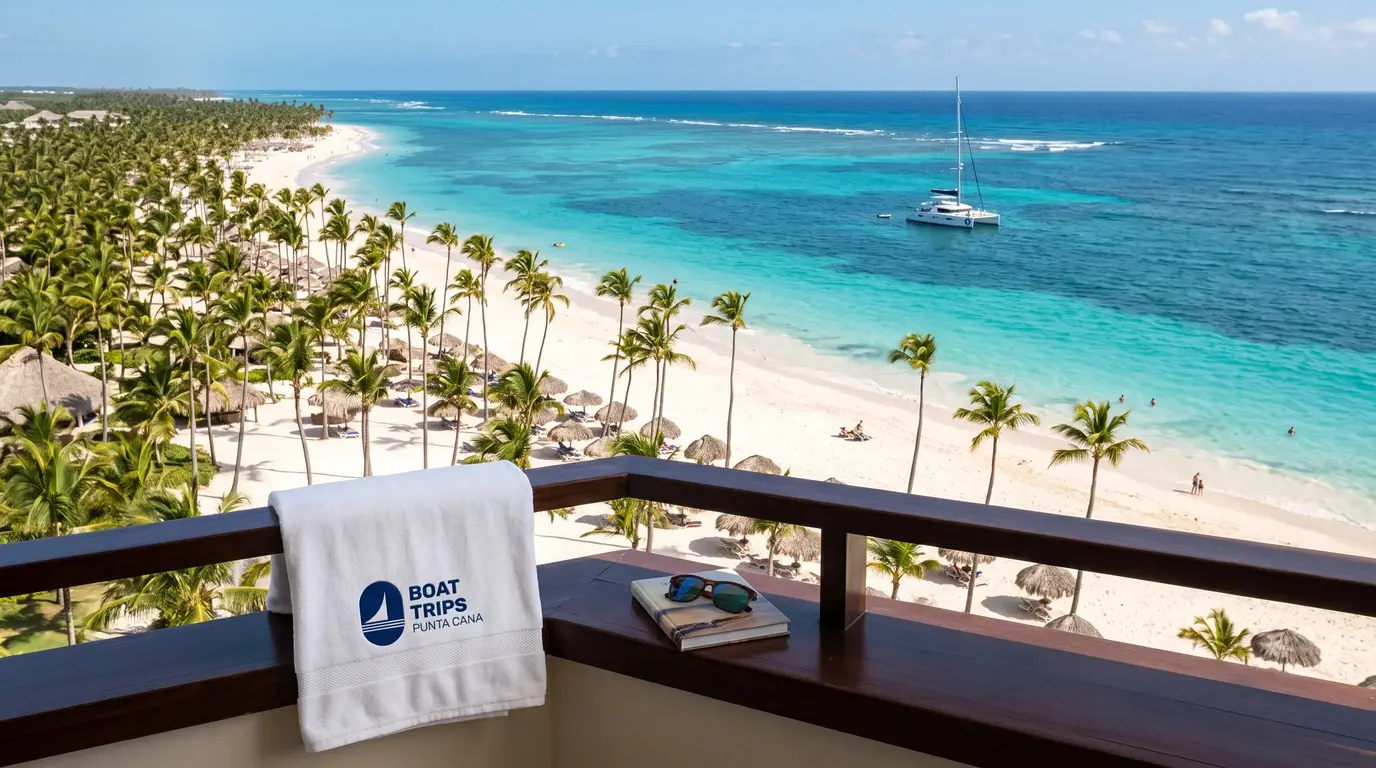
You feel it the second you step out of Punta Cana International Airport. That warm, salt-laced Caribbean breeze hits your face, the palm trees sway against a hyper-blue sky, and your vacation clock officially resets to island time. But let’s be honest about something right out of the gate. Too many travelers spend thousands of dollars flying to the Dominican Republic only to trap themselves behind the concrete walls of an all-inclusive resort for seven days straight. They stare at the ocean from a crowded pool chair and call it a beach vacation.
We see it every single week from the helm of our charters. The real magic of this coastline doesn’t live inside a buffet line or a paved hotel courtyard. It lives out on the water. Whether you’re chasing yellowfin tuna offshore, dropping anchor in a waist-deep natural swimming pool, or watching the sky turn purple from the deck of a catamaran, experiencing this island from the ocean is mandatory. If you want to experience the best boat trips Punta Cana has to offer, you need to know how to plan your days like a local.
We built this guide from thousands of hours spent navigating the Bavaro coastline, handling weather swells, and helping travelers avoid the classic tourist traps. Here is your ground-level, no-nonsense guide to conquering Punta Cana in 2026.
Essential 2026 Entry Requirements & Airport Arrival Hacks
What documents do I need to enter Punta Cana? You need a valid passport with at least six months of validity remaining, a round-trip or onward flight ticket, and a completed digital Dominican Republic E-Ticket. Visas are not required for citizens of the United States, Canada, the United Kingdom, or the European Union staying for under 30 days.
Navigating the Mandatory Dominican Republic E-Ticket
Let’s save you $80 and a massive headache right now. Before you even pack your bags, you must fill out the official e ticket for Dominican Republic customs and immigration. This is a 100% digital form that combines your arrival card, departure card, and customs declaration into a single barcode.
Here is the most important rule of your entire trip: The E-Ticket is completely free.
Every week, we meet charter guests who panicked at the airport and paid third-party scam websites $50 to $100 per person to process this form for them. Do not fall for those sponsored search ads. You should only ever use the official Dominican Republic Government E-Ticket portal to generate your QR code.
- When to fill it out: You can complete the form up to 72 hours before your flight departs. Do it at home on your desktop computer—trying to type passport numbers into a phone on hotel WiFi while standing in a customs line is a recipe for frustration.
- What you need: Your passport details, flight number, resort address, and a basic customs declaration.
- The QR Code: Once submitted, the system generates a QR code. Take a screenshot of it immediately. Do not rely on your email inbox loading inside the arrival terminal. You will need to scan this exact code at immigration upon arrival and again when you depart.
PUJ Airport Logistics: Customs, VIP Fast-Track, and Avoiding Lobby Touts
Punta Cana International Airport (PUJ) is one of the busiest, most energetic airports in the Caribbean. Its iconic thatched-roof terminals are beautiful, but navigating the arrival flow requires a game plan.
Once you clear immigration and grab your bags off the carousel, you will walk through the final customs check and step out into what locals call the “shark tank.” This is the exit hallway lined with time-share sellers, aggressive baggage handlers, and unofficial transport touts holding generic signs. They will step into your path, ask which resort you’re going to, and offer to “help you find your driver.”
Keep walking. Keep your eyes up, offer a polite “No, gracias,” and walk straight outside to the open-air ground transportation zone.
If you booked private airport transportation (which we strongly recommend over shared shuttle buses that make ten resort stops), your driver will be waiting in the numbered outdoor bays holding a sign with your name or your transport company’s logo. If you hate waiting in lines, look into booking the PUJ VIP Arrival Service before your trip. This service meets you directly at the plane boarding bridge, fast-tracks you through a private immigration line, grabs your checked bags, and escorts you straight to your vehicle in under twenty minutes. It is worth every single penny during peak holiday travel weekends.
Punta Cana Weather by Month: When is the Best Time to Visit?
What is the best month to visit Punta Cana for good weather and boating? April and May are the best months to visit Punta Cana for calm ocean conditions, warm weather, and minimal crowds. November through March offers cooler, dry weather but stronger trade winds, while June through October brings warmer water and occasional tropical showers.
Understanding Trade Winds, Hurricane Season & Tropical Tides
You can’t talk about Caribbean marine travel without talking about the wind. Punta Cana sits on the easternmost tip of the island of Hispaniola, right where the Atlantic Ocean meets the Caribbean Sea. This geographic position means we get consistent, refreshing trade winds blowing in from the east and northeast almost year-round.
From a skipper’s perspective, the wind dictates everything. During the winter months (December through February), the Christmas winds kick up. This keeps air temperatures comfortable and humidity low, but it also builds larger ocean swells out on the Bavaro reef. If you’re prone to seasickness, you want to book your ocean excursions during the shoulder months of April, May, or November when the wind drops and the surface turns to glass.
Wondering why your boat captain always wants to leave the dock at 8:30 AM sharp? Simple: thermal heating. The ocean is almost always dead calm in the early morning. By 1:00 PM, the sun heats up the land, drawing the cool ocean air inward and kicking up afternoon surface chop. Morning charters give you the clearest water for snorkeling and the smoothest ride.
What about hurricane season? Officially, it runs from June 1st to November 30th. However, direct hits on the eastern tip of the Dominican Republic are statistically rare compared to other Caribbean basins. If you travel during August or September, just ensure you have travel insurance and keep an eye on NOAA National Hurricane Center tracking a few days before your departure. Most summer rain in Punta Cana arrives in heavy, 20-minute downpours before the sun blazes right back out. For a deep dive into historical weather patterns and month-by-month breakdowns, read our dedicated analysis on the best time to visit Punta Cana.
The 2026 Seasonality & Ocean Condition Matrix
To help you choose the exact right month for your itinerary, we compiled our ground-level marine logs into this quick-reference seasonal matrix:
| Month | Avg. Air Temp (°F / °C) | Rainfall & Wind Profile | Sargassum Seaweed Risk | Recommended Ocean Activities |
| January | 83°F / 28°C | Dry; Moderate to High Winds | Low | Deep Sea Fishing (Mahi-Mahi), Whale Watching |
| February | 83°F / 28°C | Dry; Breezy Trade Winds | Low | Kite Surfing, Catamaran Sailing, Whale Watching |
| March | 84°F / 29°C | Dry; Winds Start to Drop | Low to Moderate | Reef Snorkeling, Island Hopping |
| April | 85°F / 29°C | Very Low Rain; Calm Seas | Moderate | Private Yacht Charters, Coral Wall Diving |
| May | 86°F / 30°C | Occasional Short Showers; Glassy | Moderate | Sunset Cruises, Family Snorkeling Trips |
| June | 88°F / 31°C | Warm; Humid; Calm Winds | Moderate to High | Saona Island Escapes, Sport Fishing (Marlin) |
| July | 89°F / 32°C | Summer Sun; Afternoon Brief Showers | High | Catalina Island Diving, Sandbar Swimming |
| August | 89°F / 32°C | Peak Heat; Tropical Wave Risk | High | Early Morning Charters, Deep Sea Trolling |
| September | 89°F / 32°C | Peak Hurricane Season; Low Wind | Moderate to High | Glass-Bottom Snorkeling, Private Cruises |
| October | 88°F / 31°C | Rainy Season Peak; Humid | Moderate | Offshore Fishing (Wahoo/Tuna), Day Charters |
| November | 86°F / 30°C | Rain Drops Off; Water Extremely Warm | Low to Moderate | Catamaran Sailing, Reef Exploring |
| December | 84°F / 29°C | Dry; Holiday Winds Return | Low | Holiday Party Charters, Sunset Sailing |
Where to Stay in Punta Cana: Decoding the Best Coastlines & Resort Zones
Which part of Punta Cana has the calmest beaches? Cap Cana and the southern end of Bavaro Beach offer the calmest waters in Punta Cana due to natural offshore coral reefs that act as wave breakwaters. Uvero Alto and Macao Beach experience stronger Atlantic swells and larger waves, making them better for surfing than swimming.
Bavaro Beach vs. Cap Cana vs. Uvero Alto
Punta Cana is not just one long beach; it is a massive 30-mile stretch of coastline divided into distinct neighborhoods, each with its own ocean personality. Where you book your room dictates what kind of water you will be staring at every morning. Use our map of Punta Cana resorts to get your bearings before locking in a hotel.
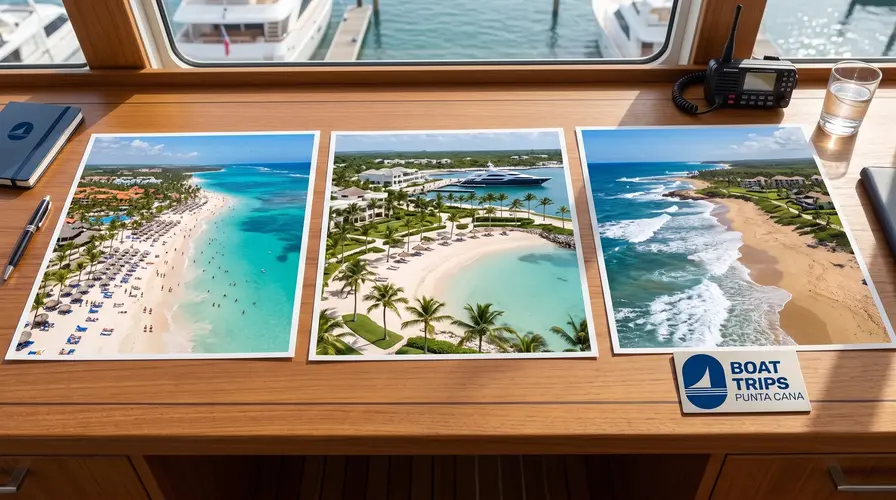
- Bavaro Beach: This is the absolute beating heart of Punta Cana. The water here is protected by a massive offshore barrier reef that runs parallel to the sand. That reef strips the energy out of incoming Atlantic waves, leaving the shoreline calm, turquoise, and swimmable almost every day of the year. Bavaro is where you will find the highest density of resorts, beach bars, and water sports operators. It is lively, energetic, and perfectly suited for travelers who want action right outside their lobby.
- Cap Cana: Located just ten minutes south of the airport, Cap Cana is an exclusive, gated luxury enclave. The vibes here are quiet, manicured, and upscale. It features world-class golf courses, a stunning state-of-the-art marina where our luxury yachts dock, and Juanillo Beach—a sugar-sand cove with powder-white sand and zero wave action. If you want high-end tranquility away from the spring break crowds, this is your zone.
- Uvero Alto: Situate far to the north, Uvero Alto feels wilder and more secluded. Because the offshore barrier reef ends before reaching this zone, the beaches here face the open Atlantic Ocean. You will get golden sand, dramatic waves, and a much quieter resort atmosphere. However, if you have young kids who want to swim in calm ocean water, Uvero Alto’s surf can sometimes be too rough for casual swimming. To find the exact right fit for your budget and travel style, check out our guide on the best area to stay in Punta Cana.
Choosing the Right All-Inclusive Resort for Your Vibe
Booking an all-inclusive resort isn’t just about picking a star rating; it’s about matching the property’s energy to your group. A couples’ retreat ruined by a screaming poolside belly-flop contest is just as miserable as a family vacation spent at a hushed, ultra-romantic boutique hotel where kids aren’t allowed to splash.
If you are traveling with children, you need properties with dedicated water parks, teen clubs, and calm, shallow beach access. Look into mega-resorts where the logistics are handled for you, and consult our curated list of Punta Cana all-inclusive family resorts to ensure you pick a property with verified safety records and top-tier kid zones. For adults looking to let loose, prioritize resorts along the Bavaro strip that feature 24-hour beach clubs, live DJ sets, and swim-up bars that keep the energy moving from noon until midnight.
Top Punta Cana Excursions: Why Ocean Adventures Beat Land Tours Every Time
What are the absolute best boat excursions in Punta Cana? The best boat excursions in Punta Cana include private catamaran charters to Saona Island, deep-sea sport fishing for mahi-mahi and marlin, sunset cruises along the Bavaro coastline, and snorkeling tours at Catalina Island. Private charters offer customized itineraries and escape the crowded public party boats.
Private Yacht Charters & Island Hopping (Saona & Catalina)
Let’s talk about the elephant in the room: public party boats. You’ve seen the photos online—ninety tourists packed onto the deck of a aging catamaran, elbow-to-elbow, fighting for a lukewarm cup of rum punch while a loudspeaker blasts reggaeton at deafening volumes. If that is your idea of fun, go for it. But if you came to the Caribbean to actually relax, connect with your group, and experience raw natural beauty, you need to upgrade your thinking.
Booking a private vessel is the single best investment you can make on your vacation. When you hire a private yacht or catamaran, the ocean becomes your personal playground. You dictate the schedule, the playlist, the food, and the destination. Want to spend two extra hours floating at a quiet sandbar before the tour buses arrive? Done. Want to serve premium rum and fresh ceviche instead of budget chips? We make it happen. You can easily customize Punta Cana catamaran tours to fit family reunions, bachelorette trips, or intimate corporate retreats without ever dealing with strangers invading your space.
When it comes to island hopping, two destinations reign supreme:
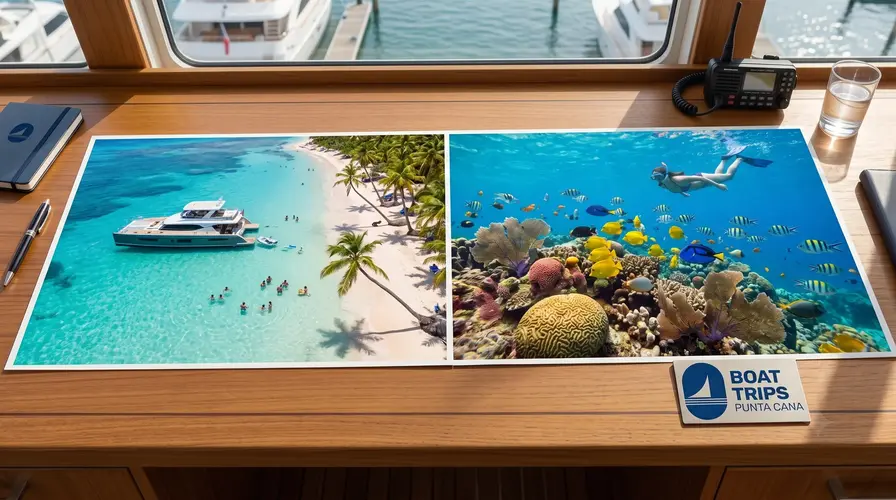
- Saona Island (Isla Saona): Located inside the protected Cotubanamá National Park on the southeastern tip of the island, Saona is the quintessential Caribbean postcard. Think leaning coconut palms, neon-turquoise water, and zero permanent hotels or construction. While thousands of tourists visit daily on crowded group tours, taking a private yacht to Saona Island allows us to launch early, bypass the crowded public beaches, and anchor at secluded palm-fringed coves where your group can enjoy a private beachfront lunch in peace. If a private yacht isn’t in the budget, you can still experience this incredible island by booking a well-managed, high-end shared Saona Island catamaran tour that strictly caps passenger numbers to ensure room to breathe. Want to know what makes this island so special? Read our comprehensive breakdown of Saona Island catamaran tours.
- Catalina Island (Isla Catalina): If your primary goal is underwater marine life, Catalina is your target. Situate further west near La Romana, this uninhabited coral rock island sits right on the edge of a dramatic marine trench known as “The Wall.” The snorkeling and scuba diving here are world-class, featuring vibrant sea fans, brain corals, and massive schools of tropical fish that blow Bavaro’s near-shore snorkeling out of the water.
Reef Snorkeling, Sunset Cruises, and Sport Fishing
You don’t need to dedicate an entire day to island hopping to get incredible ocean action. Some of our most popular charters happen right off the Bavaro coastline in four to six-hour bursts.
For travelers who want to experience the golden hour the way it was meant to be seen, nothing compares to a private sunset cruise Punta Cana tour. We push off the dock late in the afternoon as the intense midday heat begins to fade. We sail smoothly along the reef, stop at a quiet natural swimming pool—a sandbar where the water is waist-deep and crystal clear—and break out the floating bars. As the sun drops behind the island’s interior mountain ranges, the sky turns explosive shades of pink, orange, and deep violet. There is no better setting for a romantic toast or a celebratory family photo.
If adrenaline is more your speed, the offshore waters here are legendary among global anglers. Because the ocean floor drops off rapidly just a few miles from the coastline, you don’t need to waste three hours motoring out to deep water to find big fish. When you book a professional deep sea fishing Punta Cana tour, our captains will have your lines trolling in blue water within fifteen minutes of clearing the harbor jetty. Depending on the season, you’ll be fighting acrobatic Mahi-Mahi (Dorado), high-speed Wahoo, yellowfin tuna, and even trophy Blue and White Marlin. Whether you’re an experienced fisherman looking for a bucket-list catch or a parent wanting to show your kids the thrill of offshore trolling, our top-tier gear and local crew handle all the heavy lifting. Looking for even more ways to fill your vacation days? Browse our master guide of the best things to do in Punta Cana.
Navigating Local Culture, Safety & Daily Practicalities
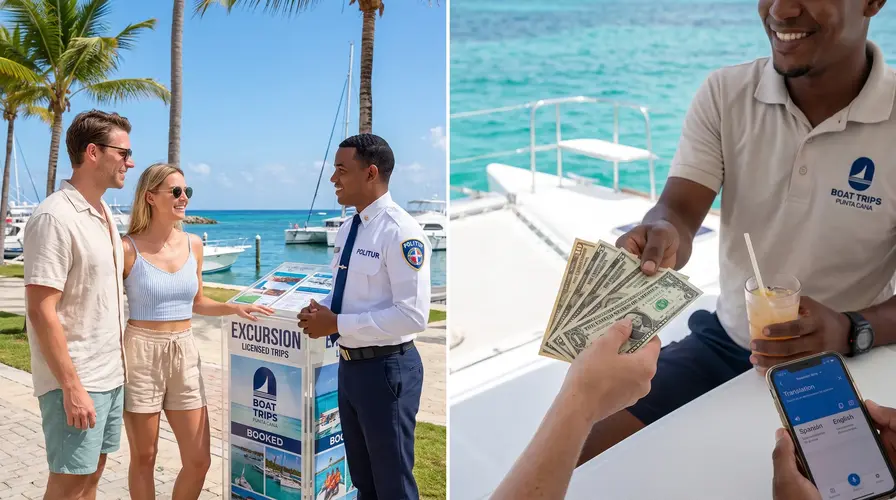
Is it safe to leave the resort in Punta Cana? Yes, Punta Cana is safe for tourists exploring outside their resorts, especially when booking excursions through licensed operators. The region relies heavily on tourism and maintains dedicated tourist police (POLITUR). Use pre-arranged transportation and avoid buying unlicensed tours from beach vendors.
Safety Outside the Resort & Smart Excursion Booking
Let’s address the safety myth directly. Can you leave your resort? Yes. Absolutely.
The Punta Cana tourist zone is one of the safest travel corridors in the entire Caribbean. The Dominican Republic understands that tourism is the lifeblood of its economy, which is why they deployed a specialized branch of law enforcement known as POLITUR (Tourist Police). These officers are stationed on beaches, near hotel zones, and around major shopping centers specifically to protect and assist international visitors. You should feel completely confident leaving your hotel to visit local restaurants, marinas, and adventure parks. For a detailed breakdown of regional crime stats and safety advice, check out our report: is Punta Cana safe to visit.
However, being safe doesn’t mean leaving your common sense at home. The number one trap tourists fall into is booking excursions through unlicensed beach vendors. You will see them walking up and down the public beach access points holding laminated photo binders, offering boat tours at prices that seem too good to be true.
Here is the dark reality of those discount beach bookings:
- Zero Insurance: Unlicensed operators do not carry liability insurance or passenger indemnity coverage. If someone gets hurt, you are completely on your own.
- Poor Maintenance: Their boats often skip mandatory safety inspections, carry expired fire extinguishers, and lack proper life jackets for children.
- Bait and Switch: You pay for a “luxury catamaran with top-shelf rum” and end up crammed onto a rusting speedboat with warm beer.
Always book your ocean activities directly through established, professional maritime companies that operate out of official marinas, maintain transparent online reviews, and provide written booking confirmations.
Currency, Tipping Rules & Communication Essentials
When it comes to money, keep it simple. While the official national currency is the Dominican Peso (DOP), the US Dollar (USD) is universally accepted everywhere in the Punta Cana tourist zone. You do not need to waste time or lose money on exchange rates at the airport currency booths. Bring crisp, clean US bills—local merchants and banks will often reject torn, taped, or heavily worn currency. Major credit cards are accepted at all established restaurants, resorts, and tour operators, but cash is king for small purchases, beach souvenirs, and tipping.
Speaking of tipping: how does it work out on the water? In the Dominican Republic, hospitality workers rely heavily on gratuities to supplement their income. If you book a private boat charter and your captain, mate, and bartender deliver an incredible, safe day on the water, tipping the crew is standard practice. A good rule of thumb is 10% to 15% of the total charter cost, handed directly to the captain at the end of the trip to be split among the crew. If you’re on a shared group tour, handing $10 to $20 to your deckhand or bartender ensures amazing service all afternoon.
What about communication? While Spanish is the official language, you will have zero trouble getting around speaking only English. Nearly all resort staff, tour guides, drivers, and marina captains are fluent in tourism English. However, learning a few basic Spanish phrases like “Buenos días” (Good morning), “Por favor” (Please), and “Gracias” (Thank you) goes a long way in showing respect to the locals, who will greet your efforts with massive smiles. Curious about regional dialects and local slang? Learn more about what language is spoken in Punta Cana. Also, if you plan on enjoying the island’s famous rum cocktails, be sure to familiarize yourself with the local rules regarding the drinking age in Punta Cana.
Your Ultimate Punta Cana Vacation Preparation Checklist
What to Pack for a Caribbean Ocean Getaway
Packing for a beach vacation seems idiot-proof until you’re out on the ocean realizing you forgot the critical gear that separates a comfortable day from a painful sunburn. Do not rely on resort gift shops to buy your essentials—they routinely mark up basic items like sunscreen and aspirin by 300%. Use this skipper-approved essentials list:
- Reef-Safe Sunscreen: This is non-negotiable. Traditional sunscreens containing oxybenzone and octinoxate actively bleach and kill the delicate coral reefs along the Bavaro coastline. Pack mineral-based sunscreens utilizing zinc oxide or titanium dioxide. Apply it thirty minutes before you get on the boat so it absorbs into your skin rather than washing straight off into the water.
- Polarized Sunglasses: Standard dark lenses aren’t enough on the ocean. Polarized lenses cut the intense surface glare off the water, allowing you to see through the surface to spot shallow reef heads, sea turtles, and tracking Mahi-Mahi during fishing charters.
- A Quality Dry Bag: Keep your phones, passports, and cameras safe from salt spray and sudden tropical showers. A simple 10-liter roll-top dry bag is essential for boat excursions and dinghy transfers to beach restaurants.
- UV Rash Guard or Long-Sleeve Sun Shirt: When you’re snorkeling face-down on the reef for an hour, your back is completely exposed to equatorial UV rays. A lightweight, UPF 50+ sun shirt will save your vacation.
- Motion Sickness Prep: Even on calm days, the ocean swells can catch sensitive stomachs off guard. If you get seasick, take non-drowsy Dramamine or apply a scopolamine patch two hours before you board the boat. Once you feel sick on the water, taking medicine won’t help you.
For a complete, comprehensive checklist that covers everything from evening dress codes to electrical adapters, save our ultimate Punta Cana packing list. And if you’re bringing the little ones along, don’t miss our specialized guide on things to do in Punta Cana with kids to ensure you pack the right gear for family comfort.
Getting Around: Taxis, Ubers, and Excursion Pickups
Transportation in Punta Cana has improved dramatically over the last few years, but you need to know how the resort security gates operate. Every major all-inclusive resort sits behind a heavily guarded security checkpoint. Random taxis and ride-share vehicles are not allowed to simply drive up to your lobby whenever they feel like it.
- Excursion Pickups: When you book a boat charter or tour with us, we handle your transportation. However, you must provide us with your exact resort name, your room number, and the name your reservation is booked under. Security guards require this information to verify your booking before allowing our transport vans through the gate. Always wait for your driver at the main lobby entrance at least ten minutes before your scheduled pickup time.
- Taxis vs. Uber: Taxis are readily available at every hotel lobby, but they do not use meters. You must ask the driver for the price and agree on a fixed fare before you get into the vehicle. Uber operates in the Punta Cana zone and is generally much cheaper than lobby taxis, but resort security will often force Uber drivers to pick you up at the outer security gate rather than the main lobby door. Ask your hotel concierge what their specific Uber policy is before ordering a ride.
Conclusion: Setting Sail on Your Dominican Adventure
Punta Cana is one of the most vibrant, accessible, and stunning destinations on the planet, but how you choose to spend your days will define your memories. You can spend your week fighting for a shady spot around a crowded hotel swimming pool, or you can step off the beaten path, feel the deck of a catamaran moving beneath your feet, and see the Dominican Republic the way it was meant to be seen.
From the quiet, palm-fringed coves of Saona Island to the adrenaline rush of a marlin striking your trolling line offshore, the ocean is waiting. Don’t leave your vacation to chance, and don’t settle for generic public tours that treat you like a number.
Gather your group, pick your dates, and let our expert crew show you true Caribbean hospitality. Reach out to the team at Boat Trips Punta Cana today to lock in your private charter, and let’s start mapping out your unforgettable 2026 itinerary on the water.
Frequently Asked Questions About Visiting Punta Cana in 2026
Do I need to bring cash to Punta Cana, or can I use my credit card everywhere?
You should bring both. Major credit cards (Visa and Mastercard; American Express is less widely accepted) are used at resorts, established restaurants, and professional booking offices. However, you will need physical cash—preferably small US Dollar bills ($1, $5, and $10 denomination)—for tipping boat captains, tour drivers, resort bartenders, and buying local crafts at beach markets where card machines are non-existent or unreliable.
What happens to my boat charter if it rains during my vacation?
In the tropical Caribbean, weather forecasts almost always predict “scattered showers” every single day. Do not let this scare you! Tropical rain usually falls in isolated, fast-moving 15-minute clouds before the sun shines brightly again. We do not cancel charters for light rain or passing showers. However, safety is our absolute priority. If our captains or local port authorities detect unsafe marine conditions—such as high wind gales, lightning storms, or dangerous swells—we will proactively reach out to reschedule your charter for a better day or issue a full refund according to our weather policy.
How bad is the sargassum seaweed in Punta Cana for 2026?
Sargassum is a naturally occurring floating brown seaweed that affects the entire Caribbean basin, usually peaking between May and August. The volume changes daily based on wind direction and ocean currents. The good news? The Bavaro hotel zone has installed massive offshore sargassum barriers to keep swimming areas clear, and resorts deploy tractor crews every morning to clean the sand. Best of all, if the beach in front of your resort is experiencing an influx, booking a boat charter allows you to completely escape it. We sail straight past the coastal seaweed lines out to pristine sandbars, deep offshore waters, and islands like Catalina where seaweed accumulation is minimal.
Can I drink the tap water at my resort in Punta Cana?
No. You should never drink tap water in the Dominican Republic, even at five-star luxury resorts. The local water filtration systems are not designed for international digestive systems. Resorts provide complimentary bottled water in your room daily—use this for drinking, making coffee, and brushing your teeth. All ice served at established resorts, bars, and on our charter boats is commercially manufactured from purified, filtered water and is 100% safe to consume.