Have you ever stared out at the turquoise waves crashing against the Dominican shoreline and wondered exactly what you were looking at? People ask us on our boat charters all the time, “what does Punta Cana mean?” The truth is far more interesting than a simple dictionary translation. It involves a massive corporate rebrand, a very specific type of palm tree, and a wild stretch of coastline that originally translated to “Drunkard’s Point.”
Punta Cana translates directly to “Tip of the White Cane Palms.” The word “Punta” refers to the geographic point or tip of the island’s eastern landmass. “Cana” refers specifically to the Sabal causiarum palm tree, a native species that grows heavily along the Dominican Republic’s eastern coastline.
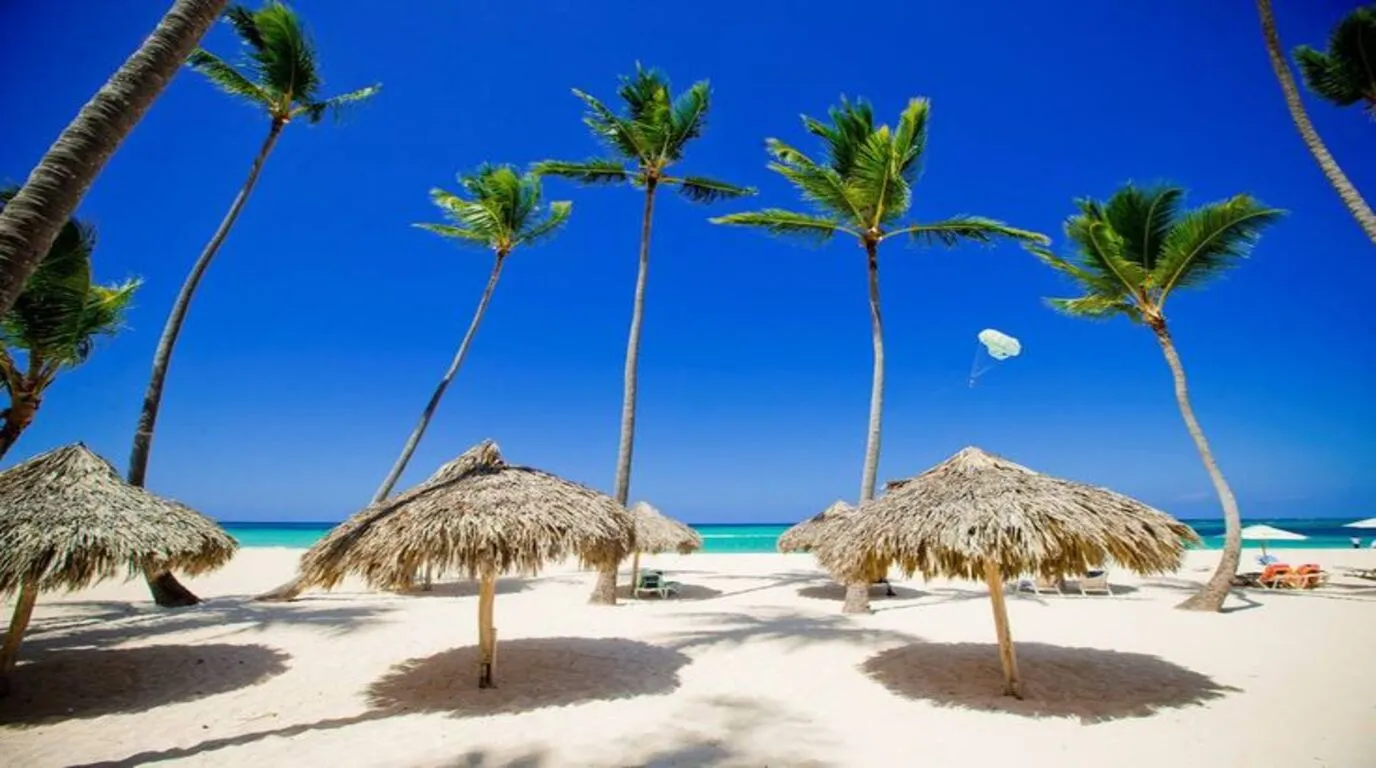
If you are out on the water with Boat Trips Punta Cana, you’ll see these exact palm trees lining the miles of white sand beaches, surviving the salt spray and heavy ocean winds just like they have for centuries.
The Exact Translation: What “Punta Cana” Actually Means
Let’s break down the literal Spanish translation. “Punta” simply means point or tip. Look at a map of the Dominican Republic. You’ll notice the easternmost edge forms a distinct, sharp geographic point jutting out directly into the Mona Passage, where the Atlantic Ocean violently meets the Caribbean Sea.
“Cana” is where the story gets deeply specific. It isn’t just a generic Spanish word for a palm tree. It refers exclusively to the Sabal causiarum, an indigenous species known regionally as the white cane palm or the Puerto Rican hat palm.
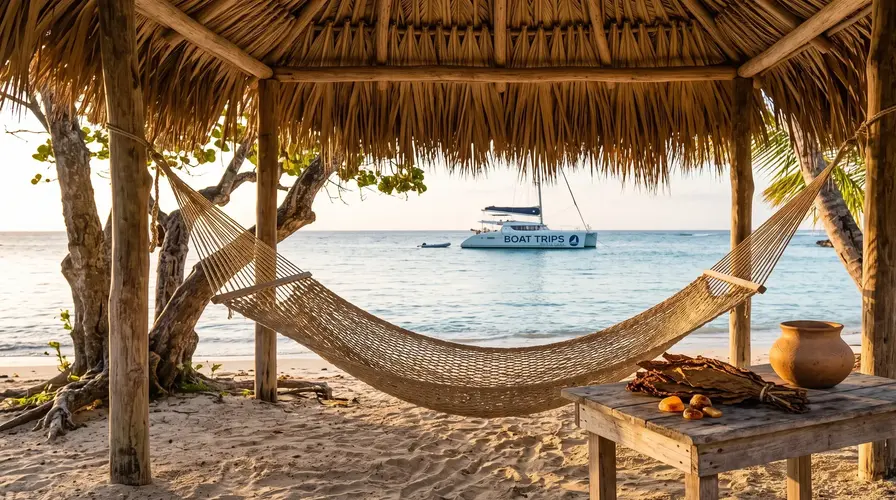
When you are planning a trip to Punta Cana, you imagine endless stretches of lush, swaying palm fronds. Those are the Cana palms. For generations, locals harvested these thick, incredibly durable leaves to construct traditional thatched roofs, known as “palapas.” The trees are practically waterproof. If you want the strict botanical breakdown of how this species survives in deep coastal sand, you can check the National Tropical Botanical Garden’s plant profile. They document exactly how this massive root system prevents beach erosion.
The Significance of the “Cana” Palm Tree in the Dominican Republic
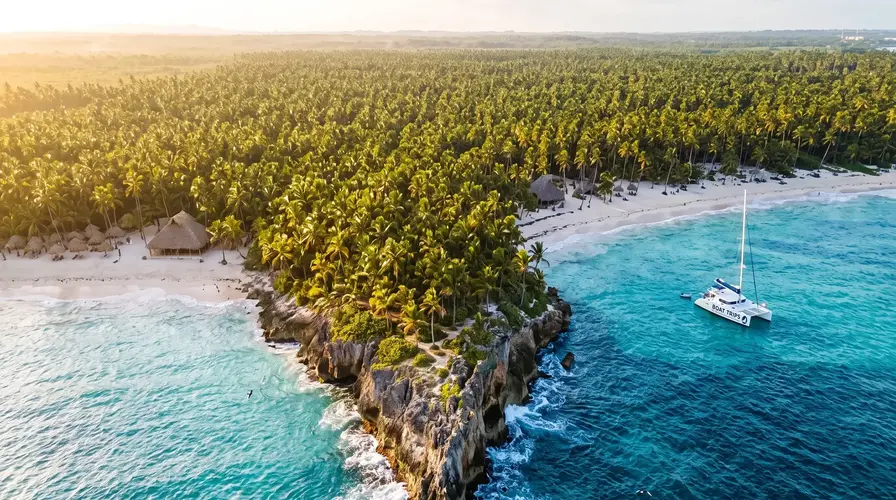
Why name an entire resort region after a tree? Because fifty years ago, there was absolutely nothing else here. No resorts. No mega-yachts. No international airport. Just fifty straight miles of untouched jungle, thick with Cana palms. The air smelled of heavy salt mixed with the dry rustle of these massive leaves.
These trees provided the only shade, the primary building materials, and a natural barrier against the heavy tropical storms that roll off the Atlantic. The name literally grounds the region in its raw, natural environment.
The Original Name: Welcome to “Punta Borrachón”
Here is the secret most tourists never hear from their hotel concierges. The area wasn’t always called Punta Cana. Before 1970, local fishermen, cattle ranchers, and sugarcane workers referred to this wild stretch of coastline as Punta Borrachón.
The punta borrachon dominican republic translation? “Drunkard’s Point.”
The origin of “Drunkard’s Point” comes from the brutal, unpredictable ocean currents at the very tip of the island. Because the Atlantic and Caribbean collide right off the coast, the water moves erratically. Local fishermen steering small wooden yawls through the chop looked like they were drunk behind the tiller. The ocean tossed them side to side.
Today, when you are exploring the modern Bavaro coastline on a luxury yacht, it’s hard to imagine the rugged, untamed, and dangerous frontier it once was.
Why “Drunkard’s Point” Needed a Rebrand
In 1969, an American labor lawyer named Theodore Kheel and a young Dominican entrepreneur named Frank Rainieri pooled their resources. They bought roughly 30 square miles of this completely undeveloped jungle for around $200,000. Their massive vision? To build a world-class tourism destination from scratch.
Their immediate problem? You cannot market “Drunkard’s Point” to luxury travelers looking for a relaxing honeymoon.
Rainieri quickly realized they needed a name that sounded exotic, relaxing, and authentic to the geography. He looked around, saw the endless forests of Cana palms, and officially changed the name on the spot. How did punta cana get its name? Pure marketing genius mixed with botanical accuracy.
Here is a clear look at how the region’s identity shifted over time to accommodate the tourism boom:
| Historical Era | Official Regional Name | Literal Meaning | Historical Context & Significance |
| Pre-1492 | Higüey (Taino) | Where the sun rises | The original indigenous chiefdom covering the eastern island. |
| Pre-1970 | Punta Borrachón | Drunkard’s Point | Named by local fishermen for the erratic, violent ocean currents. |
| 1970 – Present | Punta Cana | Tip of the White Cane Palms | Rebranded by Frank Rainieri and Theodore Kheel for tourism. |
| Modern Era | La Altagracia | High Grace | The broader, official political province that encompasses the entire resort zone. |
The Taino Roots and Dominican Language
You cannot discuss Dominican history without acknowledging the original inhabitants: the Taino people. While the modern name is Spanish, the cultural roots run much deeper into the soil.
Was there a specific Taino name for punta cana? The indigenous people referred to the broader eastern region as Higüey, which roughly translates to “the land where the sun rises.” You will still see that name on highway signs today—it is the capital city of the La Altagracia province.
The Taino influence is literally everywhere you look. Words we use every day like hurricane (huracán), barbecue (barbacoa), tobacco (tabaco), and hammock (hamaca) all come directly from the Taino language.
When you listen to local Dominican Spanish and Taino vocabulary, you hear a fast, rhythmic dialect that carries centuries of complex Caribbean history. For a deeper look into the indigenous impact on the Caribbean, the Smithsonian National Museum of the American Indian provides incredible verifiable records of how the Taino chiefdoms operated before Spanish colonization.
Geography vs. Brand: Is Punta Cana a City or a Resort Region?
We get this question constantly on our boats. Is punta cana a city or a resort? Technically, it is both, but the boundaries blur depending on who you ask and where you are standing.
Officially, Punta Cana is a specific, incorporated town within the La Altagracia province. It has its own municipality, police force, and local government. However, over the decades, the brand name exploded past the city limits.
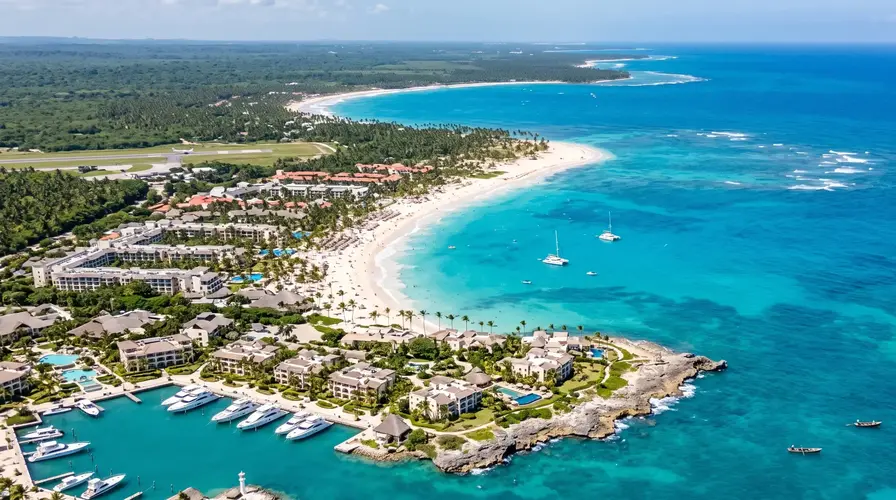
Now, the name acts as a massive umbrella term for over 30 uninterrupted miles of coastline. It encompasses the billionaire enclaves of Cap Cana in the south, runs through the heavy commercial center of Bavaro, and stretches up to Arena Gorda Beach and the wild surf breaks of Uvero Alto in the north.
When you are choosing the best area to stay, you aren’t just picking one city. You are choosing between heavily distinct micro-regions, each with its own wave conditions, sand textures, and energy levels.
Experience the “Tip of the White Cane Palms” from the Water
Knowing the history is great. Feeling the history is better. You don’t truly understand the Dominican coastline until you leave the hotel pool and feel the salt spray on your face. The roaring hum of twin outboard engines pushing through the waves. The sudden, shocking clarity of the Caribbean Sea when the water drops off the reef.
Our crew spends every single day navigating these exact waters. We ride the very currents that originally gave “Drunkard’s Point” its name.
If you want the ultimate adrenaline rush, strap in for a Punta Cana deep sea fishing excursion. We push out miles past the coastal reef where the water turns a deep, inky blue and the big pelagic fish hunt.
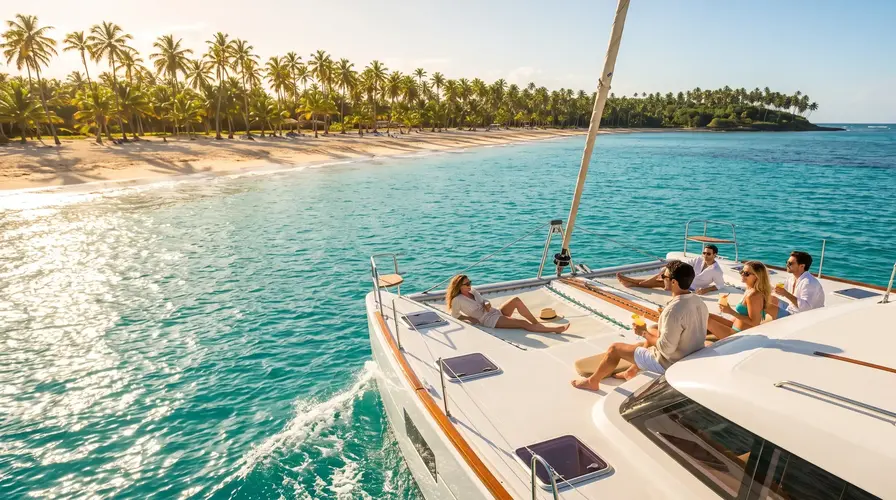
Looking for something a lot smoother? We highly recommend booking a private catamaran adventure. You dictate the pace. We drop anchor at secluded, waist-deep sandbars so you can swim in crystal-clear water with a cold Presidente beer in hand.
Nothing beats watching the sky turn violent shades of purple, red, and gold over the palms. A private catamaran sunset cruise gives you front-row seats to the best natural light show in the entire Caribbean.
For those wanting to completely escape the main tourist corridor, exploring Isla Saona and Palmilla is mandatory. It is a federally protected national park and nature reserve. Here, the Cana palms grow wild and untouched, looking exactly as they did a hundred years ago. If you don’t mind making friends on the water, joining a shared Saona Island catamaran experience is a fantastic, high-energy way to see the reserve.
We even stretch our maritime routes further north. If you find yourself staying on the northern coast, we run a phenomenal Puerto Plata private catamaran tour that includes heavy-duty coral reef snorkeling and a full ocean-side BBQ.
A Final Thought on Dominican History
The entire story of this region proves that words matter immensely. A simple, strategic shift from “Drunkard’s Point” to the elegant “Tip of the White Cane Palms” altered the trajectory of the entire Caribbean economy. It built airports, created thousands of jobs, and put the Dominican Republic on the global map.
Next time you are sitting under a woven palapa on the beach, look up. Those thick, dried leaves sitting right above your head? That is the Cana palm. You are literally sitting underneath the region’s namesake. Have a drink, feel the breeze, and enjoy the shade.
Frequently Asked Questions About the Region’s History
Let’s clear up some rapid-fire historical facts about the eastern coast.
What does punta cana mean in English?
It translates directly to “Tip of the White Cane Palms.” It describes both the sharp geographic point of the eastern island and the specific Sabal causiarum palm trees that grow densely along the beaches.
What was punta cana called before?
Before 1970, locals and fishermen called the area Punta Borrachón, which translates to “Drunkard’s Point.” Real estate investors changed the name to make the destination sound more appealing to international tourism.
When was punta cana founded?
As a modern resort destination, it was founded in 1969 when investors purchased 30 square miles of undeveloped coastal jungle. They cleared the land with machetes and bulldozers. The very first official hotel, the 10-room Punta Cana Club, opened its doors to guests in 1971.
Who founded punta cana?
Frank Rainieri, a young Dominican businessman, and Theodore Kheel, a prominent American labor lawyer, are the official founders of the region’s massive tourism industry and the creators of the modern, rebranded name.
What should I do if I want to explore beyond the resorts?
You need to break out of the all-inclusive bubble to see the real island. We always tell our guests to look up free things to do locally to understand the authentic Dominican culture. Walk the public beaches at Macao. Eat fish cooked directly on the sand.
Where can I find real local crafts?
Skip the overpriced airport gift shops. If you are picking up authentic Punta Cana souvenirs, look for homemade Mamajuana, local amber, or blue Larimar stones sold by independent Dominican artisans in the local markets.