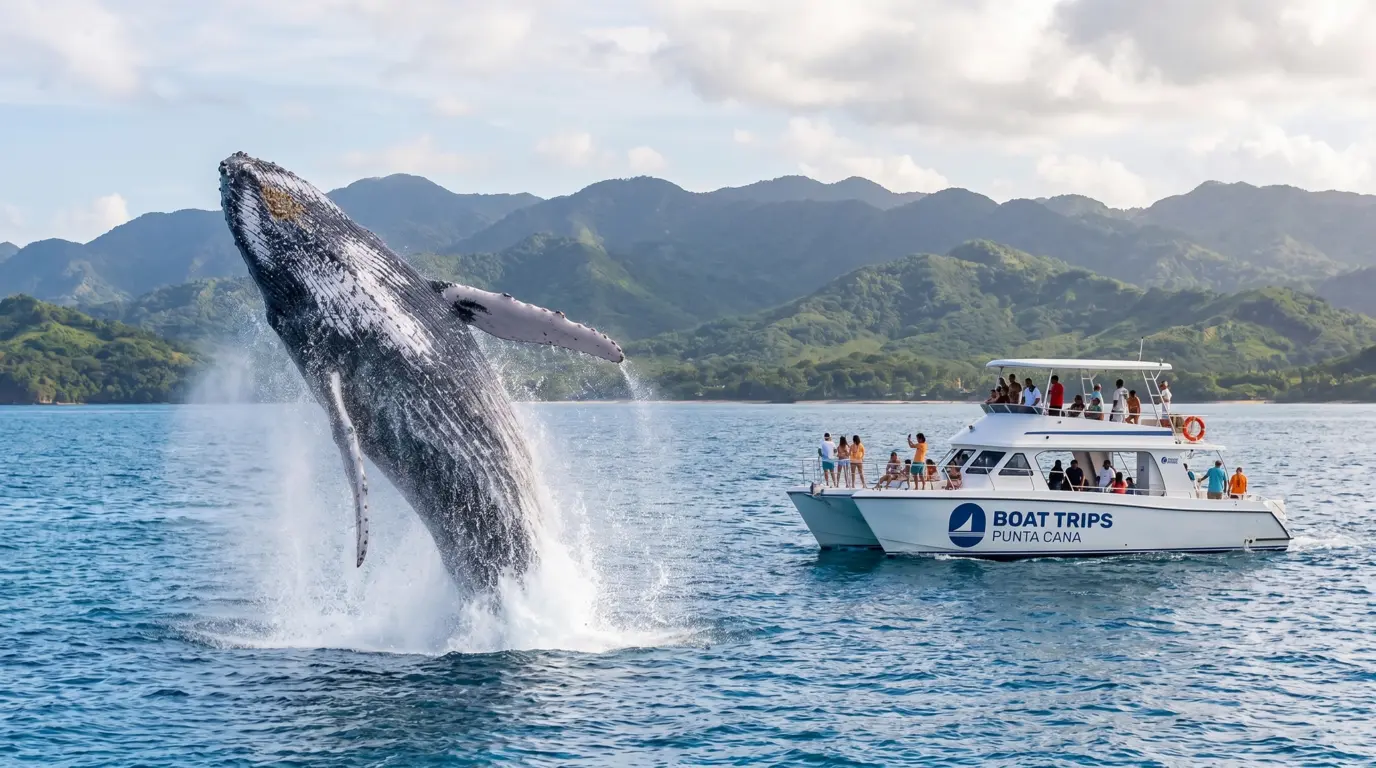
Hear that? It’s the explosive, hollow thud of forty tons of muscle hitting the surface of the Atlantic Ocean. That sound marks the arrival of the North Atlantic humpback whales. Every winter, thousands of these massive creatures migrate down to the warm, protected waters of the Dominican Republic to mate, fight, and give birth.
If you’re planning a trip, you want the real facts. Not generic travel brochure fluff. Booking the right whale watching Punta Cana 2026 expedition takes a bit of insider knowledge. Our team at Boat Trips Punta Cana knows these waters inside and out. We’ve spent years navigating the coastlines, and we know exactly what separates a chaotic, overcrowded tourist trap from a deeply respectful, unforgettable wildlife encounter.
You aren’t just taking a quick boat ride. You’re heading into a highly regulated national marine sanctuary. This ultimate Samaná day trip guide breaks down the harsh logistics, the strict timing, and the raw reality of chasing humpbacks in the Caribbean.
When is Whale Watching Season in Punta Cana?
Whale watching season in the Dominican Republic officially runs from January 15th to March 30th every year. The government strictly enforces these dates to protect the humpback whales during their critical mating and calving periods within the protected waters of Samaná Bay.
You can’t negotiate with nature. If you arrive in December or early April, the commercial boats simply aren’t running. The humpbacks are either still swimming south from the freezing North Atlantic or have already started their grueling journey back up to their colder feeding grounds.
Best Month for Whale Watching in Punta Cana
Aim for February. That’s the undisputed sweet spot.
By mid-February, the humpback population in the bay hits its absolute peak. The massive males are actively competing for mates. This means you’ll witness highly aggressive, spectacular surface behaviors. Think massive breaches, violent fin slapping, and spy-hopping right next to the boats.
March is also fantastic, particularly if you want to see newborns. People often ask, “Can you see baby humpback whales in March in the Dominican Republic?” Yes. By March, many mothers have successfully given birth. You’ll frequently spot a massive fifty-foot female slowly teaching her calf how to breathe and navigate near the surface. It’s a quieter, slower, and incredibly moving experience.
Understanding humpback whale migration patterns helps set your expectations. These animals travel thousands of miles just to reach this specific, warm-water basin. They’re here for a reason, and observing their natural life cycle in the wild changes your perspective on the ocean entirely.
Can You See Whales Directly from Punta Cana Beaches?
Let’s kill this myth right now. No, you cannot see humpback whales while sipping a piña colada from your lounger on Bávaro Beach.
The eastern coastline of the Dominican Republic is shielded by a massive, shallow coral reef system. The water here is calm and perfect for snorkeling, but it’s entirely the wrong environment for a forty-ton mammal. Humpbacks require the deep, protected basin of the Samaná Peninsula up north to safely raise their calves away from open-ocean predators like orcas.
If you’re staying at one of the best family resorts in Punta Cana, you have to book a dedicated, full-day excursion to reach them. You won’t spot a blowhole from your hotel balcony.
The waters right off Punta Cana are better suited for laid-back coastal cruising. If you want marine life and beautiful views without leaving the immediate coastline, you’re much better off booking a sunset cruise Punta Cana to explore the local reef systems. Leave the heavy wildlife tracking for the Samaná basin.
Samaná Bay vs. Silver Bank: Understanding Your Options
You have two main choices for whale watching in the Dominican Republic. They cater to completely different types of travelers, budgets, and schedules. Here is the raw data you need to make an informed decision.
| Feature | Samaná Bay (Day Trip) | Silver Bank (Liveaboard Expedition) |
| Location | Northeast Coast (Accessed via Miches) | Open Ocean (90 miles north of Puerto Plata) |
| Time Required | 10 to 12 Hours (Full Day from Punta Cana) | 7 to 9 Days (Sleep on the boat) |
| Whale Interaction | Boat-based observation only | Snorkeling/Swimming permitted (Strictly regulated) |
| Cost Estimate | $130 – $180 per person | $3,500 – $5,000+ per person |
| Best For | Families, casual tourists, budget travelers | Hardcore marine enthusiasts, professional photographers |
What is the Difference Between Samaná Bay and Silver Bank Whale Watching?
Samaná Bay is the accessible, realistic option for 99% of tourists. It’s a day trip. You leave your hotel in the morning, watch the whales from a motorized catamaran, eat lunch on a private island, and sleep in your own resort bed that night. It falls under the protected jurisdiction of the Sanctuary of the Marine Mammals.
Silver Bank is an extreme, multi-day commitment. Located far out in the treacherous Atlantic Ocean, this submerged carbonate bank is accessible only via specialized liveaboard dive boats. It requires serious cash, strong sea legs, and a week of your time.
So, can you swim with whales in the Dominican Republic? Only at Silver Bank, and only with a handful of heavily permitted operators. You absolutely cannot jump in the water with them in Samaná Bay. Anyone on the beach promising you a “swim with the whales” on a cheap day trip is lying to you.
The Full Day Whale Watching Excursion from Punta Cana: What to Expect
This isn’t a quick two-hour spin around the bay. A Samaná whale watching day trip is a full, twelve-hour expedition. You need stamina, but the payoff is worth every minute of the journey.
Here is exactly how the day breaks down, step by step.
How Far is Samaná Bay from Punta Cana?
Historically, getting to Samaná from the east coast was a nightmare. You either took a tiny, bumpy charter flight or suffered through a massive, five-hour bus detour. Not anymore.
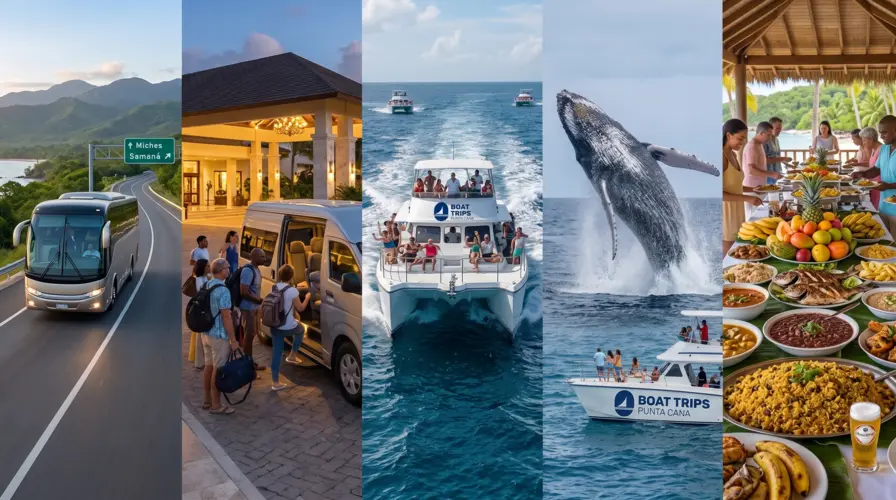
Thanks to the newly completed coastal highway, the drive from Bávaro to the port of Miches takes just about 90 minutes. From Miches, you board a boat and shoot straight across the bay to the sanctuary. This infrastructure upgrade changed the game entirely.
You’ll spend significantly less time cramped on a bus and much more time out on the water.
Punta Cana Whale Watching Hotel Pickup & Logistics
Expect an early, dark start. Your transport will likely arrive at your resort lobby between 6:00 AM and 7:00 AM.
We highly recommend eating a very light breakfast. Don’t overdo it on the heavy resort buffet before jumping on a bus and then a rocking boat. The transport is usually a comfortable, air-conditioned coach. If you’ve ever booked shared tours in Punta Cana, you know the drill. The bus stops at a few neighboring resorts to gather the group before hitting the highway north toward the mountains.
Once you arrive at the dock in Miches or Sabana de la Mar, you’ll grab a quick coffee, sign your waivers, and transfer directly to the maritime vessel.
The Boat Ride and Whale Sighting Success Rate in Samaná
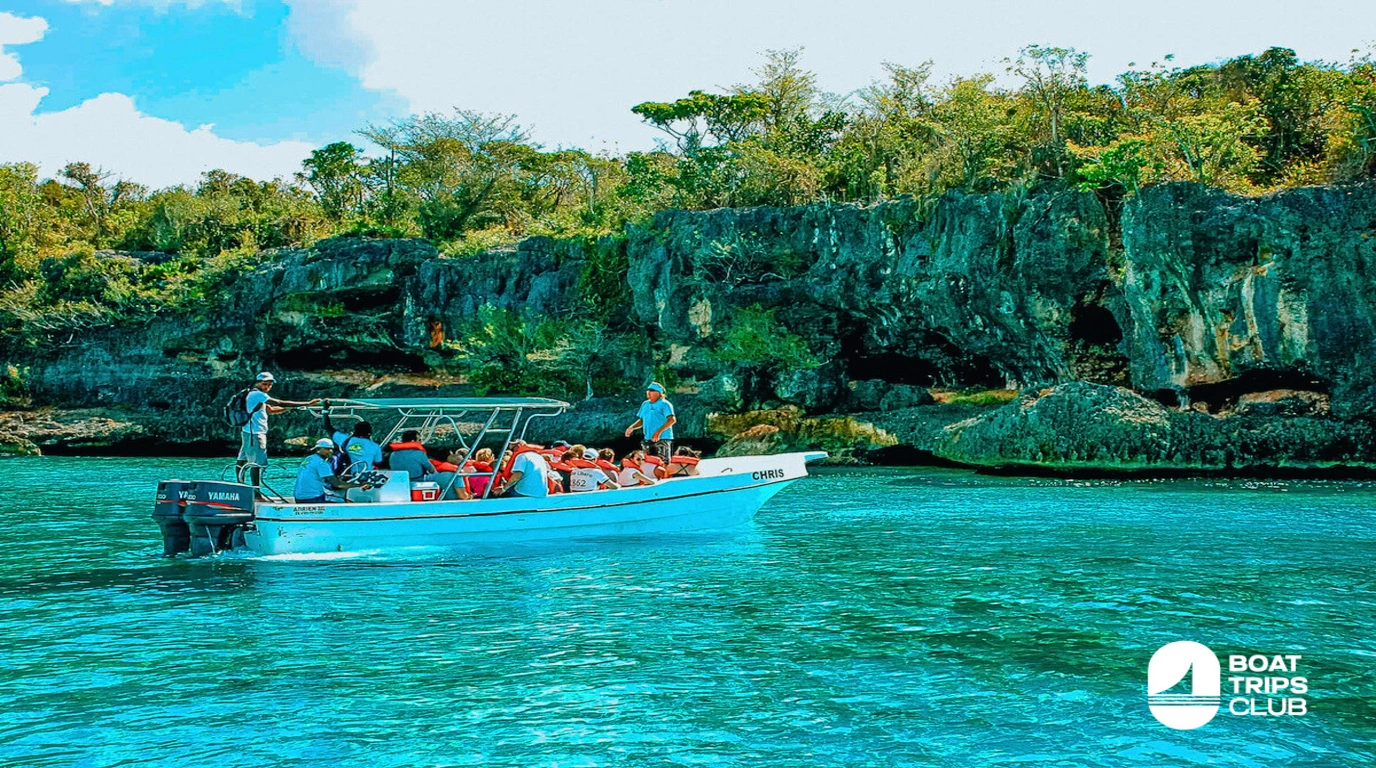
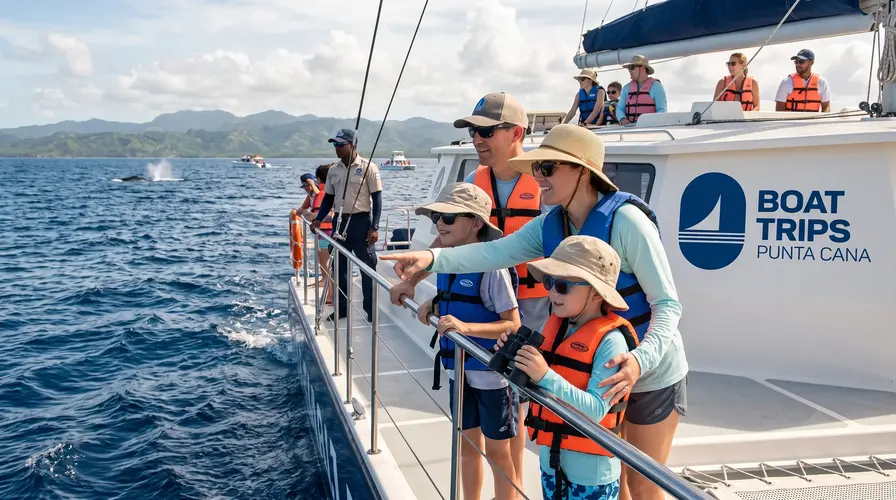
The boats range from fast, twin-engine motomarans to larger, double-decker power catamarans. The ride across the choppy bay takes roughly 40 minutes before you hit the main sanctuary observation zone.
What is the whale sighting success rate in Samaná? During peak season (February), it sits comfortably above 95%. The local captains communicate constantly via VHF radio. If one boat spots a pod, they call it in, and the fleet slowly converges.
The rules are incredibly strict. Boats must maintain a safe distance and can only stay with a single pod for thirty minutes to prevent stressing the animals.
When a forty-ton creature launches itself out of the water just fifty yards from your starboard bow, the entire vessel goes dead silent for a split second before erupting in cheers. You feel the impact of the breach in your chest. It’s a primal, unforgettable experience that makes the early wake-up call completely irrelevant.
Decoding Humpback Whale Behaviors
While you’re out there, you aren’t just looking for a splash. You’ll witness specific, intentional behaviors. Keep your eyes peeled for these moves:
- The Blow: The classic V-shaped mist shooting into the air. This is how you spot them from a mile away.
- Spyhopping: The whale pushes its head vertically out of the water to look around. They are incredibly curious and often watch the boats right back.
- Lobtailing: Smacking their massive, barnacle-covered flukes (tails) against the surface. It sounds like a shotgun blast echoing across the water.
- Full Breach: The holy grail of whale watching. The whale propels its entire body out of the water and twists in mid-air.
Cayo Levantado (Bacardi Island) Tour from Punta Cana
After two hours of intense tracking under the Caribbean sun, you’re going to be hungry and tired. Almost every reputable tour includes a mandatory stop at Cayo Levantado, famously known as Bacardi Island.
This tiny speck of sand in the middle of the bay looks like it was generated by a computer. White powdery sand, leaning palm trees, and vibrant turquoise water. You’ll pull up to the wooden dock and head straight to a massive open-air pavilion for a traditional Dominican buffet. Think freshly grilled fish, heavily seasoned rice, beans, fresh fruit, and ice-cold Presidente beer.
You usually get about two hours here to eat, swim, and nap on the beach. It’s the perfect physical reset before the boat ride back to the mainland. The tropical vibe is very similar to a classic Saona Island day trip, just dialed into the specific, lush rhythm of the northern bay.
Is Whale Watching in Punta Cana Safe for Children?
Yes, but you need to manage your expectations and prepare your family properly.
The boats used for these excursions are incredibly safe, heavily inspected by the Dominican Navy, and crewed by seasoned, weather-hardened mariners. However, the open waters of Samaná Bay get rough. By the afternoon, the trade winds pick up, and the swells can easily hit three to four feet.
If you’re looking for easy things to do in Punta Cana with kids, a twelve-hour day involving buses, boats, and intense heat might be too much for toddlers. We generally recommend this specific trip for children aged six and up.
If your kids are prone to motion sickness, the bay will absolutely test them. Give them motion sickness medication in the hotel room before you even leave. Don’t wait until you’re stepping onto the boat; by then, it’s far too late. If you want a calmer, more kid-friendly marine experience without the heavy Atlantic swells, consider booking an Isla Catalina tour instead. The water down south is much more forgiving.
What to Bring on a Whale Watching Boat Trip in Punta Cana
You are going out onto the open ocean for several hours. The sun reflects aggressively off the water, and the wind whips across the open deck. Packing correctly makes the difference between an epic day and a miserable, blistering sunburn.
Here’s your strict loadout for the day:
- Motion Sickness Pills: Dramamine, Bonine, or sea bands. Take them early.
- Windbreaker or Light Jacket: The morning boat ride departing from Miches is surprisingly chilly as the wind cuts across the bow.
- Reef-Safe Sunscreen: Apply it heavily before you board. Reapply it constantly.
- Polarized Sunglasses: This is crucial. Polarized lenses cut the harsh glare on the water, making it infinitely easier to spot the dark shapes of whales moving just below the surface.
- Cash: You’ll want small bills ($1s and $5s) for tipping the hard-working boat crew, buying extra rum drinks, or picking up authentic Punta Cana souvenirs from the local vendors set up on Cayo Levantado.
- Waterproof Dry Bag: Salt spray gets absolutely everywhere when the boat hits a wave. Protect your phone and expensive camera gear.
- Towel and Swimsuit: Wear your suit under your clothes to save time at the beach stop on Bacardi Island.
Whale Watching Tour Cost Punta Cana (2026 Pricing)
Pricing for the 2026 season is fairly standardized across all reputable, licensed operators. You truly get what you pay for in the Dominican Republic.
Expect to pay between $130 and $180 per adult. Children (usually ages 3-11) typically cost around $90 to $110.
This price tag covers a massive amount of ground. It almost always includes your round-trip air-conditioned hotel transportation, the boat charter, the official government marine sanctuary tax, the hot buffet lunch on Cayo Levantado, and an English-speaking ecological guide.
If you find a random guy on the beach offering the full trip for $80, walk away immediately. They are likely cutting severe corners on safety, running unlicensed boats that evade navy checkpoints, or using older, unreliable vans that will leave you stranded on the side of the coastal highway.
Alternative Coastal Adventures if You Miss the Season
What happens if you book your vacation in June or October? The whales are gone, but the spectacular Caribbean Sea is still waiting. The Dominican Republic’s eastern coast offers some of the best maritime conditions in the hemisphere year-round.
Here is how you pivot your itinerary for a world-class day on the water when the humpbacks aren’t in town.
Chartering Your Own Experience
Skip the crowded, chaotic party boats and take total control of your day. Booking private boat tours allows you to dictate the pace, the music volume, and the exact destination. You aren’t tied to a rigid, exhausting timeline.
For groups looking to seriously upgrade their vacation, a Punta Cana yacht charter offers a massive step up in luxury. You get premium open bars, custom snorkeling stops at the vibrant Bávaro reef, and complete privacy from the resort crowds. If you want to push further south to the famous national park limits, booking a luxury yacht to Saona Island guarantees you arrive in style, completely bypassing the massive tourist catamarans that hit the public beaches by noon.
Large Groups & Catamaran Parties
Traveling with a massive wedding party, a family reunion, or a corporate retreat? You need serious deck space.
Renting a private mega catamaran ensures your entire group of up to 100 people stays together. These massive, stable vessels feature built-in waterslides, spacious dance floors, and heavily shaded lounge areas. It operates like a floating private nightclub that anchors directly in the shallow natural pools.
For a slightly more refined, upscale group vibe, the premium catamaran experience focuses heavily on high-end service, top-shelf liquor, and a much more relaxed, scenic cruising atmosphere along the palm-lined coast.
Specialized Maritime Activities
If you want adrenaline and action rather than just lounging on a front deck net, head offshore. The deep blue waters just past the Punta Cana reef line are legendary for pelagic species. Booking a morning of deep sea fishing in Punta Cana gives you a legitimate shot at landing massive mahi-mahi, wahoo, and even the elusive blue marlin.
For those who crave remote, untouched beauty away from the noise, consider the private Saona Island and Palmilla tour. Palmilla is a stunning, completely undeveloped sandbank that feels like your own private slice of the Caribbean. The water is waist-deep, crystal clear, and completely free of the usual resort hustle and aggressive vendors.
Final Thoughts: Booking Your 2026 Samaná Adventure
The humpback migration is one of the most incredible, visceral wildlife events on the planet. Seeing these ancient giants breach in the wild changes how you view the ocean.
Because the season is incredibly short—just ten weeks—the best boats book up dangerously fast. If you are traveling in February or March 2026, lock in your reservation weeks before your plane even lands. Don’t wait until you’re sitting at the resort lobby desk drinking a welcome cocktail. By then, the prime dates are gone.
Pack your Dramamine, charge your camera batteries, and get ready for a long, beautiful, and slightly exhausting day on the water. The whales are waiting.