Trade winds whipping through palm fronds. The sharp scent of sea salt right when you step off the plane. Endless stretches of white sand radiating heat against the soles of your feet.
You’ve seen the photos, and now you’re ready to book the ticket. But before you finalize your itinerary, you need to understand the geography. A frequent question we get at Boat Trips Punta Cana is quite simple: where is Punta Cana located?
It’s completely normal to feel slightly turned around when looking at a Caribbean map for the first time. The islands blur together, and resort names sound identical. Pinpointing the exact Punta Cana location makes all the difference. It dictates your flight path, the type of ocean water you’ll swim in, and exactly how long you’ll spend sitting in an airport transfer van.
We’ve navigated these waters and coastal highways for years. Consider this guide your definitive Punta Cana map. We’ll break down the specific regions, answer the most common geographical questions, and give you the local insights you need to build out your essential Punta Cana travel tips.
Grab a map. Let’s get our bearings.
Where Exactly is Punta Cana?
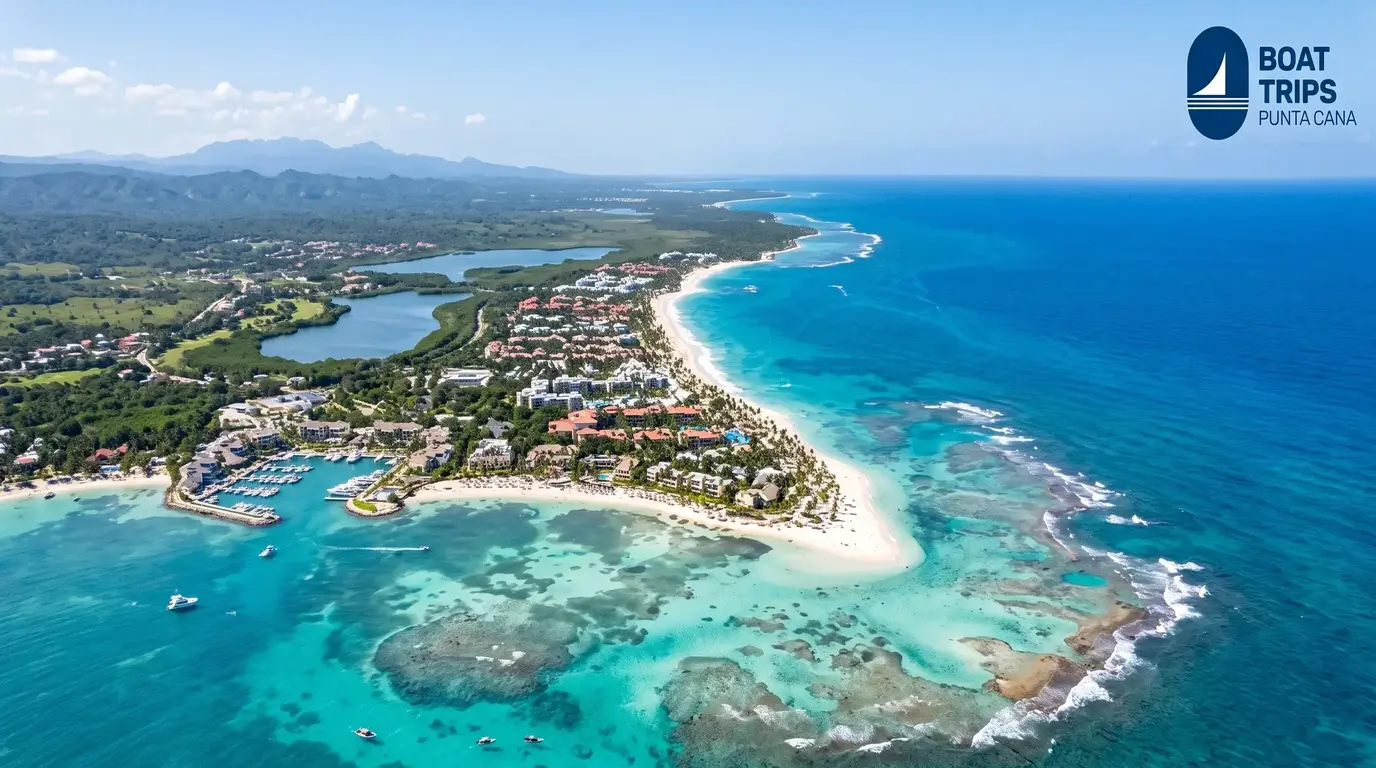
Punta Cana is located on the extreme easternmost tip of the Dominican Republic, within the La Altagracia province. It sits precisely where the Atlantic Ocean meets the Caribbean Sea, boasting over 32 kilometers (20 miles) of continuous white-sand coastline known globally as La Costa del Coco, or the Coconut Coast.
Is Punta Cana a City, a Country, or a Region?
We hear this geographical mix-up constantly. Because the brand name is so massive, travelers frequently ask: is Punta Cana in Mexico or the Dominican Republic?
Let’s clear this up immediately. Punta Cana is not in Mexico. It sits firmly on the island of Hispaniola, an island shared by two distinct sovereign nations: Haiti to the west, and the Dominican Republic to the east.
So, what country is Punta Cana in? The Dominican Republic.
And is Punta Cana a city or a country? Technically, it’s neither. Punta Cana is a resort municipality and region within the Dominican Republic. When people say “Punta Cana,” they are usually referring to the entire interconnected resort district that stretches from Cap Cana in the south all the way up to Uvero Alto in the north.
It functions entirely around tourism. You won’t find a traditional downtown grid with old colonial buildings here. Instead, you’ll find sprawling all-inclusive resorts, modern marinas, and pristine ecological reserves. If you want to know what province is Punta Cana in, it belongs to La Altagracia, the easternmost province of the country. According to official geographic boundaries maintained by the Dominican Republic Ministry of Tourism, this specific region accounts for the vast majority of the nation’s tourism revenue.
Don’t worry about getting lost in translation, either. While brushing up on what language is spoken in Punta Cana is helpful—it’s Spanish—resort staff, tour guides, and airport personnel speak excellent English.
What Ocean is Punta Cana On? (The Atlantic vs. Caribbean Divide)
This is the most critical factor to consider when mapping your stay. Many visitors assume the entire region sits directly on the calm Caribbean Sea. The reality? It depends entirely on where you plant your beach chair.
So, what ocean is Punta Cana on? Both. The region acts as the exact dividing line between the Atlantic Ocean and the Caribbean Sea.
The Northern Beaches (Atlantic Ocean)
If you stay in the northern resort areas like Uvero Alto, Macao, or the upper sections of Bávaro, you are facing the Atlantic Ocean.
- The Vibe: Energetic and wild.
- The Water: You’ll experience heavier surf, stronger undertows, and a deeper, darker blue hue to the water. This is fantastic for body surfing and watching dramatic waves crash against the shoreline.
The Southern Beaches (Caribbean Sea)
Head south toward the original Punta Cana resort area, Cap Cana, or take a boat off the southern coast, and you enter the Caribbean Sea.
- The Vibe: Placid, relaxed, and impossibly clear.
- The Water: Think bathwater. Warm, shallow, and glowing with that iconic turquoise transparency.
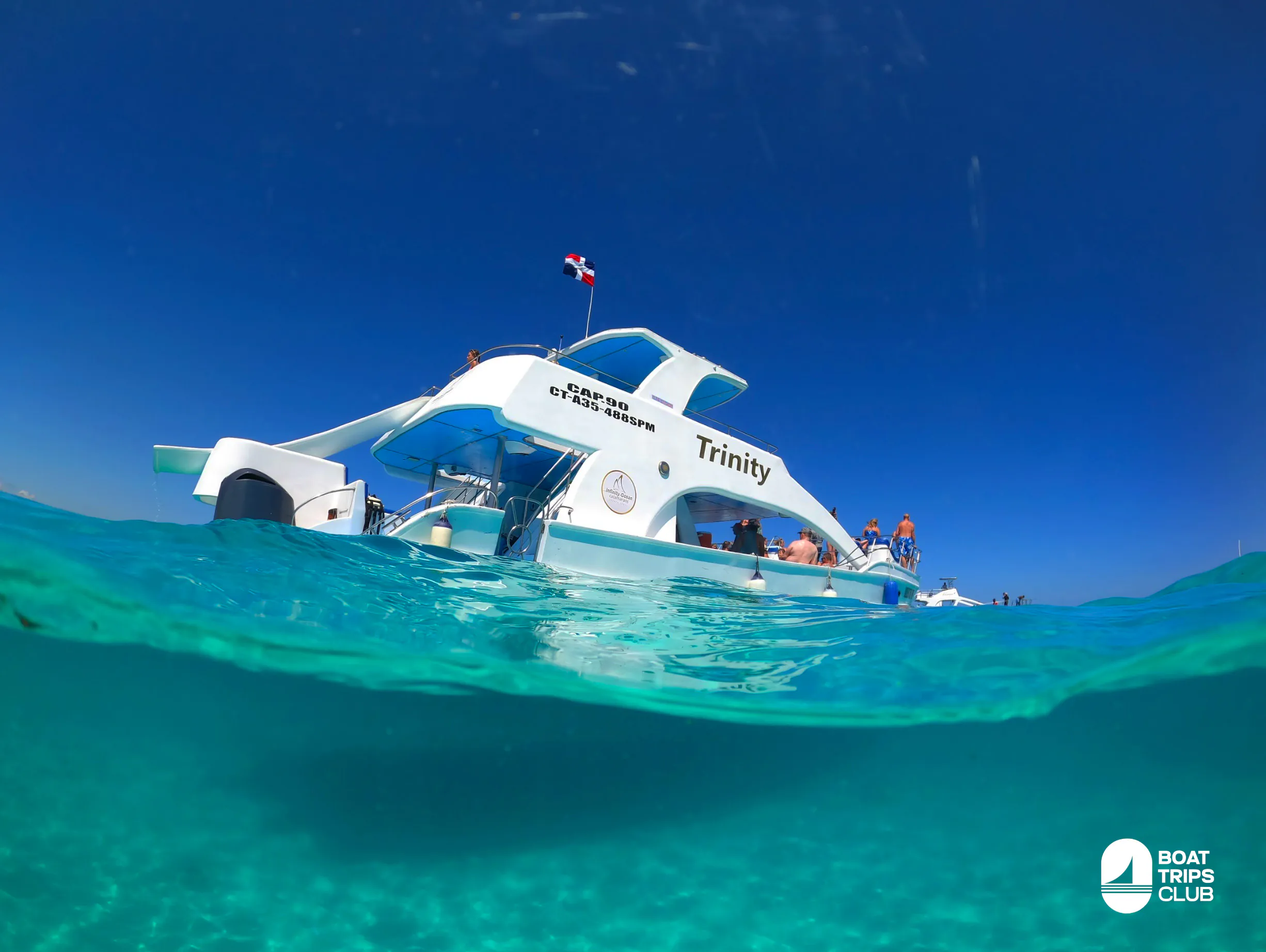
Because we spend every single day on the water, we know these currents intimately. If you want glass-like conditions for snorkeling, we always steer guests toward a private catamaran adventure that navigates the southern Caribbean channels. The reefs are protected, and the ride is incredibly smooth.
If your priority is seeing the ultimate Caribbean postcard—zero waves, shallow sandbars, and starfish-filled waters—you need to head fully south. This is why our shared Isla Saona catamaran experience remains the most requested route; it takes you straight into the heart of the true Caribbean Sea.
Punta Cana Resort Areas Breakdown
Understanding the Punta Cana vs Bávaro vs Cap Cana debate is vital. Use this quick reference matrix to find the exact district that matches your travel style. Make sure to cross-reference this with our guide on the best area to stay in Punta Cana.
| Resort Region | Vibe & Atmosphere | Distance from PUJ Airport | Water Conditions | Best Suited For |
| Cap Cana | Ultra-Luxury, Exclusive, Quiet | 15 Minutes | Calm Caribbean Sea | Couples, Golfers, Yachting |
| Punta Cana (Original) | Relaxed, Classic, Lush | 10 Minutes | Calm Caribbean Sea | Families, Quick Weekend Trips |
| Bávaro | High Energy, Walkable, Social | 25 Minutes | Mixed (Mild Atlantic) | Nightlife, Water Sports, Groups |
| Macao / Uvero Alto | Secluded, Natural, Surfy | 45+ Minutes | Rough Atlantic Ocean | Surfers, Introverts, Nature Lovers |
(Pro Tip: If you are traveling with small children who need completely flat water, favor Cap Cana or the original Punta Cana sector. Check our detailed breakdown of the best family resorts in Punta Cana for specific hotel recommendations).
Punta Cana vs. Bávaro vs. Cap Cana: Mapping Your Stay
Let’s zoom in on the map. The entire coastline stretches for miles, and walking from one end to the other simply isn’t an option. Here is the local breakdown of the three heavy hitters.
Cap Cana (Luxury & Marinas)
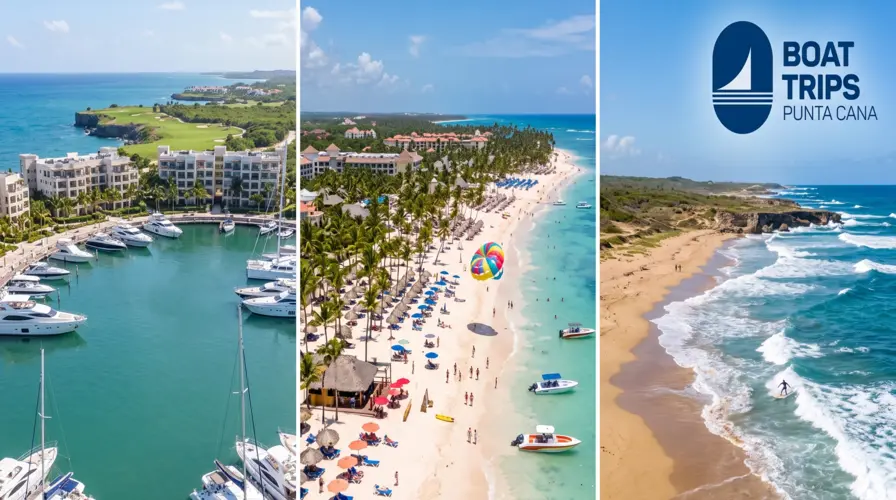
Located at the absolute southern tip, Cap Cana is a massive, private, gated community. It feels a world away from the heavy tourist traffic. The aesthetic here focuses on high-end luxury. You’ll find world-class golf courses designed by Jack Nicklaus, incredible limestone cliffs, and the largest inland marina in the Caribbean.
If you’re compiling a list of things to do in Cap Cana, getting out on the water is non-negotiable. Because the marina provides direct access to deep, rich drop-offs, this is the premier launching point for deep sea fishing in Punta Cana. The marlin and mahi-mahi runs right off this specific coast are legendary.
Bávaro (The Energetic Core)
Bávaro is the beating heart of the region. Originally built as a housing town for resort workers, it exploded into the main tourist strip. When people search for the best resorts in Bavaro recommended by travel agents, they are looking for action.
The beaches here are wide, peppered with towering palms, and buzzing with activity. Parasailers float in the sky, speedboats hum in the distance, and beach bars serve ice-cold Presidente beer directly on the sand. If you want to leave your resort and walk to local restaurants or souvenir shops, Bávaro is your target. Our curated list of things to do in Bavaro proves that you’ll never suffer a dull moment here.
Uvero Alto & Macao (Natural & Secluded)
Keep driving north, and the pavement eventually gives way to a wilder, more rugged coastline. Macao Beach is one of the few public beaches in the area not entirely dominated by resorts. It’s a favorite among locals on Sundays.
The sand takes on a slightly golden hue, and the Atlantic waves crash with real force here. It’s a haven for surfers and those looking to escape the mega-resort crowds. It also happens to be a fantastic spot to find free things to do around the island, as simply walking the undeveloped miles of coastline costs absolutely nothing.
How to Get to Punta Cana
Geography means nothing if you can’t figure out the logistics of arriving. The good news? The infrastructure here is explicitly designed for massive tourism efficiency.
Flying into Punta Cana International Airport (PUJ)
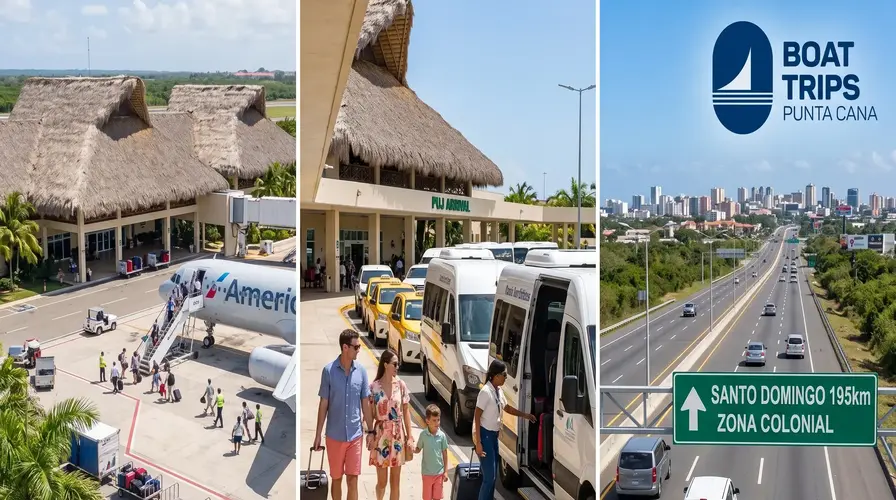
The vast majority of visitors arrive via the Punta Cana International Airport (Airport Code: PUJ). It’s an iconic facility, instantly recognizable by its open-air terminals and massive thatched palm-frond roofs.
Finding direct flights to Punta Cana from major cities is incredibly easy. Carriers run daily non-stop routes from New York, Miami, Atlanta, Toronto, and major European hubs like London and Madrid. You won’t need to endure multiple grueling layovers to find paradise.
Getting From the Airport to Your Resort
Once you clear customs and step out into the humid Caribbean air, you’ll face a wall of taxi drivers and transport operators. Don’t wing this part.
Understanding getting from Punta Cana airport to your resort requires pre-planning. We highly advise booking a private transfer before your flight takes off. The ride times vary wildly based on your map location. Cap Cana? Ten minutes, and you are sipping a welcome drink. Uvero Alto? Settle in for a 45-minute drive up the coastal highway. Dive into our dedicated guide on getting from the airport to your resort to avoid getting overcharged at the curb.
Distance From Punta Cana to Santo Domingo
A common mistake tourists make is assuming they can easily pop over to the capital city for a quick afternoon lunch.
What is the distance from Punta Cana to Santo Domingo? It is roughly 195 kilometers (121 miles). Thanks to the modern Autopista del Coral highway, the drive takes about two and a half hours each way.
While the distance to Punta Cana from the capital is manageable for a full-day excursion to see the historic Zona Colonial, it is not a quick hop. Plan accordingly, and expect to dedicate a full 12 hours if you want to explore the capital city.
Beyond the Resort: Exploring the Real Dominican Republic
Knowing your location on the map empowers you to leave the resort boundaries. Too many visitors fly all the way to the Dominican Republic only to stare at the exact same resort pool for seven straight days.
Break the cycle. There is an entire vibrant, pulsating country waiting just past the security gates. Checking out things to do outside of your resort is what transforms a standard vacation into a memorable adventure.
The ocean is your absolute best highway for exploration. If you want to see untouched, magazine-cover perfection, a trip to Isla Saona and Palmilla pulls you completely off the main tourist grid. You’ll swim in natural pools holding starfish while looking back at a completely undeveloped coastline.
Alternatively, head toward the southwest coast. The marine ecosystems shift dramatically. Dropping anchor for an Isla Catalina all-inclusive snorkel day puts you face-to-face with “The Wall,” a spectacular coral drop-off teeming with tropical fish and vibrant sponges that you simply cannot access from the Bávaro beachfront.
You now have the map. You know the zones, the water types, and the logistics. All that’s left to do? Pack your bags and get here.