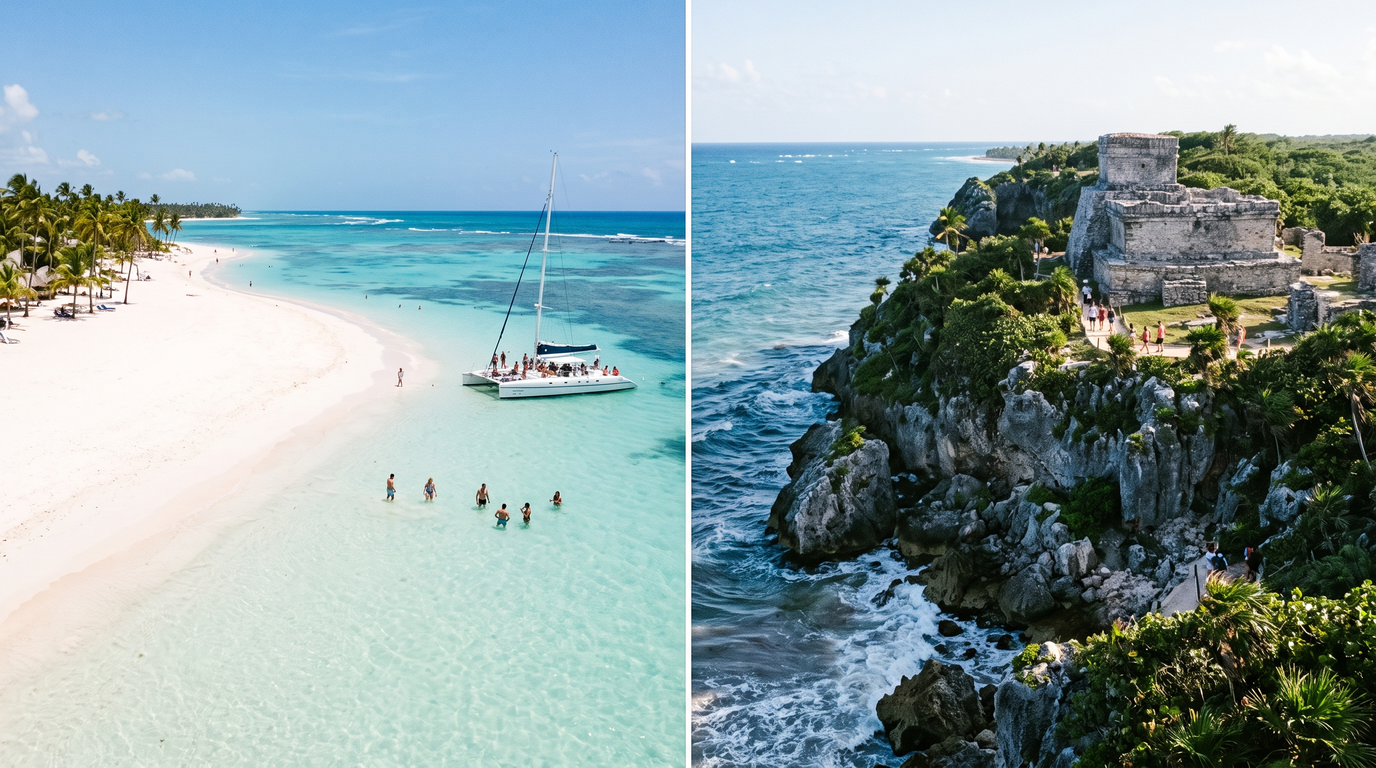
Quick Overview: Choosing between Punta Cana and Riviera Maya depends entirely on how you define a perfect Caribbean vacation. Punta Cana is the undisputed champion of pure relaxation, offering superior white-sand beaches, calm reef-protected swimming, and world-class ocean excursions like private catamaran charters. Riviera Maya, stretching south of Cancun, is built for active explorers, heavily focusing on ancient Mayan history, jungle cenotes, and massive eco-parks. If you want to lounge on flawless sand and party on a boat, book the Dominican Republic. If you want to hike ruins and swim in underground caves, Mexico is your target.
The Big Debate: Punta Cana vs Riviera Maya Overview
The primary difference between these two powerhouse destinations comes down to geography and local infrastructure. Punta Cana operates as a massive, continuous stretch of luxury beachside resorts explicitly designed to keep you near the water. Riviera Maya is a sprawling, 80-mile coastal corridor that heavily integrates the surrounding jungle environment, historical sites, and underground river systems into the daily tourist experience.
To make your decision easier, our on-the-ground analysis breaks down the core elements of both locations.
| Feature | Punta Cana (Dominican Republic) | Riviera Maya (Mexico) |
| Primary Vacation Vibe | Pure relaxation, resort living, and ocean excursions. | High adventure, cultural exploration, and jungle trekking. |
| Beach Quality | Powdery white sand, calm waters protected by offshore barrier reefs. | Beautiful, but often rockier with steeper drop-offs in certain zones. |
| Top Excursions | Catamaran parties, Saona Island, deep-sea fishing. | Mayan ruins (Tulum/Chichén Itzá), jungle cenotes, Xcaret eco-parks. |
| Airport Access | Punta Cana International (PUJ) – 15-30 mins to most resorts. | Cancun International (CUN) – 45 mins to 2 hours drive depending on the town. |
| Pace of Travel | Slow, easy, heavily centralized around the beach. | Fast-paced, requiring long transit times for major day trips. |
Why Choose Punta Cana? The Ultimate Tropical Escape
You choose Punta Cana when your primary goal is to disconnect, stare at impossibly blue water, and enjoy seamless boat access. The eastern coast of the Dominican Republic is structurally built for tourists who prioritize beach quality and maritime adventure above all else.
Pristine Beaches & Calm Waters (Bavaro Beach)
The sand in the Dominican Republic feels different. It is soft, blindingly white, and stays cool under the midday sun. Bavaro Beach consistently ranks among the top coastlines globally for a very specific geographical reason: a massive offshore coral reef breaks the aggressive Atlantic swells before they reach the shore. The result? Unmatched swimming conditions.
Instead of fighting heavy undertows, you get waist-deep, crystal-clear water that feels like a giant saltwater swimming pool. Families can let toddlers splash safely, while adults can wade out with a drink in hand. The continuous stretch of sand also means you can walk for miles without interruption. When planning your daily itinerary, looking into things to do in Bavaro will show you just how centralized the best beachside restaurants, parasailing operators, and dive shops truly are. You rarely need a taxi. You just walk down the sand.
Unforgettable Boat Trips & Catamaran Parties
Punta Cana absolutely dominates the Caribbean when it comes to ocean-based entertainment. Because the waters are heavily protected by the reef, catamaran sailing is incredibly smooth. You do not have to worry about the severe seasickness that often plagues deep-water crossings in other countries.
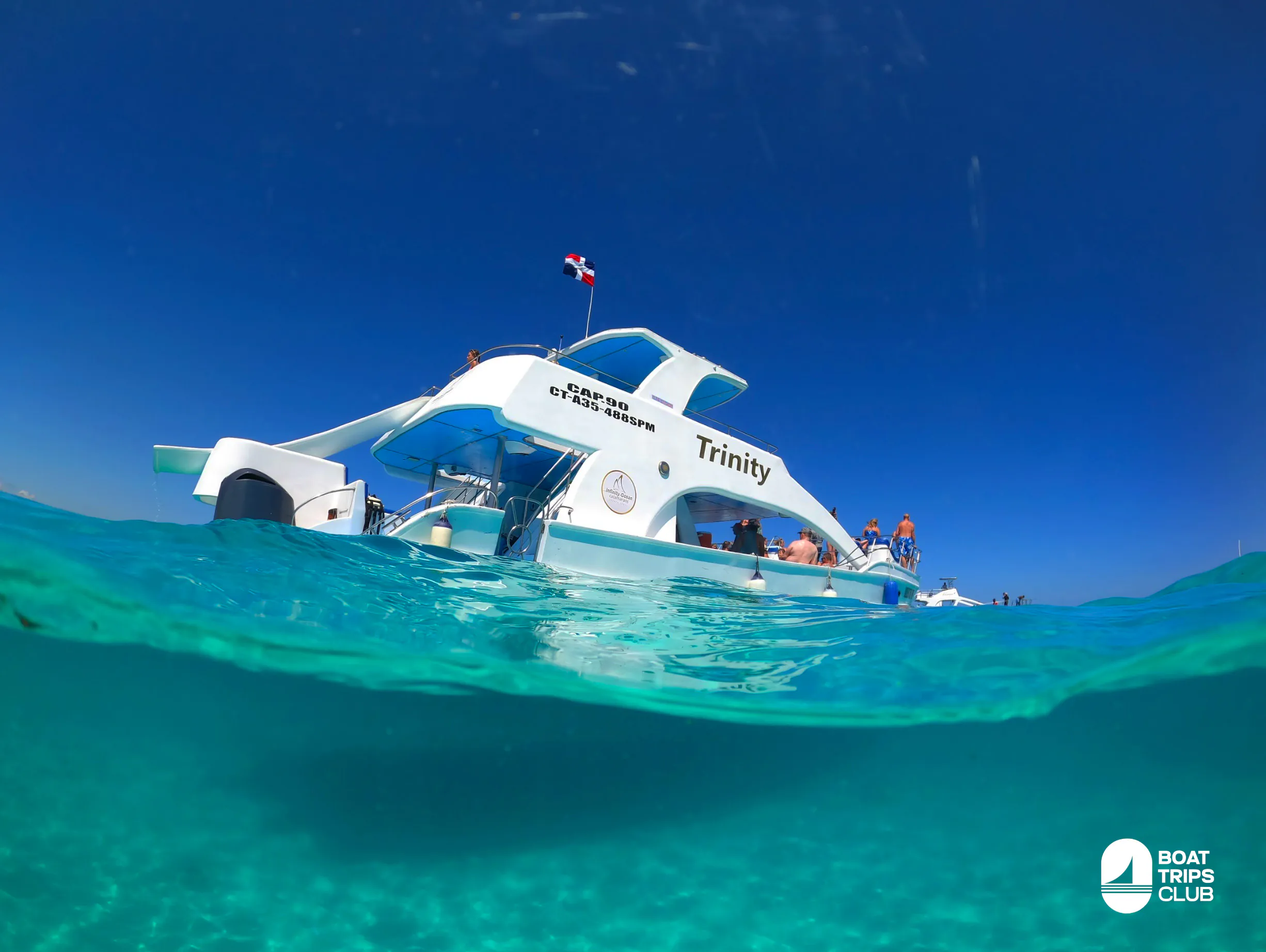
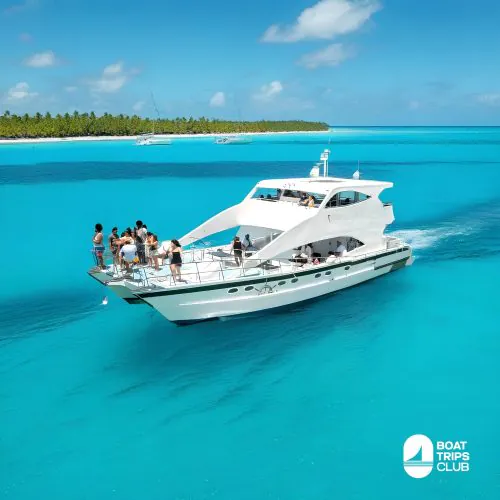
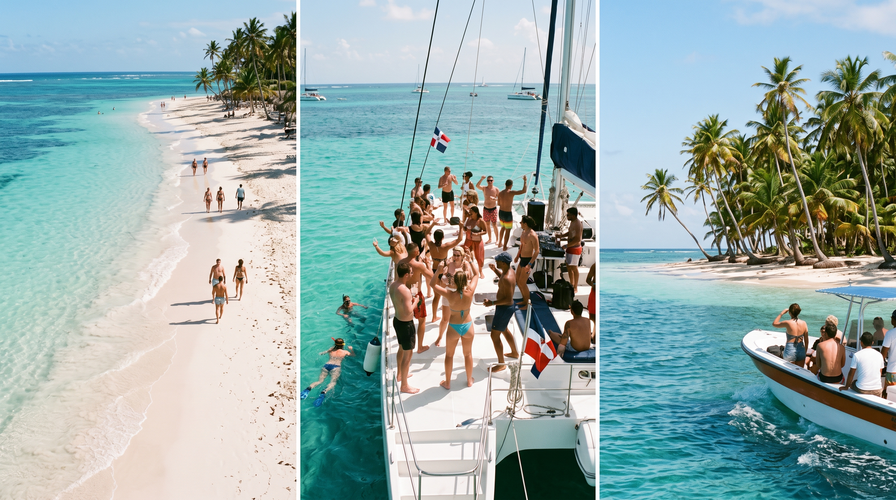
Booking private boat trips here is a seamless process. Charters regularly pick you up directly from your resort’s beachfront or a nearby marina. You can spend the afternoon snorkeling at the coral nursery, stopping at a waist-deep natural pool sandbar to drink local rum from a floating bar, and blasting your own playlist across the water. The local crews understand hospitality at a world-class level. Whether you want a high-energy party atmosphere or a quiet, romantic sunset sail along the coast, the nautical infrastructure here simply outperforms Mexico.
Nature & Wildlife: Isla Saona and Whale Watching in Samaná
Mexico has ancient ruins, but the Dominican Republic has untouchable island reserves. Isla Saona sits just off the southeastern tip of the country. It is a government-protected nature reserve completely devoid of massive hotel chains. Taking a boat trip to untouched island Punta Cana operators offer is arguably the most popular day excursion in the country. You board a speedboat or a luxury catamaran from the village of Bayahibe, race across the Caribbean Sea, and land on beaches lined entirely with leaning palm trees and wild starfish sanctuaries.
If you travel between mid-January and late March, you can access the Samaná Peninsula. Every year, thousands of North Atlantic humpback whales migrate to this exact bay to mate and give birth. Witnessing a 40-ton whale breach the surface just yards from your vessel is a staggering reality that Riviera Maya cannot offer.
Why Choose Riviera Maya? The Mayan Adventure
Riviera Maya is the superior choice for travelers who easily get bored sitting on a beach. If you want a vacation packed with history, rugged ecological exploration, and heavy physical activity, this coastal corridor delivers an aggressive, action-packed itinerary.
Ancient Mayan Ruins (Tulum & Chichén Itzá)
The Yucatan Peninsula is a historical powerhouse. You are not just visiting a beach; you are stepping into the remnants of one of the world’s most advanced ancient civilizations. The Tulum Ruins sit perched directly on a cliffside overlooking the crashing Caribbean Sea, creating a dramatic visual contrast.
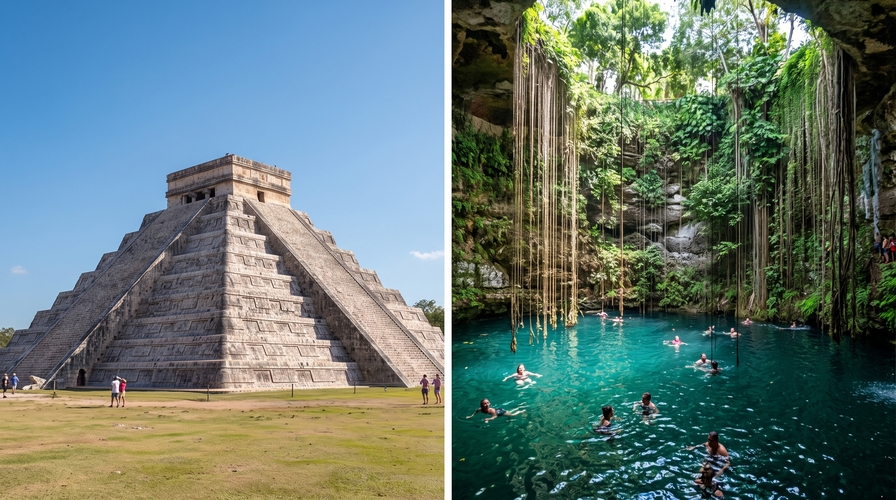
For a heavier historical footprint, travelers make the grueling inland journey to Chichén Itzá. Designated by the UNESCO World Heritage Centre as a site of profound global significance, this sprawling complex features the iconic El Castillo pyramid. Walking the grounds provides deep insight into ancient astronomical engineering. Keep in mind that visiting these ruins requires full-day commitments. You will spend hours in air-conditioned buses traversing the Mexican highway system, which is vastly different from the quick 10-minute transit times you find in the Dominican Republic.
Cenotes & Eco-Parks (Xcaret)
Riviera Maya sits on top of a massive underground limestone shelf that has collapsed over millennia, creating thousands of natural sinkholes known as cenotes. Swimming in these deep, freshwater caves is an eerie, beautiful experience completely unique to this region of the world. The water is significantly colder than the ocean, offering a sharp, refreshing shock after hiking through the humid jungle.
Additionally, Mexico has commercialized its natural environment through massive eco-parks like Xcaret, Xel-Há, and Xplor. These parks are highly engineered, offering underground river swimming, zip-lining, and aggressive ATV jungle trails all within a single ticketed boundary. They are exceptionally well-run but often feel like massive natural theme parks, complete with heavy crowds and expensive food pricing.
Punta Cana vs Riviera Maya: The Seaweed (Sargassum) Situation in 2026
Both destinations battle seasonal sargassum seaweed, typically peaking from May to September. However, Punta Cana offers easier geographical escapes. While Riviera Maya’s east-facing coastline takes direct hits from circulating ocean currents, Punta Cana allows visitors to instantly bypass the seaweed by booking a catamaran charter out to the clear, deep-water reefs or taking a day trip to the pristine Caribbean side of Isla Saona.
The reality of Caribbean travel in 2026 demands an honest conversation about sargassum. According to tracking data from the University of South Florida Optical Oceanography Lab, massive blooms originate in the Atlantic and wash ashore globally. No resort, no matter how expensive, can stop nature.
In Riviera Maya, when the seaweed hits Playa del Carmen or Tulum, it piles up heavily. Because the local current pushes directly into the shore, the water can turn brown for yards out, making swimming entirely unpleasant. The resorts run tractors to clear it, but it is a losing battle during peak blooms.
Punta Cana faces the exact same oceanic challenge, but the Dominican Republic offers a distinct tactical advantage. The offshore reef helps trap some of the influx, and more importantly, the nautical culture gives you an out. If your specific resort beach is experiencing a heavy seaweed day, you do not have to abandon the ocean. You simply walk to the marina. Within ten minutes, a boat pulls you past the sargassum line into flawless, turquoise water. Furthermore, destinations on the Caribbean side of the island, like Bayahibe and Isla Saona, often remain completely untouched by the Atlantic-born seaweed, guaranteeing you that postcard-perfect blue water.
Cost, Safety & Travel Logistics: A Practical Comparison
Punta Cana generally offers a much higher return on investment for pure luxury all-inclusive stays and is widely considered safer due to its tightly controlled tourist zones. Riviera Maya offers more diverse budget options, from cheap backpacker hostels in Tulum to ultra-luxury compounds in Mayakoba, but requires more situational awareness when traveling off-property.
Which is More Budget-Friendly?
For the all-inclusive traveler, the Dominican Republic wins on raw value. You can secure a five-star, massive resort property in Cap Cana or Bavaro for significantly less than a comparable tier in Mexico. The food, alcohol, and baseline amenities are aggressively priced to capture the North American market.
Riviera Maya operates on a broader spectrum. You can eat cheap street tacos in Playa del Carmen for pocket change, but the moment you book high-end excursions, visit eco-parks, or hire private transit down the sprawling highway, your daily spend skyrockets. Mexico taxes its tourists heavily at historical sites and park entrances.
Safety for Tourists
Let us speak entirely on facts and operational realities. Punta Cana is incredibly safe for the average tourist. The entire region of Bavaro and Cap Cana functions as a massive, interconnected resort bubble. Tourism is the lifeblood of the Dominican economy, and a specialized branch of the police force (POLITUR) strictly patrols the beaches and tourist zones to ensure zero harassment. You can walk the beaches at night safely, and the local vendors, while enthusiastic, are highly regulated.
Riviera Maya requires a higher degree of travel intelligence. While the resorts themselves are armed fortresses of safety, the surrounding towns of Tulum and parts of Cancun have experienced highly publicized cartel-related friction in recent years. While violence rarely targets tourists, the heavy military presence on Mexican beaches and highways serves as a stark reminder of the regional complexities. You must remain vigilant when leaving the resort property, particularly at night.
Which Destination is Better For…
Choose your destination based on who is flying with you. Punta Cana heavily favors romance and safe, contained family environments. Riviera Maya leans toward active groups, older kids who want adventure, and travelers looking for aggressive nightlife outside of their hotels.
Couples & Honeymooners
If your goal is to drink champagne on a private balcony, indulge in spa treatments, and enjoy a quiet, romantic dinner on the sand without a screaming child in sight, the Dominican Republic excels. The sheer volume of adults-only, luxury properties is staggering. Exploring romantic things to do in Punta Cana for couples reveals a culture dedicated to slow-paced intimacy, from private sunset yacht charters to secluded couples’ massages right on the shoreline.
Families with Kids
This depends entirely on the age of your children. If you have toddlers or young children (under 8), Punta Cana is vastly superior. The water is calm, the resorts have massive, contained water parks, and finding safe, easy things to do in Punta Cana with kids is effortless. If you have teenagers, Riviera Maya takes the edge. Teenagers want action. Ziplining through the jungle canopy, driving amphibious vehicles, and exploring ancient ruins will keep older kids engaged in a way that sitting on a beach simply won’t.
Ocean Explorers & Party Lovers
While Mexico has excellent scuba diving in Cozumel, the sheer accessibility of the water in the Dominican Republic is unmatched. If your group wants to spend the afternoon dancing on a deck with an open bar, blasting reggaeton, and jumping into a waist-deep natural pool, you need to book the DR. The local booze cruises and party boats are legendary, heavily regulated for safety, and provide an energy level that defines the Caribbean spirit.
Final Verdict: Which Destination Should You Book?
Both locations are world-class, but they serve different masters. Book Riviera Maya if you want to walk through ancient history and don’t mind long bus rides to get there. Book Punta Cana if you want the absolute best beaches, the easiest logistics, and a vacation built entirely around the ocean.
If the crystal-clear waters of the Dominican Republic are calling your name, make your trip unforgettable. Check out the top-rated catamaran tours Punta Cana locals trust, and secure your spot on the water today!
Frequently Asked Questions (FAQs)
1. Is the water clearer in Punta Cana or Riviera Maya?
Punta Cana generally features clearer, calmer water directly at the resort beaches due to the offshore barrier reef. Riviera Maya’s water clarity can be stunning but is often subject to stronger currents and faster drop-offs depending on the exact stretch of the coastline.
2. Which is cheaper: Mexico or the Dominican Republic?
The Dominican Republic consistently offers better value for luxury all-inclusive resorts and private boat charters. While Mexico offers cheaper off-resort dining options, the high costs of Mexican eco-parks, historical site entry fees, and long-distance transit quickly inflate the budget.
3. Are there cenotes in Punta Cana?
No, traditional underground limestone cenotes are entirely unique to Mexico’s Yucatan Peninsula. However, for those looking for Punta Cana things to do outside resort boundaries, you can visit Hoyo Azul at Scape Park, a stunning, vibrant blue freshwater sinkhole located at the base of a massive cliff in Cap Cana.