You’re packing your bags for the Caribbean. The sun is shining, the rum is pouring, and you’re probably wondering: what languages are spoken in the Dominican Republic? Do you need to be fluent in Spanish to order a drink, find your way to the marina, or negotiate a taxi fare?
Don’t panic. The official language is Spanish, but if you’re sticking to the resort towns and booking tours, English is incredibly common. You definitely won’t need to roll your R’s perfectly to have an amazing time here. Still, learning a few local phrases makes the trip infinitely better.
We’ve spent years navigating these waters. Based on our experience, understanding the local language dynamic changes the way you experience the island. It shifts you from a standard tourist to an active participant in the culture. Let’s break down exactly what you’ll hear when you step off the plane, head to the beach, and explore the coast.
The Official Language: Welcome to Dominican Spanish
Spanish rules the island. It’s the official language of the Dominican Republic, spoken natively by over 90% of the population. But this isn’t your textbook high school Spanish. Locals speak a rapid-fire Caribbean dialect. It’s packed with indigenous Taino vocabulary and African influences, giving everyday street chatter a totally unique rhythm.
Dominican Spanish isn’t the formal textbook language you might have studied. It’s loud, fast, and incredibly energetic. Locals speak with a distinct rhythm. They frequently drop the letter “s” from the ends of words, so “gracias” quickly becomes “gracia.”
You’ll also notice people dropping the “d” in words ending in “ado.” A word like “cansado” (tired) sounds a lot more like “cansao.” The result? A smooth, flowing conversation that almost sounds like a song. When locals get excited or tell a funny story, the speed practically doubles.
According to data from the CIA World Factbook, Spanish is the universal unifier here. But don’t let the speed intimidate you. Dominicans are exceptionally warm and patient. If you try to speak even a tiny bit of Spanish, they’ll appreciate the effort immediately. Even a fumbled “buenos días” goes a long way toward getting a genuine smile.

Do They Speak English in Punta Cana?
Wondering if you’ll need a translation app at the swim-up bar? Probably not. English is everywhere in Punta Cana. Since the entire eastern coast revolves around international travel, you’ll find that resort concierges, bartenders, and marina crews speak excellent English. Booking a catamaran or ordering dinner requires zero Spanish.
Worried about a language barrier ruining your vacation? You shouldn’t be. Punta Cana was practically built for international visitors. From the moment you clear customs at the airport, you’ll hear English everywhere.
Bartenders, concierges, and taxi drivers all know enough English to get you where you need to go. If you’re heading out on the water, communication is completely seamless. Our captains and crews are fully bilingual.
When you book private boat tours in Punta Cana, you’re getting a fully guided experience in English. We want you focusing on the warm salt spray on your face and the ice clinking in your glass, not stressing about how to ask for another towel.
Here are the main places you can expect flawless English:
- All-Inclusive Resorts: Every staff member at the front desk and restaurants will understand you perfectly. Menus are almost always printed in both English and Spanish.
- Excursions and Marinas: Guides must speak English to ensure safety and share local history. You’ll never miss a safety briefing or a fun fact about the coastline.
- Airports and Taxis: Official transport providers catering to tourists know exactly how to communicate routes and prices.
- Major Shopping Centers: Vendors in tourist-heavy plazas are used to English-speaking buyers. Negotiating prices for souvenirs like Mama Juana or cigars is surprisingly easy.

Other Languages You'll Hear Around the Island
Spanish dominates, but the linguistic map gets surprisingly crowded. Head out to the western agricultural border regions, and Haitian Creole fills the air. Stick to coastal tourist pockets? You’ll likely catch snippets of French, German, and Italian thanks to decades of European expats setting up shop near the beach.
Step outside the immediate resort zones, and the linguistic mix becomes surprisingly diverse. The Dominican Republic shares the island of Hispaniola with Haiti. Because of this, Haitian Creole is the second most common language you’ll encounter.
Haitian Creole and French
You’ll mostly hear Creole in agricultural regions or near the western border. However, thousands of Haitians live and work in the Dominican Republic, bringing their rich language with them. You might hear it spoken among construction crews or workers on the sugarcane plantations.
You’ll also run into a surprising amount of French, German, and Italian. Decades ago, European expats fell in love with the northern coast towns like Cabarete and Las Terrenas. Many stayed, opening bakeries, surf shops, and boutique hotels. Down here in Punta Cana, massive European tour groups ensure you’ll hear a variety of languages echoing across the beaches. It creates a very cosmopolitan vibe right on the sand.
The Ghost of the Taino Language
Long before Christopher Columbus dropped anchor here, the island was home to the Taino people. Sadly, their civilization was wiped out centuries ago. But their language? It survived in ways you use every single day.
When you fire up the grill back home, you’re using a Taino word. The English word “barbecue” comes directly from the Taino word barbacoa. The same goes for huracán (hurricane), hamaca (hammock), and canoa (canoe). Even words like iguana and guayaba (guava) have indigenous roots.
The Smithsonian National Museum of the American Indian highlights how these indigenous words shaped modern Caribbean Spanish. So, even if you only speak English, you already know a little bit of ancient Dominican history. It’s fascinating to think that the vocabulary of these native islanders is still spoken on these shores today.

5 Essential Dominican Slang Words to Know Before You Go
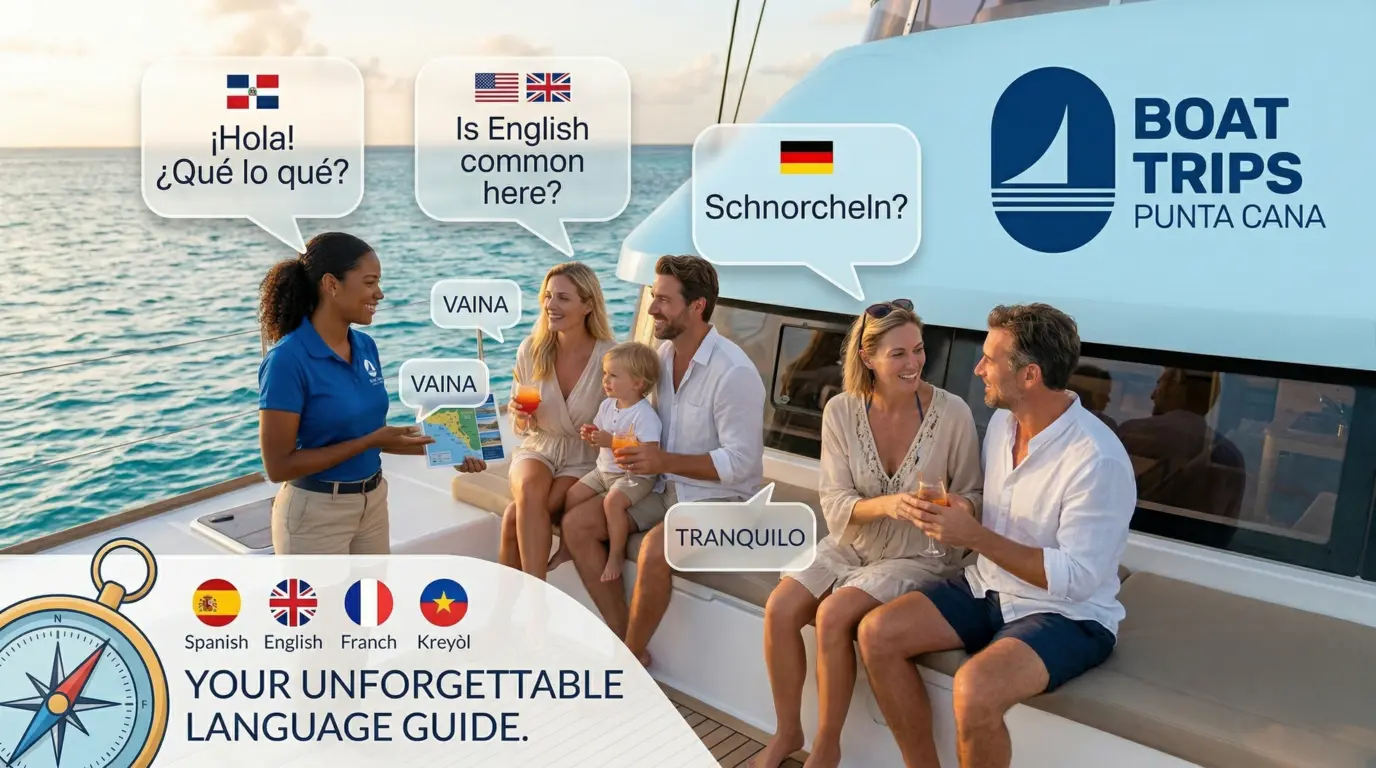
Want to earn instant respect at the marina? Drop some local slang. Memorize these five phrases: “Qué lo qué” (What’s up?), “Vaina” (thing), “Tranquilo” (chill), “Tigre” (street-smart guy), and “Nítido” (awesome). Throwing one of these into a conversation proves you actually care about the culture.
Knowing textbook Spanish is great. Knowing Dominican street slang is a superpower. Locals absolutely love it when tourists drop a piece of native slang into a conversation. It shows you took the time to understand their specific culture, rather than just treating the island like a generic beach destination.
We highly recommend memorizing a few of these before your flight. Toss one of these phrases out to the crew while heading out on your Saona Island excursions, and you’ll instantly be treated like an old friend.
- Qué lo qué: The ultimate greeting. It literally translates to “What is what?” but it means “What’s up?” or “How are things?” Say it with enthusiasm.
- Vaina: This is the ultimate filler word. It simply means “thing” or “stuff.” If you forgot the word for a towel, you just point and say, “pass me that vaina.”
- Tranquilo: Literally means “tranquil.” Locals use it constantly to mean “I’m good,” “Don’t worry,” or “Everything is chill.” Someone bumps into you at the bar and apologizes? Just smile and say, “Tranquilo.”
- Tigre: A “tiger.” This doesn’t mean the animal. It describes a street-smart guy, a hustler, or a clever dude. It’s a term of endearment among friends.
- Nítido: If something is awesome, cool, or looks great, it’s nítido. Your cold Presidente beer? Nítido. The clear blue water? Nítido.
The Verdict: Do You Need to Learn Spanish to Visit?
No, you definitely don’t need to speak Spanish to enjoy a Dominican vacation. Stay near the Punta Cana resort bubble, and English works just fine. But why stop there? Learning a few casual greetings totally transforms how locals treat you. It turns a standard trip into a genuine connection.
Let’s be real. It’s perfectly fine to land, grab a rum punch, and never speak a word of Spanish all week. The entire Punta Cana hospitality machine caters directly to English-speaking guests. The signs are in English, the menus are in English, and the staff is bilingual.
But stepping slightly out of your comfort zone is what travel is all about. Greeting your bartender with a cheerful “Buenos días” or throwing a “Qué lo qué” to your boat captain transforms a basic interaction into a genuine connection. It shows respect.
We recommend bringing a sense of adventure along with your sunscreen. Ready to hit the water and practice your new vocabulary? Whether you want a quiet sunset cruise or lively Bavaro beach tours, our bilingual crew is ready to show you the best of the coast.
Reach out today to book your next Caribbean adventure. Let’s make some waves.